White House’s $700 million push for coal revives decade-long fight in Oakland
As part of his push to revive the coal industry, President Donald Trump wants a new export terminal built in Oakland, California, to send American coal around the world. The plan to build the West Gateway Terminal, backed by $75 million in federal funds, is already facing local resistance.
The U.S. Department of Energy (DOE) announced $700 million for the coal industry on Thursday. The Trump administration invoked the Cold War-era Defense Production Act to fund $500 million of the project through the $75 million grant and another $425 million to modernize 12 coal plants. The remaining funds previously appropriated to the DOE were assigned to build two new coal plants and upgrade two existing ones.
Domestic consumption of coal has fallen by about 50% from its peak in 2008, according to the U.S. Energy Information Administration. The coal industry has long sought greater ability to export coal from the West Coast to growing markets in Asian countries that are building new coal power plants.
“By expanding access to global markets, the project will support continued growth in U.S. coal exports, improve supply chain resilience, and strengthen energy partnerships with allies throughout the Indo-Pacific region,” said DOE Under Secretary of Energy Kyle Haustveit in a press release.
The financial awards have drawn criticism from environmental groups who say continued reliance on coal as a power source will worsen climate change. In utilizing the Defense Production Act, the Trump administration argues there is an emergency on the power grid, and that boosting coal power is necessary for national security.
What is the West Gateway Terminal?
The West Gateway Terminal would be built on the city-owned former Oakland Army Base, a military dock complex that was decommissioned in the late 1990s. California investor Phil Tagami’s company, Oakland Bulk and Oversized Terminal LLC, owns the rights to develop the land. A second company, Insight Terminal Solutions LLC, would operate the coal export terminal.
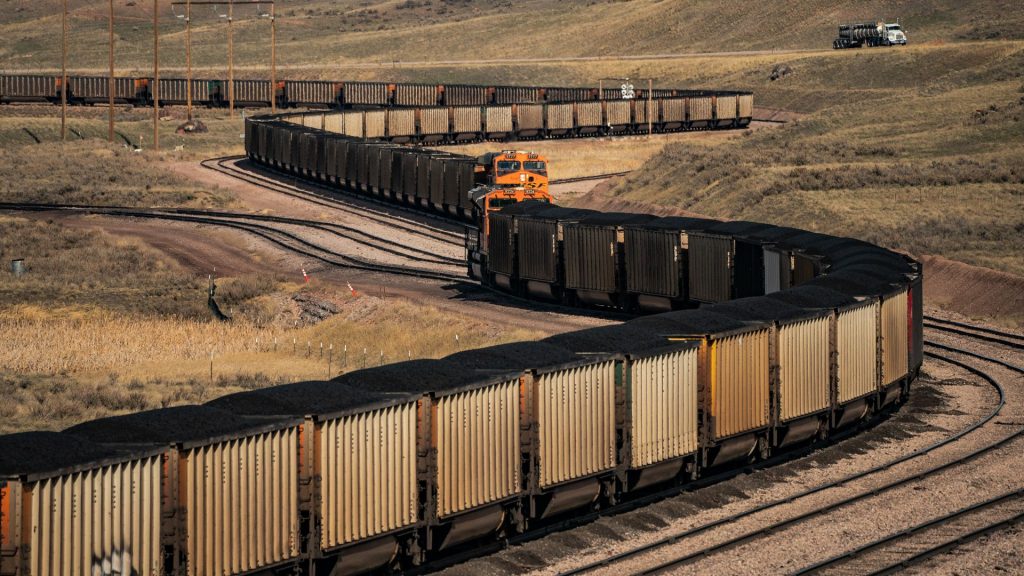
Coal from mines across the Mountain West region, such as Wyoming’s Powder River Basin, would be shipped to Oakland by rail. The terminal would have a planned capacity of exporting up to 10 million tons of coal per year.
In addition to the $75 million federal grant, the project has received $157 million in outside funding, according to the DOE. Insight Terminal Solutions still needs to finalize a design, secure relevant permits and complete construction, but the DOE announcement said the company will begin exporting coal in 2028.
Even with federal funds, there’s no guarantee that all of those pieces fall into place.
An ongoing legal fight
City leaders and environmental groups have opposed the export terminal since plans were first reported in 2015, according to local media outlet Oaklandside. They are driven largely by concerns that sending coal trains to West Oakland could increase particulate matter pollution, which can lead to asthma and other health issues.
The City of Oakland fought in court, but Tagami and Insight Terminal Solutions ultimately prevailed over efforts to ban the storage of coal within the city and revoke Oakland Bulk and Oversized Terminal’s rights to develop the land.
Now, Insight Terminal Solutions is suing the city for costs incurred while the project was delayed. The company has argued it lost $674 million, which led to it declaring bankruptcy. A federal judge in Kentucky is currently reviewing the case, Oaklandside reported.
What will happen next?
While lawsuits with the city have been resolved, the terminal continues to face local opposition.
“The developers should expect an unrelenting uphill battle,” said Ben Eichenberg, senior staff attorney at the environmental group San Francisco Baykeeper, in a press release. Eichenberg added that a coalition of groups would “use every legal, regulatory and advocacy tool to protect the Bay and Bay Area residents from this project.”

In a statement on its website, the No Coal in Oakland campaign said the $75 million grant “rests on the absurd premise that building a massive coal export terminal in Oakland to ship Utah and Wyoming coal to Asian markets addresses a national defense emergency.”
The Trump administration’s broader push to revive the coal industry has also faced legal challenges. The Environmental Defense Fund has been involved in litigation over emergency orders that kept coal power plants running past planned retirement dates. The Trump administration has argued that the policy is needed to ensure grid reliability.
“At a time when we need more power on the grid, doubling down on one of the most expensive, polluting energy sources is the worst possible answer,” EDF’s lead counsel Ted Kelly told Straight Arrow, in an email.
Round out your reading
- Plea bargains keep America’s courts running. Guilt or innocence barely matters.
- Trump says the media isn’t covering one of his biggest accomplishments. We checked.
- Mike Lindell denied MyPillow was hacked. Its private data is now online.
- Red meat allergy rises with ticks as HHS targets Lyme disease, alpha-gal syndrome.
- We’re building a new Straight Arrow. Help us shape our future by taking our survey.
Ella Rae Greene, Editor In Chief