Fearing more e-bike injuries, Illinois looks to become 10th state to mandate registration, insurance
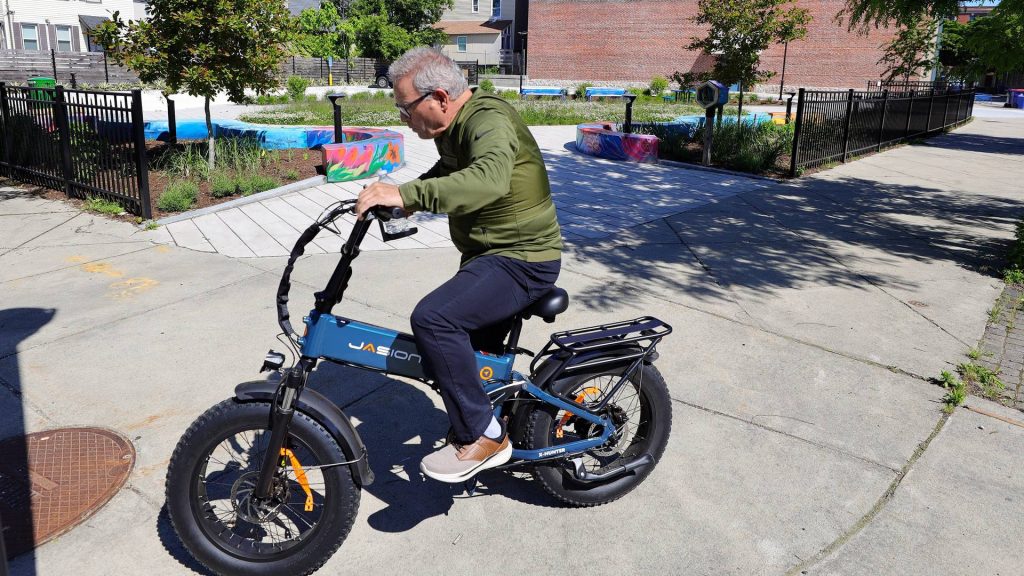
E-bikes are quickly becoming a must-have for kids and teens across the country. Many of them can reach dangerous speeds, prompting Illinois and several other states to consider setting limits on the growing trend.
Lawmakers passed a major legislative hurdle to require some devices to be registered and insured. State officials attributed the high-speed versions of the bikes to a growing number of serious injuries and fatalities.
People who own e-bikes that can reach speeds greater than 28 mph may need to add insurance and registration to their checklist starting Jan. 1 after Illinois lawmakers overwhelmingly passed legislation backed by Secretary of State Alexi Giannoulias.
He said in a Thursday statement that the legislation targets e-bikes, e-motos, and other electric micromobility devices that can sometimes exceed 75 mph. Those speeds are more in line with e-motos, which are an electric version of off-road dirt bikes.
The bill passed both chambers of the state legislature on May 31 and awaits Gov. JB Pritzker’s signature. According to the state constitution, if Pritzker doesn’t act on the bill by Aug. 1, it will automatically become a law.
“By passing this bill, we are helping prevent serious injuries, protecting pedestrians and riders, and creating uniform statewide standards that prioritize public safety,” Giannoulias said in the statement.
The American College of Surgeons has warned about the popularity of e-bikes among young people, as it noted a sharp increase in crashes between 2020 and 2023. They’ve advocated for lawmakers to adopt laws mandating helmet usage, enforcing speed limits and standardizing rules governing the devices. One pediatrician previously told Straight Arrow that there’s an increase in children landing in the hospital with injuries sustained while using a micromobility device.
“It’s really tens of thousands of people every year who are getting injured,” said Dr. Lindsay Clukies, a WashU pediatric emergency medicine specialist at St. Louis Children’s Hospital.
The devices are not federally regulated. U.S. Rep. Dave Min, D-Calif., introduced legislation in March to set a standardized definition of e-bikes and electric scooters. The bill is in the House Energy and Commerce Committee.
The bill, called the Safe SPEEDS Act, would mandate that the Consumer Product Safety Commission establish standards for the devices, maintain repositories of crash data and conduct public crash studies regularly.
According to a Straight Arrow analysis of e-bike regulations across the nation, nine states have registration requirements for the micromobility devices.

High-speed bikes need papers
Under the bill, anyone who owns an electric mobility device that exceeds 28 mph would be required to register it with Giannoulias’s office, obtain a title and have a driver’s license and insurance to ride the device.
Along with the new paperwork, the law would prohibit anyone under 16 from riding any Class III device, which has motor assists up to 28 mph. It also prohibits e-scooters, electric skateboards and unicycles from operating at speeds exceeding 28 mph on roads, bike lanes and sidewalks.
The bill includes a provision to prevent local governments from adding extra regulations. It also makes it illegal for anyone to use the aforementioned devices while under the influence of alcohol or drugs.
E-motos, not e-bikes
Regulations behind the micromobility devices have been met with mixed reception from cyclists. Bicyclist advocacy organization People for Bikes said lawmakers and doctors should focus their concerns on e-bikes.
It contends that e-bike injuries may not result from those devices, but from vehicles that are essentially electrified dirt bikes. E-motos are devices with a motor power of 1,000-plus watts, have top speeds in excess of 30 mph and are classified as a motor vehicle.
“E-motos are often equipped with pedals from the manufacturer or have pedals added by consumers in an attempt to disguise the e-moto as an electric bicycle and ‘fly under the radar,’” the organization said.
The group doesn’t fault riders, but manufacturers and sellers who will intentionally skirt motor vehicle laws to sell the bikes. Some of those modifications are placing removable pedals or installing a governor to keep speeds under 20 mph. However, those handicaps can be removed.
People For Bikes added that politicians can help differentiate the two devices by defining motor vehicles as any object powered by an electric motor that’s capable of exceeding 20 mph on the motor alone and requiring their use on roads only. They advocated for banning any device that can modify e-motos, models that can be used to operate as an e-bike, prohibiting false advertising and requiring sellers to advise buyers about legal definitions in the seller’s state.
“This lack of understanding is leading consumers into buying ‘e-bikes’ that are actually motor vehicles, and when children are allowed to use those e-motos the results can be tragic,” according to the organization.
Round out your reading
- Plea bargains keep America’s courts running. Guilt or innocence barely matters.
- Trump says the media isn’t covering one of his biggest accomplishments. We checked.
- Mike Lindell denied MyPillow was hacked. Its private data is now online.
- Red meat allergy rises with ticks as HHS targets Lyme disease, alpha-gal syndrome.
- We’re building a new Straight Arrow. Help us shape our future by taking our survey.
Ella Rae Greene, Editor In Chief