Data centers could define the midterms. Just look at Texas
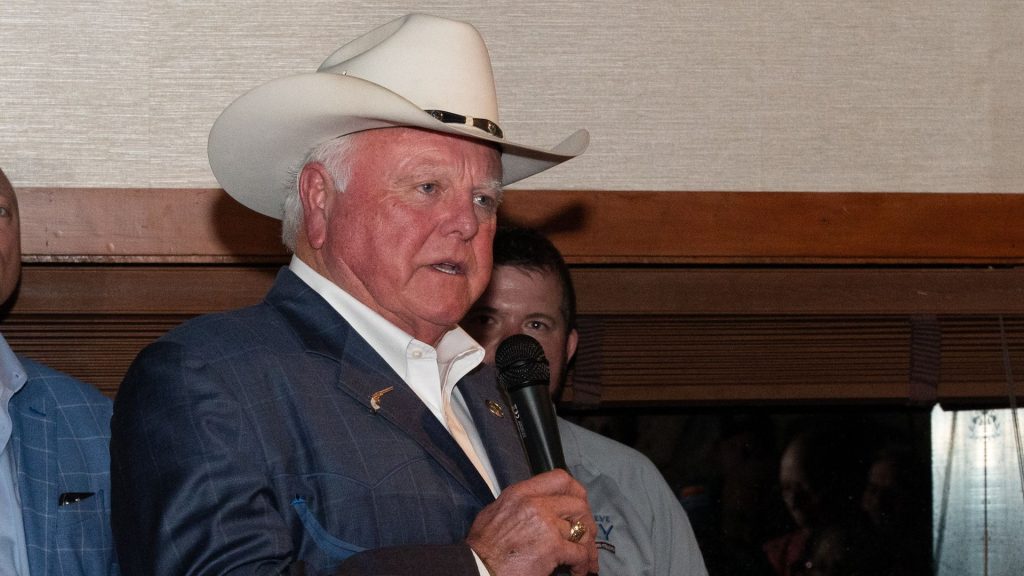
BASTROP, Texas — Texas Agriculture Commissioner Sid Miller has been traveling the state with a dual message about data centers. To voters, he’s sharing his concerns and listening to theirs about projects popping up across Texas, which is America’s hottest data center market.
To his fellow Republican politicians — many of whom have only recently started to talk about the possible downsides of data centers after years of welcoming the tech industry — Miller had a blunt message about what could happen if GOP candidates don’t take the data center backlash seriously.
“We’re going to get our ass kicked, we really are if we don’t get on this. We should own this issue,” Miller said in an interview with Straight Arrow, following his appearance at a town hall in Bastrop, southeast of Austin.
And Texas isn’t alone in grappling with the political fallout of data center development.
Data centers are flocking to key states on the map for control of Congress such as Pennsylvania, Georgia and Ohio. Yet seven out of 10 Americans oppose data centers being built in their local community, according to a May Gallup poll.
“Everybody from all walks of life are concerned about this. It truly is an American problem,” said Miller, who is not seeking re-election.
A national pledge
This week, politicians across the country have jockeyed for attention on their approach to data centers.
On Thursday, President Donald Trump released a list of companies and elected officials that joined his ratepayer protection pledge.
The voluntary pledge intends to make tech companies pay for all the power and energy infrastructure upgrades that will be needed to serve data centers. Twenty-three Republican governors, including Texas Gov. Greg Abbott, signed the pledge, but no Democrat governor has signed on.
New York Gov. Kathy Hochul became the first state leader to sign a yearlong moratorium on new data centers earlier this month. For Republicans, the ratepayer protection pledge signals an attempt to address voter concerns while still supporting the industry.
“Data Centers are tremendous WINS for the States and Communities that are lucky enough to get them,” Trump said in a post on Truth Social.
What is Gov. Abbott’s current stance?
Abbott, who is seeking re-election to a fourth term, released a statement Thursday detailing how a proposed data center in East Texas withdrew its application due to an inability to meet Abbott’s criteria.
“Texas requires companies to put communities first, protect our natural resources and power grid, and respect the quality of life of our residents,” Abbott said, in a press release.
In June, Abbott directed Texas’ power grid operator and electric utility regulatory agency to ensure data centers add capacity to the grid, contribute to lowering consumer bills, pay their infrastructure costs, use water-efficient technology and mitigate impacts on neighboring communities.
Miller called Abbott’s directive “pure political pandering” because Abbott sees growing backlash, but wants to give a “wink and a nod” to the tech companies that have supported his candidacy.
“He’s trying to burn the candle at both ends, but his hand’s going to get burned in the middle,” Miller told Straight Arrow.
Miller is one of a growing number of Texas officials pressuring Abbott to call a special legislative session to pass new laws regulating data center development. Democratic candidates for statewide office have been hammering Abbott and Republicans on the issue and releasing their own data center plans.
Texas democrats push for regulation
The Democrats’ challenger campaigning to unseat Abbott, State Rep. Gina Hinojosa, outlined her goals for new data center policy on Thursday and called for Abbott to sign a moratorium on new data center development until new laws are passed.
James Talarico, Democratic candidate for U.S. Senate, also unveiled a plan to regulate data centers and criticized the policy of giving tax breaks to developers.
READ MORE: How Democrats and Republicans found common ground against data centers
“Billionaire-backed politicians are giving sweetheart tax deals to giant AI companies and then sticking us with the bill,” Talarico said Wednesday at a press conference in Austin.
At the town hall in Bastrop, Vikki Goodwin, a state representative running for lieutenant governor who has also joined calls for a special legislative session on data centers, told Straight Arrow the topic comes up every day on the campaign trail.
“I haven’t seen any issue that has brought such bipartisan coalescing together in a long time,” Goodwin said. The data center issue “is something that is really bringing people out.”
One piece of affordability
In the purple state of Wisconsin, the leading candidate for the Democratic nomination to run for governor, Democratic Socialist State Rep. Francesca Hong, has called for a yearlong moratorium on data centers and an end to tax breaks.
Wisconsin voters cited inflation and the cost of living as either their top or second highest concern ahead of the midterms, according to a poll released Wednesday by Marquette University Law School.
Several tech companies are building data centers in Wisconsin, including Microsoft, Oracle and OpenAI. One of the major utility companies, We Energies, also has hiked electric rates beyond what could be expected with inflation, according to Tom Content, executive director of the watchdog nonprofit Citizens Utility Board of Wisconsin.
“Just electricity costs doesn’t resonate, but everybody’s thinking about affordability,” Content told Straight Arrow. Health care, housing and gasoline are major drivers of the concern, but Content said electricity costs are part of it, and there’s a worry that data centers will make it worse.
Data centers were included on a list of the most important issues, with 10% of voters telling Marquette pollsters that data centers are among their top two.
The percentage of Wisconsin voters who said data centers’ costs outweigh their benefits increased to 76% in Wednesday’s poll, up from 69% in March and 55% last October.
“You’ve got folks who are mad about data centers, folks who are already mad about utility bills going up,” said Content, who for 30 years has been involved in state utility policy but never experienced this level of public interest. “This has bubbled up in a way I didn’t expect. It’s something to behold.”
Round out your reading
- From Obama to Trump to Biden: When networks said ‘no’ to presidential speeches.
- ‘The end of American science as we know it.’ White House funding plan sparks alarm.
- AI data centers are popping up everywhere. What exactly do they do?
- The Trump administration is accused of breaking a law built to target the KKK.
- One Republican senator is dead, another is still alive. Both are the center of conspiracy theories.
Ella Rae Greene, Editor In Chief