What is ibogaine? Executive order pushes faster reviews of psychedelic drugs
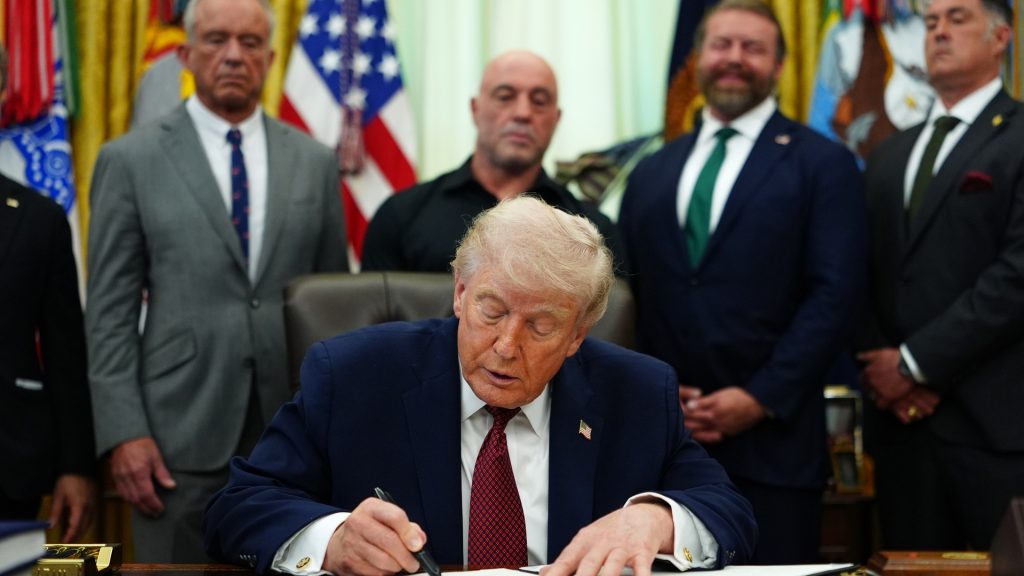
President Donald Trump on Saturday signed an executive order directing federal agencies to accelerate the review and clinical testing of certain psychedelic drugs, including ibogaine, arguing that existing treatments have failed many Americans with severe mental illness, particularly military veterans.
The order instructs the Food and Drug Administration to prioritize review of psychedelic drugs that have already received “breakthrough therapy” designation and to expand use of the federal Right to Try law to allow eligible patients to access investigational psychedelic treatments under medical supervision. It also directs federal health agencies to invest at least $50 million to support state-level research and clinical programs.
Trump signed the order during a White House event attended by senior health officials, lawmakers, veterans and researchers, many of whom described psychedelic-assisted therapies as potentially transformative for patients whose depression, post‑traumatic stress disorder or addiction has not responded to standard treatment.
“For decades, patients with the most severe mental illnesses have been stuck in a system that too often manages symptoms without delivering lasting improvement,” the order states, citing persistently high suicide rates and the disproportionate impact on veterans.
According to the executive order, more than 14 million Americans live with serious mental illness, and veteran suicide rates remain more than double those of the non‑veteran adult population. The administration said the policy is intended to speed access to novel treatments while maintaining scientific review and regulatory safeguards.
Focus on ibogaine
Much of the attention at Saturday’s event centered on ibogaine, a psychoactive compound derived from the root bark of an African shrub. Ibogaine has long been used in ceremonial contexts and has drawn interest in recent years for its potential to treat addiction and trauma‑related psychiatric conditions. It is currently classified as a Schedule I drug under federal law, meaning it is illegal for clinical use outside approved research.
Researchers from Stanford Medicine described observational studies involving military veterans with traumatic brain injury and psychiatric symptoms who received ibogaine in combination with magnesium at a clinic in Mexico. According to those studies, participants showed large reductions in symptoms of PTSD, depression and anxiety, along with improved cognitive function, within one month of treatment.
In one study involving 30 combat veterans, researchers reported average reductions ranging from roughly 80% to nearly 90% across several psychiatric symptom measures, along with significant improvements in daily functioning. Brain imaging and electroencephalography data suggested changes in neural activity patterns associated with executive function and stress regulation.
The studies were not randomized clinical trials, and the researchers emphasized that further controlled research is needed. They also noted that ibogaine carries recognized medical risks, particularly cardiac complications, which is why the treatment in the study was administered with magnesium and continuous medical monitoring.
Other published research cited by the administration has found that ibogaine can cause significant but reversible heart rhythm changes, as well as temporary neurological side effects such as severe ataxia. No serious cardiac events were reported in the Stanford veteran study.
Regulatory changes outlined
Under the executive order, the FDA is instructed to issue National Priority Vouchers to qualifying psychedelic drugs, allowing their reviews to move faster than the standard approval timeline. The order also directs the FDA and the Drug Enforcement Administration to coordinate on creating legal pathways for doctors and researchers to handle Schedule I substances when used under Right to Try or approved research protocols.
The Department of Health and Human Services is additionally directed to work with the Department of Veterans Affairs to increase clinical trial participation and improve data sharing related to psychedelic research.
If a psychedelic drug successfully completes Phase 3 clinical trials and is approved by the FDA, the order instructs the attorney general to initiate an expedited review to determine whether rescheduling under federal drug law is appropriate.
Administration officials said the policy does not authorize general public access to psychedelic drugs and does not eliminate existing safety requirements. Instead, they described it as an effort to reduce bureaucratic delays for therapies already showing promise in regulated clinical settings.
Veterans speak in support
Several veterans who attended the signing event said ibogaine treatment had dramatically improved their lives, describing relief from addiction, PTSD and long‑term sleep problems after years of unsuccessful conventional therapy. Lawmakers and health officials echoed the urgency of addressing what they described as a national mental health emergency.
House members present said previous legislative efforts to expand psychedelic research had stalled and credited the executive action with breaking through longstanding regulatory barriers.
Health officials emphasized that the administration intends to continue studying why some psychedelic treatments appear to work rapidly and durably, and for which patients they may be most effective.
“This is a shift toward precision mental health,” one Stanford researcher said, arguing that psychiatric care has lagged behind other fields of medicine in matching treatments to individual biology.
The executive order takes effect immediately, though officials acknowledged that widespread clinical availability would depend on further trials, FDA approvals and coordination with states and the Veterans Affairs system.
Ella Rae Greene, Editor In Chief