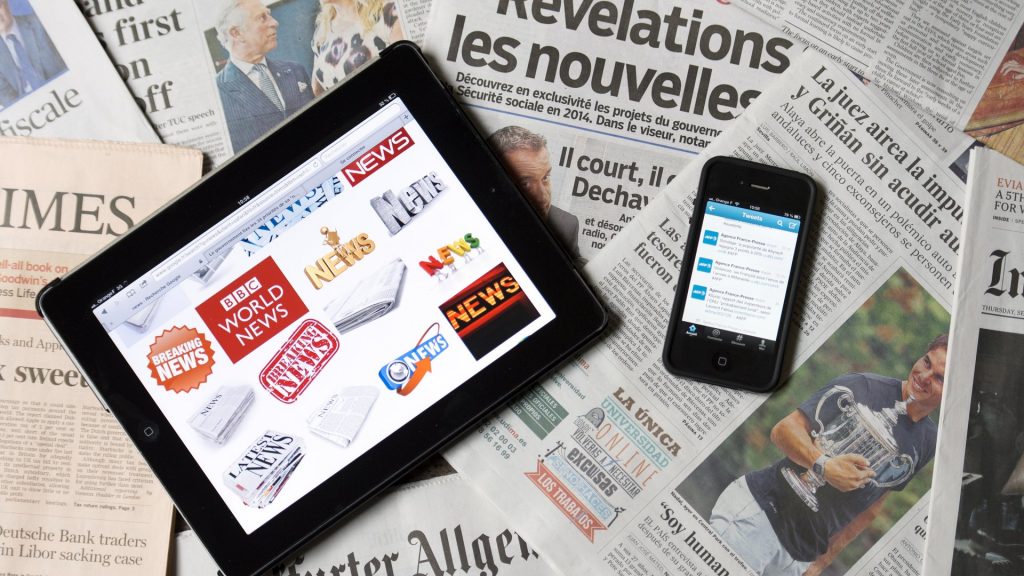
These newspapers are using reporters’ names on AI-written articles. How will this affect trust in the media?
This article was written by AI … just kidding.
The company that publishes the Miami Herald, The Kansas City Star, The Charlotte Observer and several other major regional newspapers is facing scrutiny over its use of artificial intelligence to create news stories.
A report from The Wrap says the company, McClatchy Publishing, is using AI to write entire articles, and then adding real reporters’ names to the stories — even if those reporters had nothing to do with creating the content. And if the reporters don’t like it? Too bad, McClatchy says.
The news is the latest in the AI and news media world, which has struggled to balance using the new technology with maintaining editorial control. Public trust in the news is already low, and some fear the use of AI will further erode the media’s standing.
McClatchy’s AI usage draws criticism from internal staff
McClatchy’s plan, according to The Wrap, is to repurpose content with AI to increase output.
“We need more stories, and we need more inventory,” said Eric Nelson, McClatchy’s vice president of local news, according to The Wrap.
The AI takes previously published stories and repackages them for republication — while keeping the original reporter’s byline on the content, giving the impression they wrote it.
And if those reporters don’t want to be a part of it? Well, Nelson says they’ll feel the effects.
“Journalists who embrace and experiment with this tool are going to win,” Nelson said. “Journalists who are defiant will fall behind.”
Despite Nelson’s comments, unions representing newsroom employees at the Herald, the Star and McClatchy’s Sacramento Bee have filed grievances. Journalists at some McClatchy newspapers have reportedly withheld bylines from news stories in protest.
The union representing the Star’s employees did not respond to Straight Arrow’s request for comment.
AI and the future of journalism
Other news organizations, such as The Associated Press, use AI to produce routine content, such as corporate earnings reports and sports box scores. Bloomberg and The Washington Post use it to create summaries that accompany news stories.
Straight Arrow uses AI to help produce features such as Media Miss and Media Landscape, which analyze coverage from multiple news outlets. However, editors review all AI content, and AI is never used to write news articles.
But some publishers have crossed an invisible line. A few years ago at USA Today, journalists noticed the publication of stories with bylines of people they had never heard of. Turns out, the articles were written by AI.
McClatchy’s AI use raises questions about the future of journalism and the journalists who produce it.
The United Nations has raised its own concerns, noting in an article from February 2025 that AI tools are already being used to publish convincing but false content.
And false content on a news organization’s platform makes it even harder for the general public to determine fact from fiction.
Another major concern? Accountability.
If a publication shares an article with misinformation or slanderous details and it lists a reporter’s name, but it was entirely or even partially written by AI, that reporter could be held responsible.
“This threatens the safety and effectiveness of those who report in the public interest,” the U.N. wrote.
But it’s not all dreary and scary. The U.N. says there is a path forward, and it’s to support local media outlets and professional journalists.
“By investing in their capacity to uphold editorial standards,” the U.N. said, “we ensure that journalism remains a trusted foundation of democratic societies.”
Round out your reading
- Work for food: New SNAP rules reshaping who gets to eat.
- How Iranians actually feel about regime change and war.
- Feds warn that Russians may hack your internet router. Why?
- The truth behind a medical condition that never existed.
- We’re building a new Straight Arrow. Help us shape our future by taking our survey.
Ella Rae Greene, Editor In Chief