For one Missouri family, autism diagnosis led not to fear, but possibility
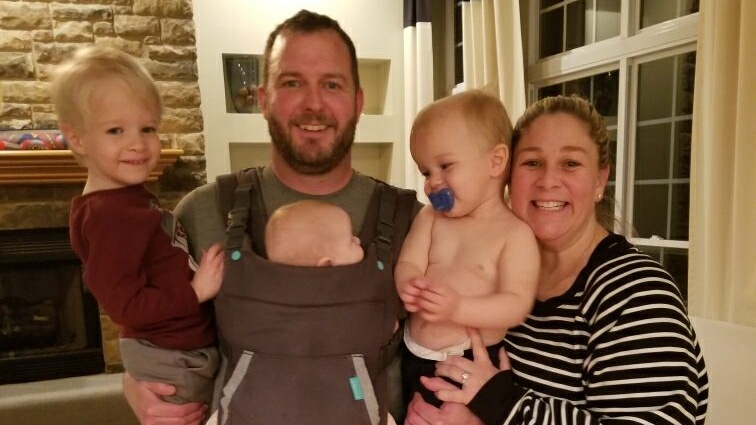
When Sarah Kaestner looks back on her childhood in the 1980s, the word autism still carries an echo of fear.
“It was always kind of a scary word growing up,” she said. “You heard it and thought: something is not right.”
So, when Kaestner’s son, Trip, was diagnosed with autism in 2022 at age 3, fear returned quickly. She was raising an infant and a toddler at the same time, living through the isolation of the COVID-19 pandemic, and dealing with a diagnosis she never imagined would apply to her family.
“I prayed and prayed we weren’t going to get that diagnosis,” she said.
Four years later, Kaestner talks instead about friendships, school projects and future independence.
Trip, now nearly 7, attends a mainstream private school, navigates the classroom independently and proudly tells his mother about his friends.
“He is thriving,” she said.

A diagnosis delayed — then decisive
The early signs of autism were subtle. Trip showed limited eye contact, occasional hand-flapping and didn’t always respond to his name. At the same time, he displayed striking strengths, including reading before age 2.
“He was so smart it almost distracted us,” Kaestner said. “I’d look at my husband and say, ‘Is this even our kid?’”
Their pediatrician’s initial screening did not indicate autism. Kaestner hesitated, attributing some delays to Trip being a “COVID baby” with little social exposure. Her husband encouraged a more comprehensive evaluation.
That decision changed everything.
Specialists confirmed Trip was on the autism spectrum, and the family soon connected with the Mercy Kids Center for Neurodevelopment, where Trip received diagnostic evaluation, advocacy support and access to therapy resources.
Kaestner describes the days following the diagnosis as overwhelming, followed by a brief period of grief.
“Then I went into go mode,” she said.
Early intervention changes the trajectory
At the center, Kaestner was paired with navigators who helped guide decisions about treatment, school placement and services. Mercy clinicians recommended Applied Behavior Analysis, or ABA, therapy, while emphasizing that Trip’s development should remain integrated with family and school life.
“They said, ‘He needs to be with you. He needs preschool. He needs his siblings,’” she said.
Trip attended ABA therapy about 20 hours a week through Mercy, a commitment that required commuting and careful scheduling while raising three young children. Therapists also helped Kaestner navigate safety concerns such as wandering, known as elopement, and sensory-related behaviors.
“I never felt alone,” she said. “They were with us every step of the way.”
According to pediatric neurologist Dr. John F. Mantovani, who specializes in neurodevelopmental disabilities at Mercy, early diagnosis and coordinated care can significantly improve outcomes.
“Brains are more flexible at younger ages,” Mantovani said. “Early diagnosis and intensive treatment really change outcomes.”
More than half of children diagnosed with autism when young now attend general education classrooms, often with supports rather than separation.
From awareness to acceptance
Autism was long misunderstood. In the mid-20th century, theories wrongly blamed parenting styles for the condition. Modern research shows autism is a neurobiological variation shaped largely by genetics, sometimes influenced by environmental factors.
“Most people believe that the core difference in a person with autism is the way their brain networks are wired together,” Mantovani said, “And they produce the challenges, but they also do produce these gifts. You hear about people that are very talented, musically or artistically — most people with autism, the majority, have very good visual learning and very good visual memories, and that’s how they learn and remember things. That diversity has driven a cultural shift from autism awareness to autism acceptance … recognizing differences not as deficits, but as variations that include both challenges and strengths.”
Kaestner sees this acceptance reflected at Trip’s school.
“Kids know he’s different,” she said. “But they accept him as he is.”
They even gave him a nickname.
“He’s the ‘GOAT’ of the class,” she said. “Everyone wants him as their partner because he knows the answers.”

A milestone measured in friendship
One moment stands out above all others.
Last winter, Trip came home with an announcement.
“Mom, I have a friend,” he said.
He asked to give her a Christmas gift. He carefully drew a picture framed at home. With teachers’ approval, the exchange went forward. The friend hugged him in return.
Kaestner cried.
“Nothing about that came naturally to him,” she said. “The idea was huge.”
By spring, progress reports described Trip playing easily with classmates. Just a few months earlier, he spent recess alone on the playground.
“It took time,” she said. “But suddenly, he’s just there. With everyone.”
A message to other parents
Kaestner believes her son’s progress is rooted in one decision: not waiting.
“If that little voice says something’s off, listen to it,” she said. “Early intervention is everything.”
She knows fear often comes first, especially for parents facing a diagnosis they never anticipated.
“You’re going to learn to embrace it,” she said. “What you think is a disability can become their greatest ability.”
Trip, she adds, remains blissfully unaware of the anxiety that once surrounded his diagnosis. He is busy being himself: reading, learning and making plans for tomorrow.
As for his mother, her hopes are simple.
“That he’s happy,” she said. “That he’s accepted. That he has a full life — whatever that looks like for him.”
In the end, autism reshaped not only her son’s future, but her understanding of human potential.
“What he has, I don’t,” she said, “And what I have, he doesn’t. That’s just being human.”
Round out your reading
- Work for food: New SNAP rules reshaping who gets to eat.
- How Iranians actually feel about regime change and war.
- Feds warn that Russians may hack your internet router. Why?
- The truth behind a medical condition that never existed.
- We’re building a new Straight Arrow. Help us shape our future by taking our survey.
Ella Rae Greene, Editor In Chief