Russia’s oil export revenue jumped 94% in first month of Iran war
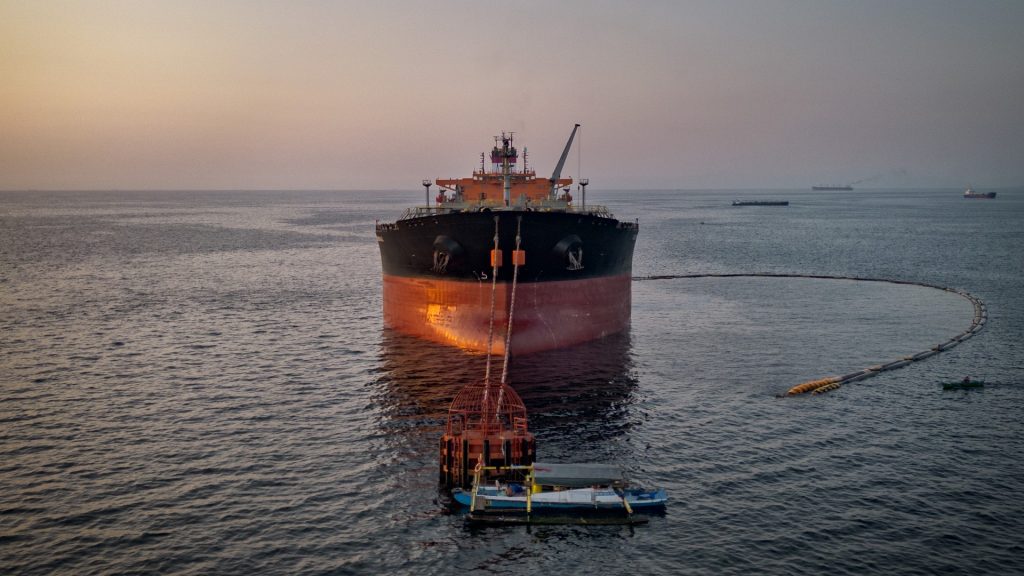
Sanctions on Russian oil at sea are back this week after a 30-day pause expired on Saturday. The war in Iran has generated increased revenue for Russia as oil prices soared and loosened sanctions allowed Russian oil to flow more freely.
Iran’s near-total closure of the Strait of Hormuz removed roughly 20% of global oil supply from the market overnight, sending benchmark prices soaring across the world.
The price of Russian Urals crude oil averaged $94.50 per barrel in March, up 67% from February, and the price has climbed further in April to about $120 as of Tuesday. Russia’s oil export revenues jumped 94% month-on-month in March to the equivalent of $508 million per day, according to a new report from the Centre for Research on Energy and Clean Air.
The U.S. has not reinstated the sanctions relief, but experts told Straight Arrow News that option remains on the table. Amid a tentative ceasefire between the U.S. and Iran and the start of a U.S. blockade of vessels attempting to head in and out of Iranian ports, the outcome of the war remains uncertain. So far, Russia has seen a war-time windfall despite no direct involvement in the conflict.
What are the Russian oil sanctions?
Sanctions on Russian oil began after the country’s invasion of Ukraine in 2022. The United States and European countries leveraged their influence over the shipping industry to stop Russia from raking in huge profits from the oil industry.
The sanctions effectively capped the price at which Russia could sell oil by penalizing any vessels that transported Russian crude to be sold at a higher price. This method was designed to “take revenue away, but keep barrels on the market,” Catherine Wolfram, a former deputy assistant secretary at the U.S. Treasury who had a hand in crafting the policy, told SAN in March.
As oil prices climbed following the start of a new war with Iran, the U.S. decided to remove sanctions in an effort to inject more supply into a constrained market. First, the U.S. Treasury’s Office of Foreign Asset Control (OFAC) allowed India to freely import Russian oil already at sea. A week later, that exemption was extended globally.
Treasury Secretary Scott Bessent said it was a “narrowly tailored, short-term measure” and that revenue would not flow directly to the Russian government.
How has Russian oil revenue increased?
Bessent was referring to taxes taken at the point of oil extraction. But revenue from selling oil still makes its way to the Russian state because the Kremlin holds major stakes in the country’s oil companies, such as Rosneft. A vast majority of Russian oil sold in March went to China and India.
“The revenue surge is largely a story about the rise in the price of oil,” said Luke Wickenden, energy analyst at the Centre for Research on Energy and Clean Air and author of its latest report on Russian fuel exports.“Sanctions relief contributed on the margin by helping clear stranded cargoes.”
At the end of February, approximately 6.8 million metric tonnes of Russian crude — worth about $2.7 billion — floated on tankers without a buyer. The OFAC waivers helped clear nearly all of those stranded cargoes, with on-water volumes approaching normal levels by early April.
Wickenden’s analysis found signs that the sanctions relief made a clear difference for exports to India. He found that India’s state-owned refinery purchases of Russian crude jumped 148% in March.
“Sanctions relief was the direct reason Russian barrels hit the spot market, and [India’s] state-owned refineries took them because that is how they procure oil,” Wickenden told SAN, in an email.
Will the sanctions relief continue?
Despite the sanctions relief expiring on Saturday, OFAC has not renewed it, and it’s unclear what will happen next. The U.S. Department of Treasury did not respond to requests for comment from SAN.
But former government officials have speculated that the policy is likely to continue.
“It’s hard for me to see a world where the Trump administration cracks down on Russian oil again, at least between now and the midterm elections,” Edward Fishman, an Obama-era official and author of Chokepoints, a book on sanctions policy and other forms of economic warfare, told Semafor last week.
Wolfram, who was a treasury department official during the Biden administration, told SAN she isn’t surprised the sanctions relief was allowed to expire because of how it interacts with ongoing peace talks.
Extending the sanctions during the ceasefire “could signal an expectation that the peace talks would fail,” Wolfram said. “That thinking could still be at play, but if the ceasefire is broken, the sanctions relief may come back.”
Ella Rae Greene, Editor In Chief