Gas surpasses $4.50 average. Can oil tanker escorts bring prices down?
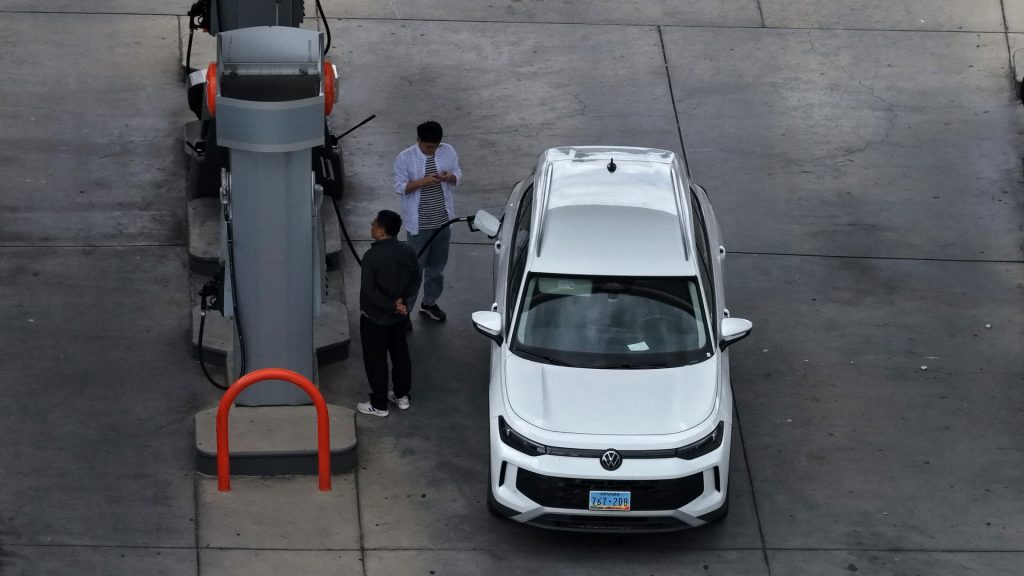
A gallon of regular gasoline in the U.S. now costs more than $4.50 on average. Before the war with Iran, the average was around $3.
Prices hit the $4.50 benchmark late on Tuesday morning, according to Patrick De Haan, head of petroleum analysis at GasBuddy, a website that tracks real-time price data from more than 150,000 gas prices nationwide. Gas has not been this expensive since July 2022.
The price of crude oil is the largest determining factor in the cost of gasoline at the pump. Global oil prices have fluctuated with the back-and-forth news on the war and attempts to broker a long-term peace. On Tuesday afternoon, the global benchmark Brent traded at about $110 per barrel, while the standard U.S. crude price (WTI) sat above $102. Oil has been on an upward swing since mid-April when initial peace talks failed.
The increasing gasoline prices are a daily sign for Americans of the cost of war, as Iran has restricted tanker passage through the Strait of Hormuz. This week, cracks started to show in the ceasefire deal that started on April 8. The U.S. struck six small Iranian boats and Iran attempted to strike ships under U.S. protection in the strait, according to the U.S. Central Command. Despite efforts to unleash more oil supply, the price trajectory remains largely dependent on the outcome of the war.
“The longer the Strait remains closed with very little chance of it reopening in a significant way, the more I think oil prices will continue to go up,” De Haan told Straight Arrow.
How is the US trying to open the Strait?
On Monday, U.S. officials announced Project Freedom, an effort to use the U.S. military to escort commercial ships through the Strait of Hormuz.
In a social media post, U.S. Central Command said ”2 U.S.-flagged merchant vessels have successfully transited through” the strait, assisted by “U.S. Navy guided-missile destroyers.”
The status of the two merchant vessels is unclear. Straight Arrow analyzed marine traffic data from global analytics platform Kpler and did not identify any U.S.-flagged commercial ships that crossed the Strait of Hormuz on May 3 or May 4. In an email, U.S. Central Command declined to provide further information.
Naval escorts were one of the first solutions proposed by President Donald Trump in early March. At the time, experts told Straight Arrow that the risk-averse shipping industry would be hesitant to take up the offer. Two months later, the same dynamic holds true.
Global shipping groups including the United Nations-backed International Maritime Organization had previously advised vessels against attempting to cross the Strait, even after the ceasefire was announced. Since the announcement of Project Freedom, the IMO and related organizations have not revised their public guidance for ships.
“Shippers are probably not going to jump at the opportunity,” De Haan said. Even the promise of U.S. military support “doesn’t change the risk calculus.”
Where is the shift in gas prices?
Since the war began, De Haan estimates that Americans have spent at least $24 billion more on gasoline, compared with what they would have paid with steady prices. While some of that is normal seasonal price swing, De Haan said about 85% of it can be attributed to the war-induced oil supply shock.
In half of the country, $4.50 prices for gasoline are already everywhere. The West Coast leads with average prices over $6.13 per gallon in California, according to data from AAA. But increases are hitting the entire county, and according to De Haan’s analysis, about 14 states from the Midwest to the South are driving the latest increase.
However, some relief may be in store around the Great Lakes region where problems at a refinery have been resolved. The increased refining capacity should — barring more upheaval in the Persian Gulf — translate to a 20-40 cent drop from Wisconsin to Ohio, according to De Haan.
Those decreases could help keep the national average steady for a few days, De Haan said.
Round out your reading
- First, it was the schools. Now they’re coming for your cellphone at work.
- Why one of America’s top economic forecasters is worried about a recession.
- AI companies may not be adhering to their own guidelines — with potentially deadly outcomes.
- Data centers are a thorny issue for Democrats. Maine shows us why.
- We’re building a new Straight Arrow. Help us shape our future by taking our survey.
Ella Rae Greene, Editor In Chief