Six things to know about BuzzFeed as a new owner takes over
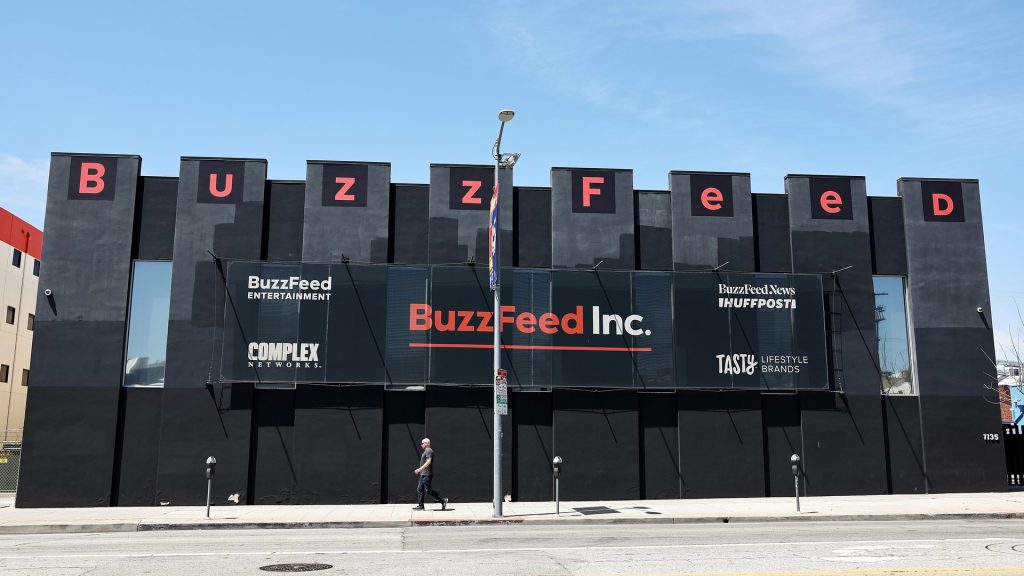
BuzzFeed will soon have a new CEO and chairman after Byron Allen, the comedian-turned-entrepreneur and media mogul, purchased a 52% stake in the company for $120 million.
Allen’s company, Allen Family Digital, and BuzzFeed shared the news Monday, saying Allen would replace Jonah Peretti, BuzzFeed’s founder, who would take on a new role as president of artificial intelligence.
This is just the latest in a string of sales involving pioneering digital media platforms. As Straight Arrow reported last week, James Murdoch, son of media mogul Rupert Murdoch and former CEO of 21st Century Fox, was in talks to buy Vox’s New York Magazine and podcast division.
BuzzFeed has repeatedly reinvented itself since its founding 20 years ago, including shutting down BuzzFeed News in 2023 due to declining revenue and high operating costs.
Let’s take a look back at BuzzFeed’s history, in the most BuzzFeed way we can: with a listicle.
1. BuzzFeed is founded
In 2006, Peretti founded BuzzFeed, positioning itself as “home to the best of the Internet.” At its inception, the website employed no writers. Rather, it used an algorithm to pull stories from across the internet that were appearing to go viral.
Peretti already co-owned another digital media platform at the time, The Huffington Post, now known as Huffpost: a digital news website and aggregator. Peretti saw BuzzFeed as a side quest to Huffpost, using it as a “lab” where he could experiment with content and its production.
2. Listicles and quizzes
After its inception, Peretti hired curators to take the content its algorithm was finding and repackage the trends into listicles, which would become the format BuzzFeed was most known for.
The curators created easy, catchy and digestible lists with mostly pop-culture content. They also curated quizzes based on trending topics and celebrities, including one of their most popular: “What State Do You Actually Belong In?”
Under this format, BuzzFeed saw its audience double nearly every year from 2006 to 2017.
3. Mastering social media algorithms and expanding into video
In 2012, when BuzzFeed was thriving and had established itself as the place for all things lists, quizzes and pop culture, the company launched a YouTube channel.
That channel led to the creation of numerous sub-brands, including Tasty, The Try Guys and BuzzFeed Unsolved. As of May 2026, BuzzFeed Video has 19.7 million subscribers on YouTube and BuzzFeed Celeb has 4.21 million.
Along the way, the company mastered social media algorithms. By 2012, 75% of the company’s traffic came from social media. This includes the viral 2015 BuzzFeed post questioning whether a photographed dress was blue and black or white and gold. (It was blue and black, and I stand by that).
4. Expanding into news
In 2011, BuzzFeed entered the news industry, hiring former Politico blogger Ben Smith in hopes of building a respected hard-news division.
Many people were skeptical the company would be able to establish itself as a reputable news source. Despite the doubts, BuzzFeed News went on to win a Pulitzer Prize in 2021 for international reporting.
5. The fall
After more than a decade of success, BuzzFeed began to face some struggles. Social media platforms made algorithmic changes, leading to a decline in the site’s traffic.
It’s the same struggles BuzzFeed’s chief competitors, Vox Media and Vice Media, have faced.
Smith, the former BuzzFeed News editor in chief, said Peretti originally “didn’t seem to care about money.” However, Peretti later went on to address some instability when BuzzFeed announced plans to acquire HuffPost from Verizon Media.
As part of the deal, Verizon became a minority shareholder without a seat on the BuzzFeed board.
Still, revenues continued to decline, leading to massive layoffs. Eventually, BuzzFeed closed its news department in 2023.
6. New hope?
Now, BuzzFeed could be looking at a light at the end of the tunnel … or could face even more uncertainty.
Peretti said the company will undergo “significant” cost cuts ahead of Allen’s arrival, which could mean layoffs. It’s also unclear whether the platform will maintain its style and voice under Allen, who currently owns The Weather Channel and numerous local TV stations, or shift to a more news-forward approach.
“Byron’s vision, operational experience and long-term commitment to premium content makes him exceptionally well-positioned to lead BuzzFeed and HuffPost into our next phase of growth,” Peretti said in a statement.
Round out your reading
- Are aliens real? Pentagon’s newly released UFO files suggest the truth is out there.
- A million Americans get this knee surgery every year. But does it work?
- Is the apocalypse now? One man is tracking flights by the rich to find out.
- ‘No Mow May’: A boon for the bees or a well-intended mistake?
- We’re building a new Straight Arrow. Help us shape our future by taking our survey.
Ella Rae Greene, Editor In Chief