Americans paid the price of Trump’s global tariffs — why are companies getting the refunds?
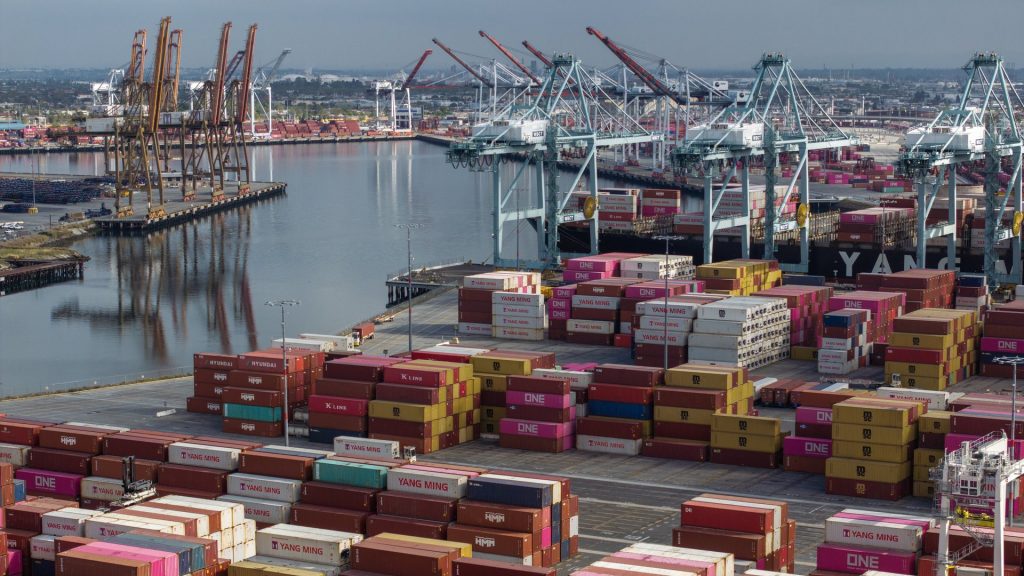
It may have mostly been American consumers footing the bill for the global “Liberation Day” tariffs President Donald Trump imposed last year, but it’s big corporations getting the refunds. The Trump administration has refunded about $100 billion in tariffs since the Supreme Court declared the levies illegal — to major corporations.
According to a new court filing this week, Apple got back $2.2 billion, Ford saw $1.3 billion and Amazon received $600 million.
And while some companies have said they’ll use the refunds to lower prices — how does the song go? “Never count your money when you’re sittin’ at the table.” Experts say don’t bet on it.
It’s likely many companies won’t change their prices since Trump has replaced the tariffs that were struck down by the Supreme Court with other levies, Kimberly Clausing, a UCLA professor who served as a tax policy official under the Biden administration, told The Washington Post.
“If you’re a firm, you’re wondering what the tariff policy is,” Clausing said. “Some of that pass-through to consumer prices has been slower than you might think if it were really permanent policies. That’s good news in the short term for consumers, but it also means you won’t necessarily see as big a swing in the other direction.”
Clausing also told The Post that some companies were already “gambling” that the import taxes would be thrown out in court, so they didn’t raise prices much in the first place.
Where’s your cut?
Trump’s tariffs cost U.S. households an estimated average of $1,000 last year, according to the Tax Foundation. Prior to the Supreme Court’s ruling, Trump had promised $2,000 tariff rebate checks to Americans, but that never happened.
And most American households won’t see any of the refund money directly, despite paying higher costs because of the tariffs.
Only entities that directly paid the tariffs can file for a refund. If you bought an iPhone, for example, that was more expensive because Apple was passing along tariff costs to consumers, there’s no way for you to get that money back.
And because Trump has imposed so many different tariffs since he began his second term, it’s all but impossible to tell which of those tariffs those price hikes were meant to cover. On top of that, many businesses only passed off some of the costs of tariffs to consumers — further confusing how much Americans paid directly into the levies.
However, some companies are working to make sure their customers get at least something from the refunds.
Amazon has said it will give certain customers direct refunds, though it has not publicly specified who or how much.
Unbiased. Straight Facts.TM
American importers and their customers paid 96% of Trump’s tariffs, according to a policy report by the German Kiel Institute for the World Economy.

“We have identified a limited set of circumstances where we can trace that we passed specific import charges on to customers, and when we receive those refunds, we will proactively contact affected customers and automatically issue refunds to them,” Amazon Chief Financial Officer Brian Olsavsky said last week during the company’s earnings call.
He added that in cases where charges can’t be traced back, the company will “utilize refunds to continue to invest in low prices for customers.”
Costco CEO Ron Vachris has said the wholesale retailer will “return to our members in some form the portion of tariffs that were passed on to them.”
“Our commitment will be to find the best way to return this value to our members through lower prices and better values,” Vachris said in March.
Meanwhile, retailers Walmart and BJ’s are among those who have promised to use their refunds to lower prices. Apple CEO Tim Cook said his company is using the money to expand its American manufacturing footprint. Others, like PepsiCo, say the refunds are helping offset higher energy and freight costs tied to the Iran War.
Costco, Amazon and many other companies are facing class action lawsuits demanding they give consumers direct refunds.
Round out your reading
- Why Gen Z is staying home on the weekends.
- Autism research is entering a new era. Here’s what scientists are learning.
- The big reason small cities want data centers. Hint: It’s not permanent jobs.
- High school teacher arrested at city meeting after clapping for anti-data center speech.
- Off Script: Everyone’s watching Michigan. Our reporter explains why the race just changed.
Ella Rae Greene, Editor In Chief