How regulations have failed to prevent a string of funeral home scandals
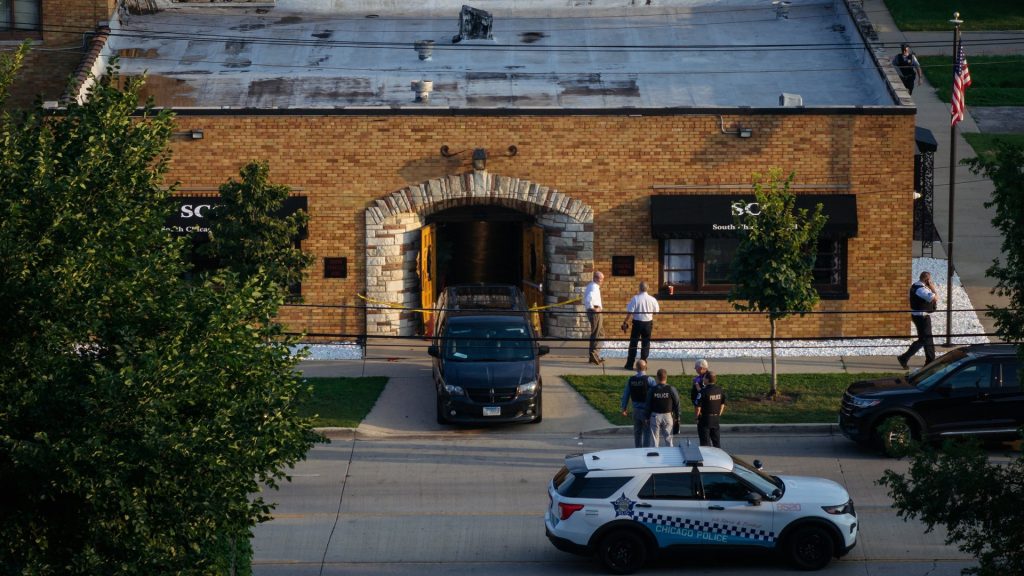
A Chicago funeral home is under investigation for improperly storing at least 50 bodies, which were discovered in varying stages of decomposition. Now, officials are working to identify the bodies and notify families.
It’s the latest case involving alleged malpractice by funeral home operators. Critics say it points to lax state-level regulation of the death industry.
The Cook County Medical Examiner’s Office responded to South Chicago Chapel funeral home on Thursday after receiving reports that bodies were being stored improperly.
Authorities say when the examiner’s office arrived, they found more than 50 bodies “in various states of decomposition,” and will now “work with authorities to identify these decedents as quickly as possible and notify their families.”
Incidents at other facilities
But South Chicago Chapel funeral home isn’t the first facility to face an investigation over body storage practices. In fact, there have been several instances across the U.S. in the last 10 years.
In March 2016, a Florida funeral home owner was accused of improperly storing bodies, months after they were to be buried.
In January 2025, a Maryland crematorium was shut down after bodies were stored improperly, with some found decomposing. At least 18 bodies were discovered, some of which had been left in the facility for nearly a year.
And more recently, in April, a Colorado funeral home owner was sentenced after authorities say Return to Nature Funeral Home, located outside Colorado Springs, was improperly storing nearly 200 bodies in a single-story building.
The home performed “green” burials without embalming chemicals or metal caskets. However, under Colorado law, if the burial doesn’t occur within 24 hours, the corpse must be properly refrigerated.
Inspections and regulation
When the bodies were discovered at Return to Nature, Colorado did not regulate funeral homes, nor did it require funeral directors to have a professional license.
However, since the Colorado case began in 2023, lawmakers in the state — as well as those in Illinois and Michigan — have sought to tighten regulation of funeral homes and crematoriums.
Now, Colorado funeral directors, embalmers, cremationists and other mortuary professionals must be licensed by the state.
Facilities are also now subject to regular, unannounced inspections; previously, the state primarily responded to complaints. The state introduced new body tracking and handling standards, and strong penalties when laws are violated.
In Michigan, lawmakers are aiming to change state regulations, ensuring bodies are refrigerated as they await burial or cremation.
Illinois is looking at similar new rules.
Who do funeral homes report to?
No federal agency regulates the funeral industry. Rather, funeral homes report to state agencies, and the regulations vary widely among the states.
Some states — Texas and Wisconsin, among them — have created agencies specifically to oversee funeral homes, including licensing and disciplinary matters. Others, such as Colorado, monitor funeral homes through agencies that regulate multiple professions.
Across states, though, there are essentially six ways funeral homes are regulated and monitored: Through licensing, inspections, complaint investigations, criminal enforcement and consumer protections.
State agencies and commissions handle the licensing, inspections and investigations, while law enforcement and the courts handle any criminal actions.
The only federal role is handled by the Federal Trade Commission. It enforces the funeral rule, which requires homes to provide transparent pricing and prohibits deceptive sales practices.
Round out your reading
- Why Gen Z is staying home on the weekends.
- Autism research is entering a new era. Here’s what scientists are learning.
- The big reason small cities want data centers. Hint: It’s not permanent jobs.
- High school teacher arrested at city meeting after clapping for anti-data center speech.
- Off Script: Everyone’s watching Michigan. Our reporter explains why the race just changed.
Ella Rae Greene, Editor In Chief