Should Big Oil be held responsible for climate change? Supreme Court may decide
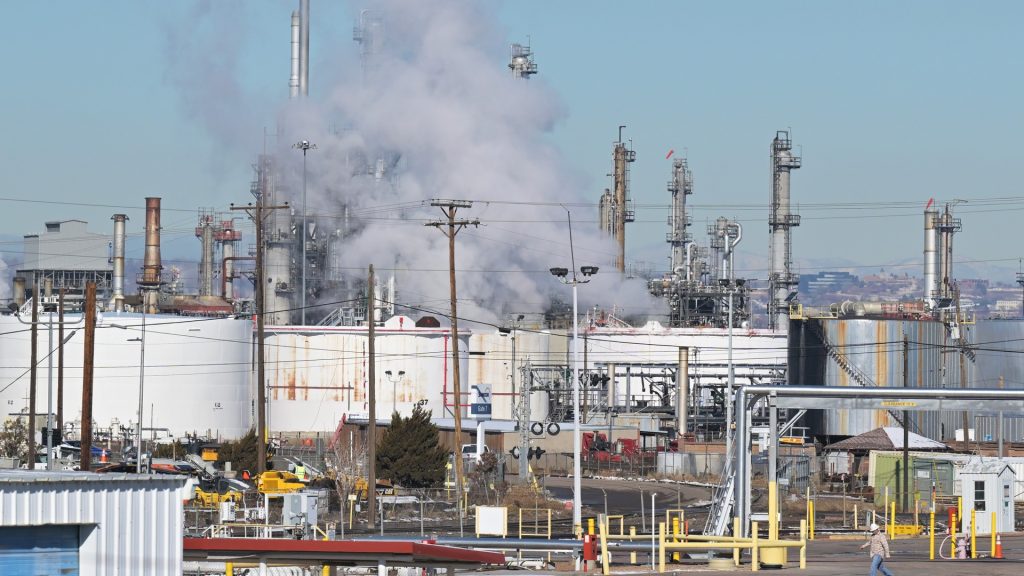
Forest fires tore through the West. Colorado roads cracked from extreme heat and drought. Local officials identified the culprits they thought should pay to repair the damage: the giant oil companies Suncor Energy and ExxonMobil.
Boulder County, Colorado, sued the companies, alleging that by “producing, promoting, refining, marketing and selling fossil fuels,” they had altered the climate to a dangerous degree. The companies fought back, and now the question of who should pay the price of climate change is headed to the Supreme Court.
On the first Monday of October, Suncor Energy v. Commissioners of Boulder County will be the first case heard during the court’s 2026-27 term. The court announced its new calendar on Tuesday.
The justices’ decision could shape the future of climate litigation across the nation. Currently, dozens of similar lawsuits claim that Big Oil is at least partly responsible for climate change caused by burning fossil fuels.
“The U.S. Supreme Court must allow our case to continue, not bail out the oil companies before hearing the facts,” Boulder County Commissioner Ashley Stolzmann said in a statement to Straight Arrow. “Boulder County experienced one of its driest winters on record and is facing deepening drought. Every year, our community absorbs the escalating costs of climate harms fueled by decades of corporate deception.”
Neither U.S.-based ExxonMobil nor Canada-based Suncor responded to Straight Arrow’s requests for comment.
The case “raises an important question about the ability to use state tort law to address climate change, or whether doing so may be preempted by the federal government,” Zachary Schemtob, executive editor of SCOTUSblog, told Straight Arrow. “On the other hand, because of procedural issues, the justices may decide that the case should be heard by them — if at all — another day.”
‘False sense of security’
The battle over climate change has been raging for years, perhaps nowhere more than in Colorado, where years of drought have led to devastating wildfires and dwindling water supplies.
Three local governments — Boulder County, San Miguel County and the city of Boulder — sued the oil companies in July 2018 in state court.
“Despite receiving the warning that ‘fossil fuel use should not be encouraged,’ Defendants spent decades producing, promoting, refining, marketing and selling fossil fuels at levels that have caused and contributed to alteration of the climate without disclosing the dangers that continued fossil fuel overuse posed,” the plaintiffs alleged.
The complaint claims that the oil companies protected their business by working to “lull consumers into a false sense of security with regard to the impacts of fossil fuels on climate change, and obstructed the changes needed to prevent or at least minimize the impacts of climate change.”
The communities say that they alone cannot cover the cost of mitigating the harm caused by climate change.
“The costs should be shared by Exxon and the Suncor Defendants,” the complaint said, “because they knowingly caused and contributed to the alteration of the climate by producing, promoting, refining, marketing and selling fossil fuels at levels that have caused and continue to cause climate change, while concealing and/or misrepresenting the dangers associated with fossil fuels’ intended use.”
A federal matter, oil companies say
Since the local governments filed suit eight years ago, they have fought the oil companies over a technicality: whether the case could be tried in a Colorado state court — or if it belongs in federal court.
Where the case goes to trial matters, said Stolzmann, the county commissioner.
“Our state claims raise serious issues that must be decided in state court; accountability and justice matter,” she said.
But ExxonMobil and Suncor say it should be a federal case, governed by the federal Clean Air Act.
The Colorado Supreme Court disagreed, refusing to dismiss the lawsuit or move it to federal court. The oil companies then appealed to the Supreme Court, where the Trump administration has filed briefs supporting their position.
“As our filings make clear, climate policy shouldn’t be set through fragmented state‑court actions, and we look forward to making that case before the court,” an ExxonMobil spokesperson said in February, when the Supreme Court first agreed to hear the case.
Ripple effects
However the Supreme Court rules, the impact of this case will likely be far-reaching.
A decision in favor of the oil companies would not only cause the Colorado case to be dismissed, it could undermine other state lawsuits alleging major oil companies are responsible for climate change.
If the justices rule in favor of the Colorado officials, the case will head back to the state court where it was originally filed for a trial. It would be up to a a jury to determine whether the oil companies are liable — and, potentially, how much they should have to pay.
Round out your reading
- Why Gen Z is staying home on the weekends.
- Autism research is entering a new era. Here’s what scientists are learning.
- The big reason small cities want data centers. Hint: It’s not permanent jobs.
- High school teacher arrested at city meeting after clapping for anti-data center speech.
- Off Script: Everyone’s watching Michigan. Our reporter explains why the race just changed.
Ella Rae Greene, Editor In Chief