How the Iran war set off a week of oil price swings, and what comes next
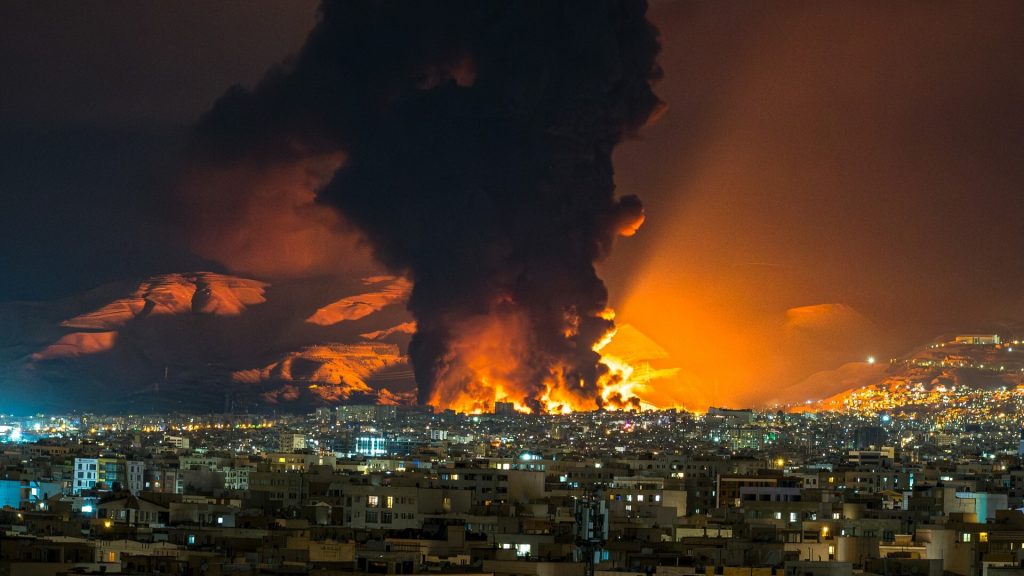
The price of a barrel of oil has been on a roller coaster ride as the war with Iran enters its second week. U.S. officials are looking to bring down prices, but proposed solutions face serious headwinds, according to industry analysts.
Amid the conflict, oil tankers are avoiding the Strait of Hormuz, which typically sees 20% of the world’s daily oil supply. Higher oil prices have translated to price surges at gas pumps, with the average cost of a gallon of gasoline in the U.S. also rising by 50 cents in the past week, according to data from GasBuddy.
The Trump administration has told the American people that spending more to fill up their cars is a temporary price worth paying to neutralize the threat of Iran.
“Yes, we have a temporary period of elevated energy prices. But it will not be long,” Energy Secretary Chris Wright said in an interview with CBS News’ “Face the Nation” on Sunday. “In the worst case, this is weeks. This is not months. And it leads to a much better place.”
On Monday, President Donald Trump told CBS News, “the war is very complete, pretty much.” The market reacted to the comments immediately: The global oil benchmark Brent dropped below $90 per barrel after hitting $119 less than a day earlier.
Trump said the U.S. has destroyed Iran’s navy, weapons and drone stockpiles, which would also hinder Iran’s ability to target vessels in the strait. Last week, Trump announced the U.S. would offer insurance and naval escorts to oil tankers traveling around Iran. Many economic analysts, however, warn that oil prices could climb higher yet again before stabilizing.
The oil supply chain takes another hit
Trump’s comments came after markets reacted to more disruptions of the oil supply chain over the weekend.
“The calculus is worsening by the day, and it’s going to take exponentially longer to fully recover,” Patrick De Haan, head of petroleum analysis at GasBuddy, told Straight Arrow News on Friday.
Iran’s oil depots were among the U.S. and Israeli targets over the weekend when oil prices briefly surged above $119 per barrel.
As the Strait of Hormuz remains impassable, oil storage facilities in other countries in the Middle East are filling up. As a result, Iraq, Qatar and Kuwait have all announced production cuts. Saudi Arabia is reallocating a portion of oil from the Persian Gulf to a pipeline that connects to export terminals on the Red Sea. But Saudi Arabia is also making some production cuts, according to Reuters.
“The sky is the limit,” when it comes to how high oil prices could rise, Neil Atkinson, former head of oil at the International Energy Agency, told CNBC. “We cannot know because we have never been here before.”
Analysts from the investment company Macquarie Capital told The Wall Street Journal that oil could reach $150 per barrel within weeks if tankers do not begin sailing through the Strait of Hormuz. Other estimates, such as a $135-per-barrel projection from Rystad Energy, are more modest.
“In 2008 oil got to $147 a barrel. Don’t, don’t think that it can’t happen again,” Ed Hirs, an energy fellow and economics lecturer at the University of Houston, told SAN.
Will plans to open oil shipping lanes work?
Speaking to CBS News, Wright reiterated that the administration is open to using the U.S. Navy to escort oil tankers through the Strait of Hormuz. He also said talks are ongoing with several companies to arrange passage. However, the specifics of the plan remain unclear.
Matthew Lekstutis, a seasoned supply chain expert and director at the consulting firm Efficio, told SAN on Friday the administration’s plan could “help reduce the view of risk.” But he asked: “Do you want to be the guy driving the first one through?”
Even with a military escort, the danger remains, and Lekstutis said oil shipping companies will be hesitant to risk sinking one of their large crude carriers. Iran has already used drones to hit targets in the region.
“Drones are mobile, they’re fast, they’re hard to defend against,” De Haan said. “The risk is too high of transiting the strait.”
And the price has to be right for an oil company to take on the risk. That means the industry has an incentive to wait and see if prices climb higher or the conflict resolves.
When does the energy crisis trigger broader inflation?
The Trump administration’s plan for naval escorts “could make a difference of bringing that area back online in three weeks versus two months,” Lekstutis said, but added, “the only thing I can be certain about right now is uncertainty.”
The duration of the conflict will determine how deep and widespread the economic fallout becomes.
The uncertainty is already factoring into what logistics companies charge to move goods around the country, Lekstutis said. That’s happening on the spot market, where short-term deals are made in real time, but Lekstutis warned that if supply chain disruption from the war lasts months, long-term contracts across the economy will be affected.
“We’re talking about renegotiating baseline costs for not just logistics, not just for energy, but for underlying manufacturing. And this starts to put pressure on inflation,” Lekstutis said.
Ella Rae Greene, Editor In Chief