
Mark Zandi is one of America’s top economic forecasters. Here’s why he’s worried about a recession
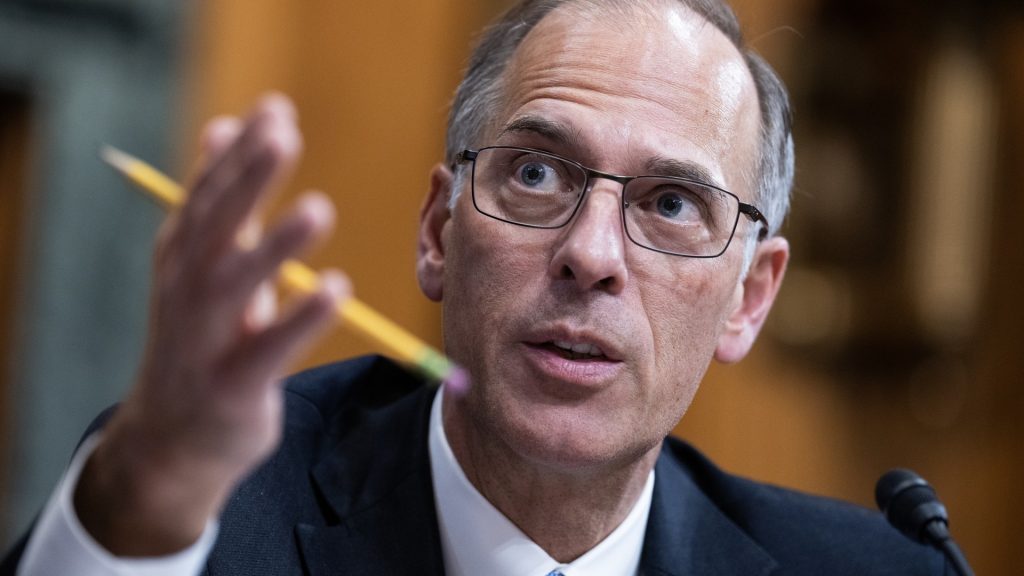
When the U.S. economy gets turbulent, Mark Zandi is the economic forecaster that policymakers, investors and reporters often turn to first.
Zandi is the chief economist at Moody’s Analytics, a financial intelligence and economic research firm, and one of the country’s most closely followed forecasters. He frequently testifies before Congress, briefs policymakers and advises corporate boards.
Now, with the Iran war sending oil prices above $126 a barrel this week and new inflation data showing prices rising at their fastest annual pace in nearly three years, Zandi is sounding the alarm that we could be headed toward a recession.
In a wide-ranging interview this week with Straight Arrow, Zandi laid out in stark terms what Americans might expect in the months ahead: how high the prices of gas and household essentials could climb; how interest rates could hobble families and businesses; how the war might shape the November midterms; and what happens if the best and worst Iran war scenarios play out.
Most concerning, however, is Zandi’s forecast of a possible recession if the war doesn’t wind down in the next few weeks.
That, he said, “would be the dagger in the heart of affordability.”
Our conversation with Zandi has been edited for length and clarity.
Lauren Pearle: Let’s start with oil, which this week topped $126 a barrel, the highest during the Iran war. How high could prices climb at the pump, and what would it mean for the average American?
Mark Zandi: We could be closing in at $5 a gallon at the pump. Since the war started, Americans have shelled out about $25 billion more for gas than they would have spent if prices had remained steady.
New inflation data came out this week: Prices rose 3.5% in a year, the biggest annual increase in almost three years. Walk us through how the Iran war is driving up prices for a range of household essentials, not just gas, and do you predict more price hikes to come?
There’s been a run-up on oil prices and other energy and commodity prices — everything from natural gas to helium, which goes into the manufacturing of chips, to chemicals that go into producing fertilizers. That’s driving up prices for the consumer, as you say, for gas, but also for groceries and anything that is put on a truck. That includes all the Amazon and UPS packages. Airfares are going up. And then it’s going to start affecting the price of all manufactured goods, because they’re very energy-intensive.
I would say under any scenario, even if the war ended tomorrow, inflation is going to continue to move higher.
What is an unexpected or underreported affordability concern you have right now?
The affordability issue is also about interest rates, which are up. The Fed was on track to cut them this year, and now that’s on hold, and we may not see any rate cuts this year.
Fixed mortgage rates have gone from below six to now closer to six and a half. So if you’re looking to buy a home, housing is much less affordable. If you’re thinking about refinancing, that’s much less attractive, which affects your ability to repay higher-cost debt or finance other spending. If you have a credit card loan or home equity line, you’ll pay more. Small business loans cost more.
And then the other thing that hasn’t happened yet, but it could: Investors and businesses expect inflation to rise so they raise prices. That becomes fodder for the Fed to raise interest rates, which could push the economy into a recession. That would be the dagger in the heart of affordability.
What is the likelihood we’ll go into a recession?
I think odds are we’ll get through without a recession. But that requires President [Donald] Trump and the Iranians to come to some terms in the next two to four weeks. If they don’t, odds are quite high that oil prices will jump. And if prices stay around $125 a barrel for two to three months, that would be enough to push us into a recession.
You predicted the Iran war could wind down in the next few weeks, possibly by Memorial Day. If that happens, would Americans see prices come down at the pump and for everyday goods? And if so, when?
I think gas prices will come back in, but not as fast as they went up. There’s an old adage that “prices go up like a rocket and come down like a feather.” But they’re not going back to where they were. We’re not going back to $3 a gallon for the foreseeable future.
There will be a risk premium built into oil prices, because now there’s always the possibility, and even a likelihood, the Iranian regime will close down the Strait [of Hormuz] again. Also, there’s been a lot of damage to the energy infrastructure, and there are other issues like mines in the strait. So it could take years to get oil prices back in.
Prices for other goods may be even less likely to come down. Businesses will be reluctant to cut prices for groceries, airfares and delivered products. They might keep prices flat, but it would be unusual to drop prices unless there’s a recession.
So for the consumer, for a typical American family, they’re going to be paying more, even if this war comes to the best possible resolution in the quickest time.
You’ve estimated that a typical American household has to spend about $1,400 more a year for the same goods and services than it would have before the war. What does that mean for families already living on the edge?
High-income households can digest that; they have savings and assets. Life will go on. But for lower- and some middle-income households, this is a real hardship. Some people have to make tough choices. If they have to put more of their hard-earned money into their gas tank, they’ll have less to spend on everything else.
Politicians often ask voters: Are you better off today than you were at the last election? How do you think most Americans would answer that now, and how do you think they’ll answer it going into the November midterms?
Well, I don’t need to guess what they’re saying. They’re saying they’re having a hard time. The University of Michigan consumer sentiment surveys are at an all-time record low, which makes the case that people are feeling pretty uncomfortable with what’s going on. And I don’t see that getting any better anytime soon, given the prospect of higher oil prices. So that’s not really a forecast, it’s exactly what they’re telling us.
Do you have any predictions for the November midterms and beyond?
History would strongly suggest that even if things were going reasonably well, the party in power will lose full control of the government. Then you throw into the mix what’s going on with affordability, and the fact that it’s top of mind for most Americans, and the war exacerbates that plain as day. If history is any guide at all, then the government will be split between Democrats and the Republicans.
How would you rate this administration on its handling of affordability?
Well, uh, I don’t want to get in trouble. Let’s put it this way: I’m not a fan of policies that have been put in place, particularly with respect to what it means for affordability for the typical American household. Tariffs, attacks on Americans, particularly middle- and lower-income Americans and now the war — they have been a big hit to affordability. So I’m just not a fan.
Let’s switch gears. What keeps you up at night about the Iran war just from an economics perspective? What’s the worst-case scenario that’s still realistic?
I think it’s simply that the current status quo continues on for months, not weeks, because if it does, I think there will be a significant jump in oil prices and a significant selloff in the financial markets. And that would put tremendous pressure on the broader economy.
I also think there’s a feeling right now among investors that the president is focused on the stock market, and if it looks like the market is getting shaky, Trump will reverse policy and declare victory and move on. But if we have a stalemate, at some point investors are gonna say, “Oh, I’m wrong about that assumption,” and we’re going to see a selloff in the equity market.
That would hit high-income households, because it goes right to the heart of their wealth. They are key to consumer spending — they drive the train. So that would be fodder for an economic downturn.
Now the opposite question: What would be the best-case scenario from an economics perspective that’s realistic given where we are today?
Well, I would put it as my most likely scenario: that this ends by Memorial Day. Ends in the sense that the Strait of Hormuz is reopened to traffic, oil tankers move through, production picks up and all prices start to come in.
I suppose the best-case scenario is also that the president is able to accomplish some of his objectives, like addressing the Iranian nuclear situation, or perhaps, some change in the regime. But that’s more from a geopolitical than an economics perspective.
If you were talking to a typical American family around the dinner table, what would you tell them to expect over the next 30 to 90 days?
I’d say buckle up. I’d read Straight Arrow, but I don’t think I’d be watching TV too much. For most Americans, it’s important not to get too wrapped up in the day-to-day, ups and downs and all arounds, certainly not in terms of their savings: how they save, how much they save, how they manage their debt.
At the end of the day, if you take a very long-term perspective — the next 10, 20, 30 years — I wouldn’t bet against the American economy. Given everything that’s been thrown at it, it’s still kicking, and that’s a strong testimonial to its underlying resilience and strength.
Ella Rae Greene, Editor In Chief