Hezbollah’s new drone tactic exposes a new battlefield threat for Israel
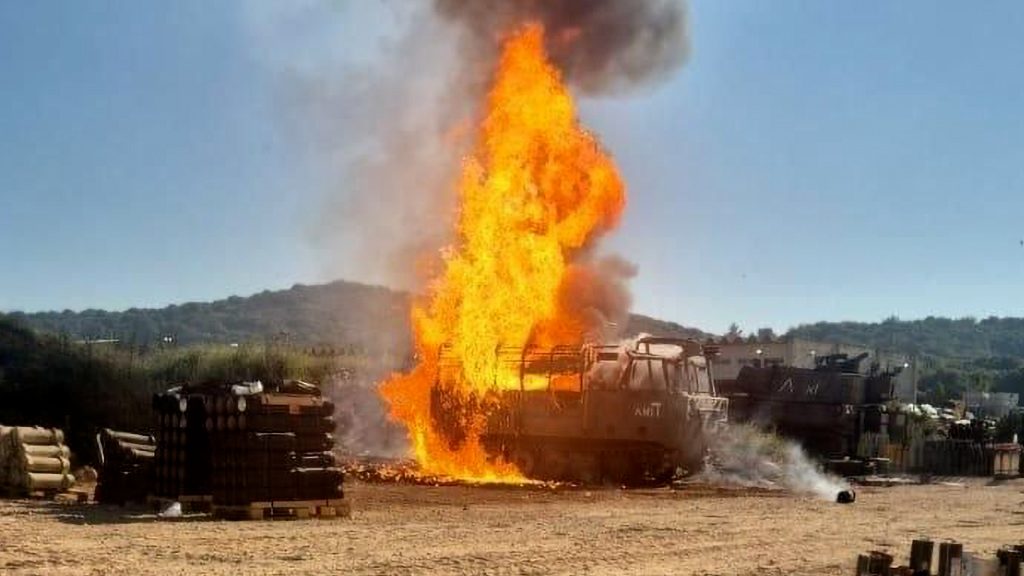
Hezbollah is increasingly using explosive first-person drones, including fiber-optic models that can evade electronic jamming, to strike Israeli troops in southern Lebanon and near the border.
The attacks have killed Israeli soldiers and a civilian contractor in recent days, and Israeli officials and analysts say the threat is forcing the military to improvise defenses while it searches for more effective countermeasures.
Why Hezbollah’s fiber-optic drones are a bigger threat
The fiber-optic versions pose a more serious challenge because they are guided by a physical cable instead of radio or GPS signals, making them far harder to disrupt with electronic warfare. That leaves even a military built around advanced air defenses vulnerable to a cheap weapon that can fly low, move fast and cost only a few hundred dollars.
The tactic also shows how lessons from Ukraine are spreading. The technology became prominent in the Russia-Ukraine war and is now being adapted by Iran-backed groups like Hezbollah.
Analysts say Iran has closely watched battlefield drone innovation, and Israeli officials believe Hezbollah has leaned more on fiber-optic drones because Israel has been more effective against larger rockets, missiles and other drones.
What Israeli officials say about the attacks
Hezbollah has used first-person drones, known as FPVs, more widely in recent weeks and released videos showing strikes on tanks, armored vehicles and excavators. In one recent attack, an Israeli soldier was killed, and five others were wounded. A second drone then filmed the rescue scene before diving toward it.
Israeli and Western officials say Israel is still trying to figure out how to defend against the new tactic. Former Israeli national security adviser Eyal Hulata said the military is improvising with tools such as nets to protect buildings and vehicles.
One Israeli military official said the drones have a range of nine to 12 miles, allowing Hezbollah to launch them from beyond the zone Israeli troops now occupy in southern Lebanon.
Israeli officials believe the weapons are assembled locally. They require little sophisticated manufacturing, relying instead on commercially available drones rigged with explosives and fiber-optic cables.
Why Israel is struggling to counter them
The immediate problem is not only that the drones are hard to jam. Officials and former commanders say the drones fly close to the ground at high speeds. Because of their tiny profile, they are notoriously difficult to spot — and tracking them after detection is nearly impossible.
For years, Israel prioritized building defenses against major threats like ballistic missiles and rockets, leaving it underprepared for the rise of small drone warfare. Ukrainian officials and experts say Israel was warned that the tactic could spread. Ukraine’s former defense minister, Oleksiy Reznikov, said those warnings were not taken into account.
That doesn’t mean Hezbollah has solved every battlefield problem. High winds or crowded airspace can cause the drone cables to tangle. But analysts say the broader trajectory is clear. Cheap drones are rapidly cementing their place as a central weapon in modern warfare.
What Israel is likely to do next
Israeli Prime Minister Benjamin Netanyahu said this week that he had ordered a special project to address the drone threat. Israeli officials and former officials say more technological responses are likely, but they are still being developed.
Soldiers are relying on improvised protections, and officials warn the danger may not stay limited to military positions in Lebanon. If Israel does not find an effective answer, former officials say similar drones could eventually threaten civilian areas inside northern Israel as well.
Round out your reading
- Scientists unearth new evidence on how the Grand Canyon was shaped.
- Why the Army is adding a second fitness test for combat.
- Illegal midwives, growing demand: The fight over home birth in America.
- 40 years after Chernobyl, the U.S. pushes nuclear power once again.
- We’re building a new Straight Arrow. Help us shape our future by taking our survey.
Ella Rae Greene, Editor In Chief