Americans didn’t largely oppose war. Military strikes in Iran changed that
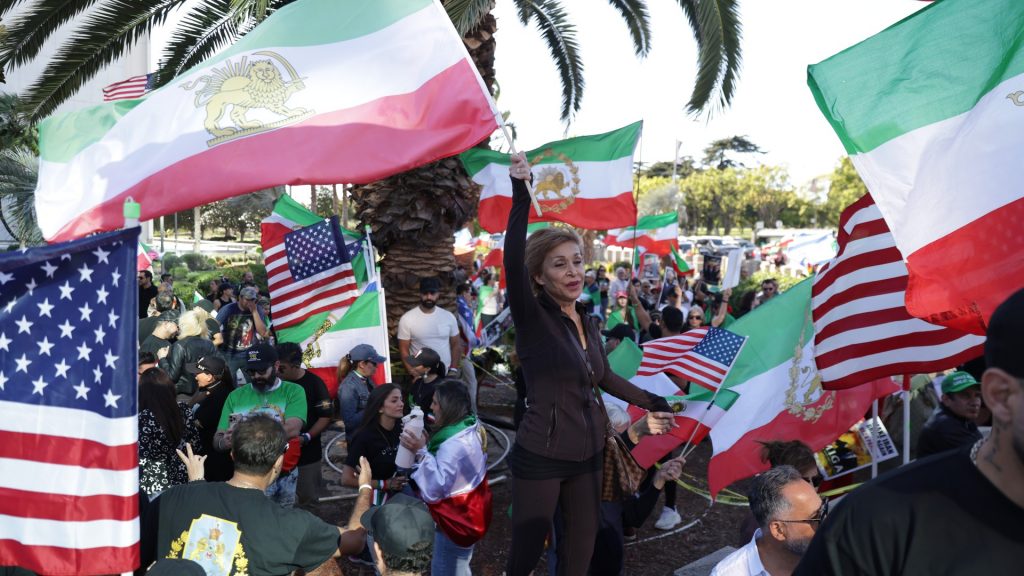
America’s joint military strikes with Israel have largely been met with disapproval from Americans as many see oil prices rise and President Donald Trump’s remarks on American casualties. The opinions are a stark difference from support for other prominent military actions in the past 25 years.
Several polls conducted in the past week revealed between 43% and 59% of Americans disapproved of the military strikes Trump ordered against Iran in what his administration coined as Operation Epic Fury. The results showed a division between Americans and Trump about the optics of the Iran War.
“What will replace the government of Iran, and will we have boots on the ground?” 18-year-old Sriram Shanmugam, a Republican, told The Guardian after the Supreme Leader’s death. “Is there any guarantee that this won’t be our generation’s Afghanistan or Iraq?”
Trump and the White House have said the operation is to keep Iran from developing nuclear weapons and to liberate Iranians from Supreme Leader Ayatollah Ali Khamenei, who was killed in a Feb. 28 strike. Trump has said the country’s new leader won’t last long if Iranians don’t secure the president’s approval.
War in the Mideast
The U.S. and Israel launched joint airstrikes on Iran on Feb. 28, which killed the supreme leader and hit near a girls’ school.
It’s a contrast from Defense Secretary Pete Hegseth’s remarks on the war. He told reporters on March 2 that Operation Epic Fury doesn’t involve democracy-building goals. During that same briefing, he didn’t rule out deploying troops to Iran.
But the sentiment among the public isn’t in favor of further military action as the Trump administration seems to have changed the Iran War’s objective. Some of those condemnations happened after a Feb. 28 U.S.-Israeli strike killed 175 civilians.
“This is not the United States’ war, this war is not being waged on behalf of American national security objectives to make the United States safer or richer,” Tucker Carlson said in a March 3 podcast episode.
“Americans do not want another endless war, and they certainly don’t want to be forced to fight in one,” Rep. Dave Min, D-Calif., wrote on X Monday. “This is not what the American people voted for.”
Polls from Marist/PBS/NPR, CNN, Reuters/Ipsos, The Washington Post, NBC News and Fox News revealed just that — an average 32% of Americans approved of the strikes. At least 1,000 American adults responded to each survey.
A Cato Institute review of American sentiment about wars in the Middle East in June 2025 showed that most don’t want another conflict to start and instead want leaders to reach a compromise.
“Americans are looking for peaceful solutions but are also watching closely, hoping that global leaders can keep the region from sliding into a wider war,” it said.
Unpopular wars amongst Americans
The lack of support from the American public contrasts with historically positive opinions on military action in Iraq, Afghanistan and the Gulf War.
A Pew Research review of Americans’ support of the Iraq War showed that 73% of adults favored using force in the Middle Eastern country, which was conducted four months after the Sept. 11, 2001, terrorist attacks. The research company said in the 2023 review that Americans were still reeling from the attacks and supported using force to oust Saddam Hussein from Iraq, who was later executed.
The George W. Bush administration justified U.S. intervention in Iraq with claims Hussein had weapons of mass destruction. It led to 65% of the public believing in October 2002 that Hussein was close to having nuclear weapons. Additionally, 66% of Americans believed the leader helped terrorists in the attacks, despite the White House giving no proof.
Support dropped sharply in 2007 to 31% as the war continued and Bush sought to send more troops to Iraq.
“If anything, the plan has triggered increased partisan polarization on the debate over what to do in Iraq,” the center said in 2007.
The war in Afghanistan, which became the longest war in U.S. history, initially started with broad public support, with 90% of Americans in a Gallup poll supporting military action in the country. The poll was conducted from September to November 2001.
Left-leaning thinktank Council on Foreign Relations said in a 2021 review that most Americans didn’t think it was a war worth fighting. The war, coined Operation Enduring Freedom, achieved its primary goal of killing Osama bin Laden in 2011, who founded al-Qaeda.
“The United States spent more than $2.3 trillion dollars seeking to remake Afghanistan,” CFR wrote. “That blood and treasure cannot be forgotten or regained. On this anniversary, it’s worth remembering that robust public support at the start of a war does not guarantee public support at its end.”
Public opinion flips on Vietnam War
One war that sharply divided the country was the Vietnam War. A Gallup poll from 1965 showed that 61% of Americans didn’t think it was a mistake for the U.S. to send troops to the country, while 24% said it was, and 15% were unsure.
The New York Times reported in 1971, more than a decade and a half after the war started, that 61% of Americans polled saw the conflict as a mistake for the U.S. The publication interviewed 1,502 people for the poll.
It reached then-President Jimmy Carter, who issued a sweeping pardon in 1977 for anyone who was drafted during the war and evaded selective service, according to Justice Department archives.
“In a way, I thought bringing the constant and continuing altercation about the Vietnam War to a conclusion was important,” Carter told PBS in December 2024. “And although I served 11 years of my life in the military, my father was in the First World War, my oldest son was in Vietnam. I thought that the best thing to do was to pardon them and get the Vietnam War behind us.”
The war started with support from most Americans, but it flipped with the 1968 Tet Offensive military action, which killed about 1,000 American soldiers. The operation caused newscasters to argue against keeping troops in the Asian country and ending the war, according to the Defense POW/MIA Accounting Agency.
Ella Rae Greene, Editor In Chief