Why Punxsutawney Phil’s weather forecast may not be so accurate
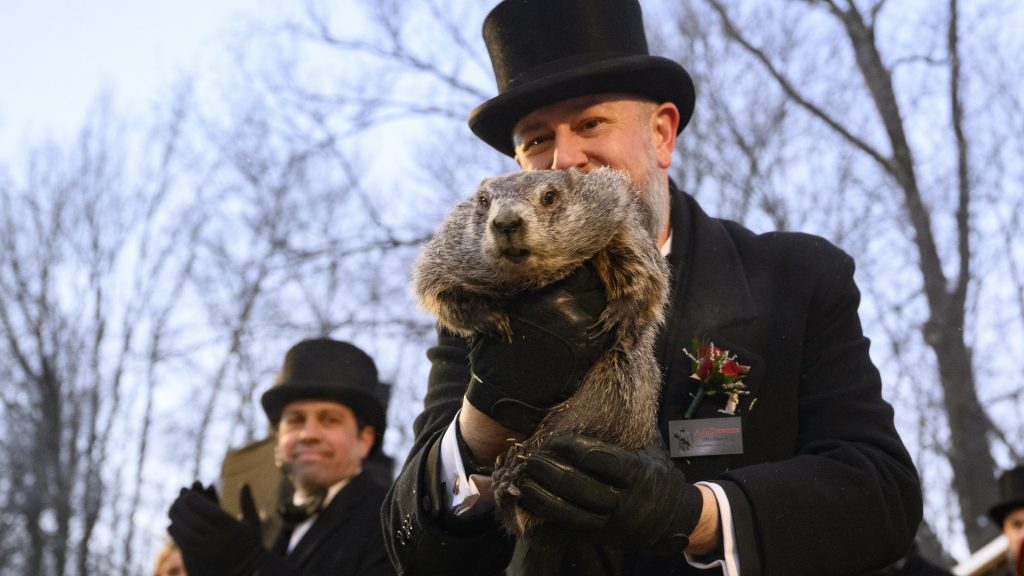
The second day of February is Groundhog Day, a day when Americans find out whether they’re in for another six weeks of winter — or can gear up for an early spring. In the case of 2026 … gear up for six more weeks of winter.
It’s a tradition like no other, but what makes it so special? Why is there so much fanfare surrounding a groundhog and his shadow? Well, it all dates back to 1887 when a groundhog named Phil in Punxsutawney, Pennsylvania, made his first official prediction.
History of Punxsutawney Phil
Ethnic traditions and early Christian influences are a big part of Groundhog Day’s origins. Its exact inspiration varies across cultures, but it’s a tradition that led a small town in Pennsylvania to create an annual event honoring the seasons.
Punxsutawney itself dates to 1723, when the Delaware Indians settled in the area, giving the city an Indian name meaning “the town of the sand flies.”
When Germans moved into the area later in the 1700s, they brought their tradition of Candlemas, a day to bless and distribute candles. The holiday was at the midpoint between the Winter Solstice and the Spring Equinox and was used to determine how much longer winter would last.
Early Christians believed that if it was cloudy on Candlemas, it meant winter was coming to an end. But if there were clear skies, a longer winter was ahead.
So where does the groundhog come in? When the Germans settled in Pennsylvania, they introduced the custom of an animal seeing its shadow, which was a new tradition in Germany. However, they found that a groundhog was more suitable in Pennsylvania than the traditional German badger.
The tradition went on until 1886, when an editor for the Punxsutawney Spirit Newspaper used his editorial clout to proclaim Punxsutawney Phil, the local groundhog, to be the one and only official weather forecasting groundhog.
That news spread, and one year later, for the first time ever, people traveled to Punxsutawney to see Phil make his prediction. Since his first Groundhog Day as the “official” groundhog, generations of Phils have predicted a lot of winter.
Punxsutawney Phil stats
When looking at the stats, it’s easy to feel discouraged if you’re hoping for early spring every year. It seems the odds of Phil calling for warmer weather are not in spring’s favor.
Over the last 139 years of predictions, Phil has only called for early spring 15% of the time, so 21 times. In the last six years alone? He only predicted an early spring once, in 2024.
Now, some Americans see Phil’s predictions as gospel; what he says is what will happen. But the National Oceanic and Atmospheric Administration looked at some of his recent predictions and found in the last 10 years, he was only right about 30% of the time.
The Punxsutawney Phil event
So, does that mean it’s time to forget the groundhog and trust science? No way, this groundhog draws a lot of attention, and we don’t foresee that changing any time soon.
Every year, the city of Punxsutawney sees a massive surge in visitors, with the Groundhog Day event drawing anywhere from 10,000 to 40,000 people. That event alone, according to Time, pumps more than $1 million into the local economy each year.
“The economic impact Pennsylvania’s most unique holiday has on the town of Punxsutawney and surrounding communities is astounding,” Kelly Walker, spokesperson for the Pennsylvania Tourism Bureau, told Time in 2014.
It’s a time-honored tradition that’s likely to continue if fans keep showing up, and profits keep flooding in.
The post Why Punxsutawney Phil’s weather forecast may not be so accurate appeared first on Straight Arrow News.
Ella Rae Greene, Editor In Chief