WNBA to meet this week on eligibility after 2 former NBA players declare for draft
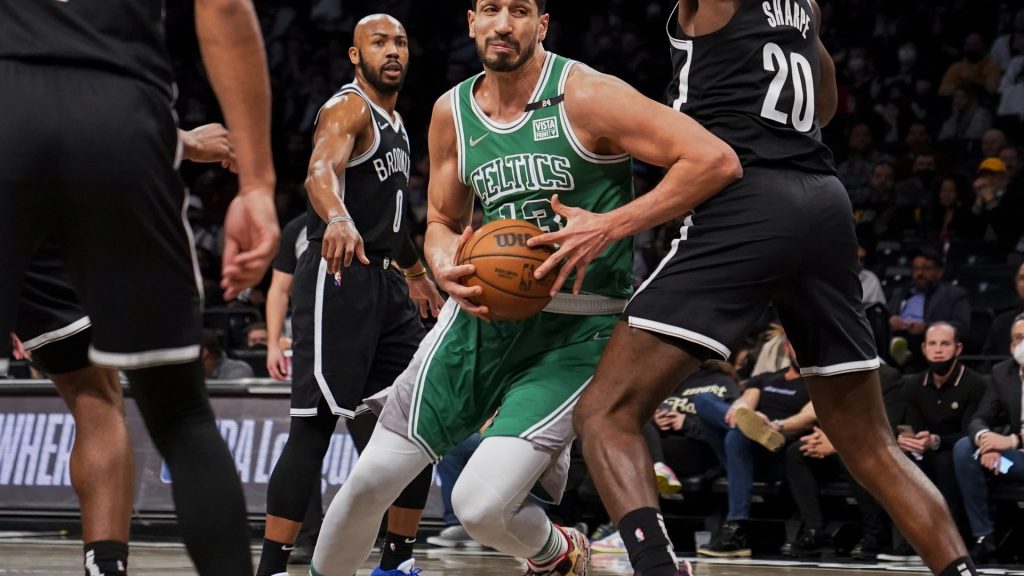
Two former NBA players say they plan to declare for the 2027 WNBA draft, a move that has drawn attention to unresolved questions about how the league defines eligibility and how women’s sports should balance inclusion, competitive fairness and safety.
Enes Kanter Freedom and Royce White, both former NBA players, announced separately on social media that they intend to seek WNBA eligibility. Their statements came amid a broader national debate over transgender athletes in women’s sports and after public comments from WNBA players, coaches and the Women’s National Basketball Players Association about inclusion and the protection of women’s competition.
The declarations do not mean either player is eligible for the draft or that the WNBA has accepted their claims. The league’s collective bargaining agreement says only women are eligible to play in the WNBA, but publicly available summaries of the agreement do not describe a detailed process for evaluating transgender applicants or claims based on gender identity.
WNBA Commissioner Cathy Engelbert addressed transgender policies in a memo sent to teams Friday afternoon and obtained by The Associated Press. Engelbert wrote that the league expects the topic to continue receiving attention and said the league office wanted to share how it is approaching the conversations.
The memo said transgender athlete participation in women’s basketball will be discussed further by a task force of team presidents and general managers at a previously scheduled meeting next week. Engelbert wrote that the WNBA would approach the topic thoughtfully and respectfully and said fair competition remains among the league’s highest priorities.
Straight Arrow has requested an interview with the WNBA and made multiple interview requests to Athlete Ally, a national nonprofit organization that advocates for LGBTQ+ inclusion and equal access in sports. Neither organization has responded to our requests.
Freedom wrote on X that he had reviewed the WNBA’s eligibility guidelines and was “officially declaring” himself a WNBA prospect. He said he was not seeking to mock or disrespect any community but wanted the league’s stated principles applied consistently.
White also said on X that he planned to declare for the 2027 draft, saying he identified as a “sometimes identifying transgender woman.” His statement, like Freedom’s, appeared intended to challenge the league to clarify its eligibility rules.
David Ridpath, a professor of sports business at Ohio University, told Straight Arrow that sports have long used categories based on age, weight, skill and sex. “There’s no right to compete anywhere,” Ridpath said. “You compete by permission, and those permissions are based on eligibility rules.”
Nancy Hogshead, CEO of the Women’s Sports Policy Working Group, told Straight Arrow that the issue should not be framed as a partisan dispute. “This was not about politics,” Hogshead said. “It was not about politics in the sense that it’s just not like a left-right issue the way that it’s made out to be.”
Hogshead said former NBA players declaring for the WNBA draft were “forcing the issue” by asking the league to define how its eligibility rule would be applied.
“Every other rule is strictly enforced, except the female category,” Hogshead said. “So these two men are exposing that gender ideology is flawed when men try to get into women’s sports and spaces.”
Supporters of transgender inclusion have said policies that exclude transgender athletes can be discriminatory and harmful, and that sports leagues should evaluate eligibility through transparent, evidence-based standards. Hogshead said she does not view her position as anti-transgender, but as an argument for sex-based eligibility in women’s sports and spaces.
Ridpath said the WNBA may need to address the issue more directly if former men’s professional players continue to test the language of its rules.
“If you have rules, you have to enforce them,” Ridpath said. “If the rules are unclear, then the league has to decide whether it wants to clarify them.”
Advocates for transgender inclusion have argued that transgender athletes should not be singled out for political debate and that sports organizations should avoid policies that stigmatize people based on gender identity.
According to ESPN, Seattle Storm center Stefanie Dolson and Minnesota Lynx coach Cheryl Reeve are among players supporting transgender athletes.
During a recent press conference, Reeve told reporters, “The narrative that I think is problematic is to suggest that transgender athletes are the biggest problem in women’s sports. This is what’s bothersome. There is a faction of people in our country that are making this a massive issue.”
The WNBPA said in a statement Friday that it supports justice, equity, diversity and inclusion while rejecting “hate, abuse, and demonization” of transgender people.
Critics of broad eligibility policies have said women’s sports exist to preserve fair competition and opportunities for female athletes.
Supporters of more inclusive policies say transgender athletes should have access to sports and that eligibility rules should be based on evidence, not political pressure.
For now, the WNBA has not publicly announced whether Freedom or White would be considered eligible for the 2027 draft. Their declarations have no immediate effect on league rosters, but they have intensified calls for the league to explain how it would apply its rules if a disputed eligibility claim reached the draft process.
Round out your reading
- Why Gen Z is staying home on the weekends.
- Autism research is entering a new era. Here’s what scientists are learning.
- The big reason small cities want data centers. Hint: It’s not permanent jobs.
- High school teacher arrested at city meeting after clapping for anti-data center speech.
- Off Script: Everyone’s watching Michigan. Our reporter explains why the race just changed.
Ella Rae Greene, Editor In Chief