Who investigates federal agents? ICE killings expose legal divide
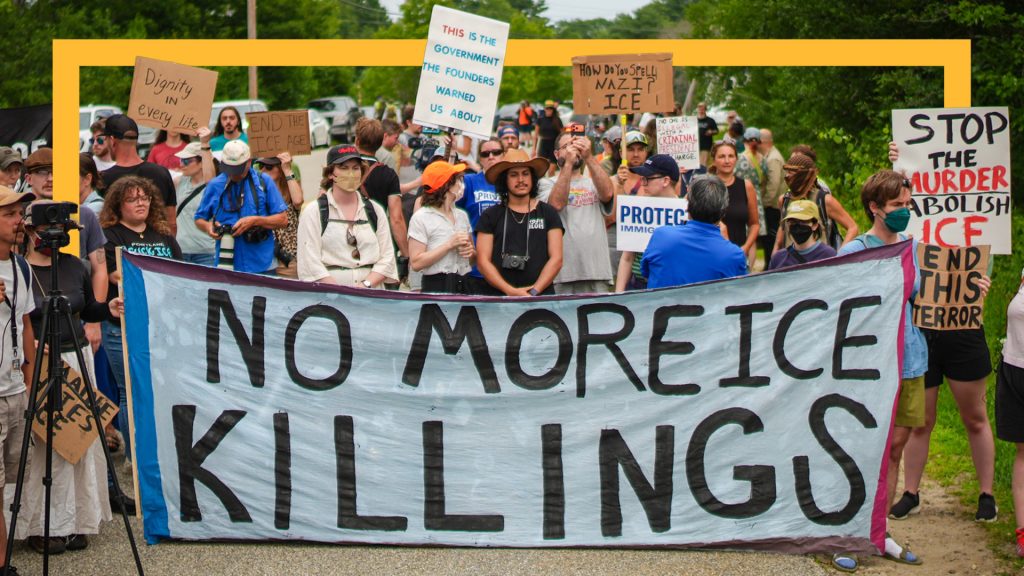
When Immigration and Customs Enforcement agents killed American citizens Renee Good and Alex Pretti in Minneapolis last January, local authorities repeatedly asked federal agencies for evidence. Repeatedly, they were told no.
On Monday, after ICE officers killed two more people — in Texas, Lorenzo Salgado Araujo, a 52-year-old Mexican national who lived in the U.S. for decades, and in Maine, a 26-year-old Colombian, Joan Sebastian Guerrero — federal investigators finally handed over the long-awaited evidence trove for the Good and Pretti cases to Minnesota prosecutors.
The delay and the recent deaths have renewed scrutiny and controversy around a little-understood area of the justice system: which agencies are responsible for investigating deaths caused by federal agents? Whoever controls the evidence has the power to determine how, when and if an agent will be prosecuted.
President Donald Trump’s federal government has stated that state and local prosecutors lack jurisdiction to investigate, since the deaths were committed by on-duty federal officers.
But others, such as Sen. Angus King of Maine, believe it is crucial for federal agencies to work with local agencies on the ground.
“[T]here should be a thorough, open, unvarnished investigation,” King told PBS. “But, importantly… it should involve state and local officials, not just ICE, DHS, and the FBI. To be honest, those institutions just don’t have much credibility right now. And an investigation into this that doesn’t have some independent verification is certainly not going to satisfy my people in Maine that the fairness and justice has been carried out.”
Meanwhile, President Trump made no mention of the killings. Instead, he instructed ICE agents to continue using traffic stops to look for people in the U.S. illegally.
“The men and women of ICE are doing a GREAT job, one that has to be done,” Trump posted on Truth Social on Wednesday. “[W]e must be strong, tough, and smart, and we CANNOT give up one of I.C.E.’s most important and effective Crime Fighting tools, THE TRAFFIC STOP… The Radical Left Dumocrats would like to see this done, but it won’t happen on my watch.”
Since the Trump administration’s immigration enforcement campaign began last year, at least nine people have died during efforts tied to immigration enforcement.
To date, no federal agents or border patrol officers have been charged with the killings. Some are being investigated, though no criminal charges have been brought thus far.
Whose jurisdiction?
After an ICE agent killed Araujo last week, Houston Mayor John Whitmire announced that the city would not be investigating since it is a federal matter, he said.
“This is a time for the federal government to oversee their employees,” Whitmire said. “I’m not going to promise something that I can’t carry out. … This is a federal matter, and we have no access to the evidence. We were not involved. And we do have high expectations for ICE, the FBI and the federal government.”
However, legal experts point to a longstanding Supreme Court precedent, saying that it has long been tradition for local, state and federal agencies to investigate the same scene. The Supreme Court ruled a century ago that an employee of the federal government “does not secure a general immunity from state law while acting in the course of his employment.”
Legally, there is no agency solely responsible for investigating deaths committed by federal officers. Interestingly, federal and state authorities often have overlapping jurisdiction. And unlike with deaths caused by police officers, there is no single mandatory nationwide protocol.
“Both the federal government and the state or county have the power to investigate as a predicate to possible prosecutions,” Robert Weisberg, Edwin E. Huddleson, Jr. professor of law, said in an interview with Stanford Law School. “There are logistical problems when both parties want to examine the same evidence, especially when there are time-sensitive concerns about preserving the evidence. These problems can be overcome by cooperation between the U.S. and the state to coordinate the investigations.”
Overlapping jurisdiction
Oftentimes, several agencies will get involved around the same time. Typically, the FBI leads or assists with a criminal investigation when a federal officer, such as an ICE agent, uses deadly force. This can include securing the scene, interviewing witnesses and collecting evidence.
ICE’s parent agency, the Department of Homeland Security, can also investigate. Whether or not an ICE agent followed policy is typically looked into; this is separate from criminal liability.
The Department of Justice’s Civil Rights Division can get involved, as well. This division can examine if an officer violated an individual’s Constitutional rights.
State or local authorities maintain the authority to investigate violations that happen on their turf. Whether they can successfully prosecute depends on facts — as well as any federal immunity that could be applied — but they are not prohibited from investigating.
However, certain legal experts say it is the federal government’s responsibility.
“When a federal law enforcement officer is acting within the scope of his employment, namely pulling someone over for probable cause, any criminal negligence or homicide attributable to the Agent falls squarely within the jurisdiction of the federal government,” Houston-based attorney Joseph Gutheinz, Jr. told Straight Arrow. “[In] Maine and my own stomping ground of Houston, there may be a role for several federal agencies to get involved.”
Gutheinz, who was formerly a federal agent, said federal agencies may be suspicious of local agencies.
“Of course, local authorities could ask to participate in a federal investigation, but the feds would squash such a request if they sensed a political agenda on the part of the locals,” he continued. “If I were still a federal agent conducting a criminal investigation, I would not want anyone on board with that investigation who had an agenda.”
Other legal experts hold that investigations have recently been handed to the least biased agency.
“[I]n recent years in many states, the investigative power over local police has been handed to the state Attorney General on the theory that that office is more objective than local prosecutors,” Weisberg said. “So, the parallel on the federal side is that the investigation of ICE agents should be done by DOJ on the theory that it is independent and more objective than DHS in investigating its own agents.”
However, there has been heightened criticism around the DOJ acting as a non-independent agency.
“I need not tell you that there is a lot of skepticism out there about whether the DOJ will exercise any independent judgment here, especially after we have people in the White House and the U.S. Attorney General pre-judging these killings as thoroughly justified actions against so-called domestic terrorists,” Weisberg said.
Evidence turned in to local authorities
The recent evidence the federal government handed over to local authorities included the much-desired body camera footage, the car in which Good was killed, as well as officers’ statements.
In March, Hennepin County attorney Mary Moriarty and the state’s attorney general, Keith Ellison, filed a federal lawsuit against the DOJ, DHS, Kristi Noem and Pam Bondi for blocking Minnesota’s requests for evidence regarding the killings that happened during Operation Metro Surge.
“[L]itigation is always on the table. And it works,” Len Kamdang, Director of the Criminal Justice Project at the Lawyers’ Committee for Civil Rights Under Law, told Straight Arrow. “Minnesota sued the administration over evidence withheld in the killings of Renee Good and Alex Pretti. This week, months after the shootings, federal officials finally turned over the hard drives, the body camera footage, and Good’s vehicle. It should not take a lawsuit to get evidence in a federal killing. But right now, it sure seems like it does… Whether the badge is local or federal should not matter.”
The plaintiffs said their federal lawsuit was highly unusual, as typically federal agencies cooperate with local law enforcement and hand over evidence.
President Donald Trump, in justifying the evidence block, called Minnesota officials crooked.
Now that federal officials turned over evidence on Monday, Moriarty said her office will have the opportunity to fully examine if criminal charges for these killings are warranted.
“Federal law enforcement stonewalled local prosecutors for months, withholding information critical to investigating the killings of Renee Good and Alex Pretti,” Kamdang said. “We’re seeing the exact same Minnesota playbook in Houston with the killing of Lorenzo Salgado Araujo. Harris County officials still don’t even know the names of the agents who were present when the ICE officer fired. And federal law enforcement is keeping custody of all of the key evidence.”
Round out your reading
- With more prison space than prisoners, correctional facilities are shutting down.
- ‘Game changer’: New cancer treatment turns major surgery into an outpatient procedure.
- Viewers overwhelmingly support ‘The View’s’ fight against the FCC. Will that matter?
- Why an ICE shooting in Houston isn’t leading to mass protests.
- Milwaukee detective is the latest officer charged with misusing Flock cameras.
Ella Rae Greene, Editor In Chief