Britain’s next prime minister promises a Labour reset
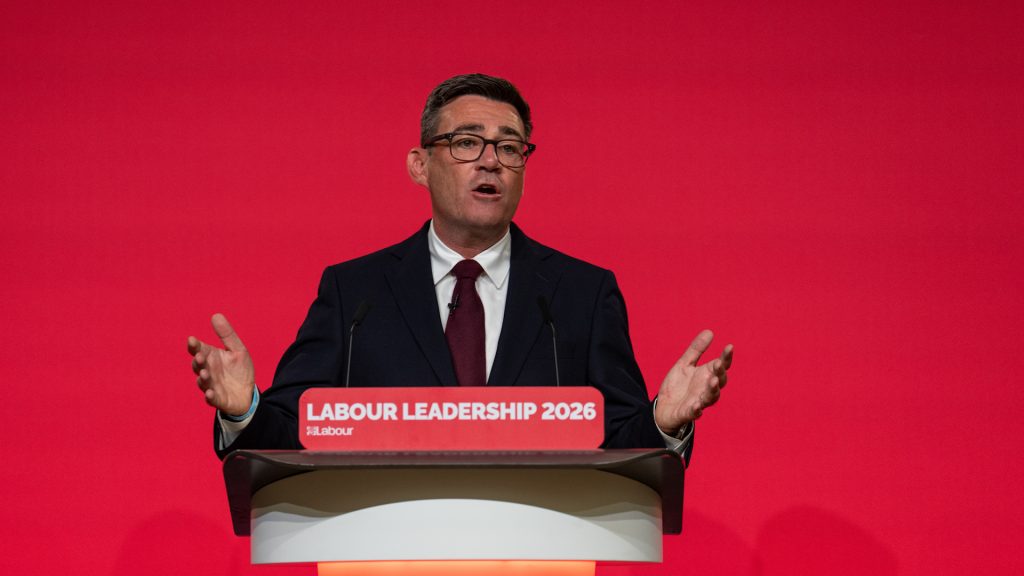
Andy Burnham moved a step closer to becoming Britain’s next prime minister Friday after Labour formally confirmed him as its new leader.
The former Greater Manchester mayor is expected to replace Keir Starmer next week, when King Charles III asks him to form a government.
In his first speech as Labour leader, Burnham promised to restore hope, reduce party infighting and move more power out of Westminster and Whitehall.
“We’re going to give them hope back,” Burnham told Labour lawmakers, activists and trade union leaders.
What Burnham promised
Burnham framed his leadership as a reset for Labour and for Britain’s political system.
He said he would build “one Labour team,” move beyond factional battles and end what he called the party’s “insidious briefing culture.” He also called for less combative politics focused more on problem-solving than point-scoring.

His biggest policy theme was local power.
“We will take power back from Westminster and Whitehall, and give it to the place where you live,” Burnham said.
He said local areas should have more control over essentials such as housing, water, energy and transport, along with more power to improve high streets. He also pledged to support reindustrialization and create stronger pathways into technical education, apprenticeships and work.
A distinct Labour turn
Burnham said his government would take a “distinctively Labour” direction.
He said Britain took “a series of wrong turns in the 1980s,” arguing that decisions made during that period pulled power away from communities and put essential services further outside public control. He said that left communities with less control over essentials, including housing, water, energy and transport.
Burnham has long argued that the national government has overlooked communities outside London. He also said he would be a leader for “the North, the South, the East and the West,” as well as Scotland, Wales and Northern Ireland.
The problems he inherits
Burnham takes over a government facing slow economic growth, high debt, pressure on the National Health Service and deep political divisions.
Starmer led Labour to a landslide election victory two years ago, but his standing fell after missteps, judgment errors and poor local election results. Labour has also trailed Nigel Farage’s Reform UK in opinion polls.

Burnham must now work to bolster his party’s waning popularity before the 2029 election. Politico’s Poll of Polls has Labour tied with the Conservatives at 19% but trailing Nigel Farage’s Reform Party and its 24% popularity.
Britain’s decade of political turnover
Burnham would also inherit a country used to rapid leadership change. Britain has gone through six prime ministers since 2016: David Cameron, Theresa May, Boris Johnson, Liz Truss, Rishi Sunak and Keir Starmer.
The turnover has been driven by Brexit, party rebellions, ethics scandals, economic turmoil and falling public confidence. Starmer had promised stability after Labour’s 2024 landslide, but he lasted barely two years before stepping down under pressure from his own party.
Round out your reading
- With more prison space than prisoners, correctional facilities are shutting down.
- ‘Game changer’: New cancer treatment turns major surgery into an outpatient procedure.
- Viewers overwhelmingly support ‘The View’s’ fight against the FCC. Will that matter?
- Why an ICE shooting in Houston isn’t leading to mass protests.
- Milwaukee detective is the latest officer charged with misusing Flock cameras.
Ella Rae Greene, Editor In Chief