Who gets to tell the story? White House, Smithsonian disagree over US history
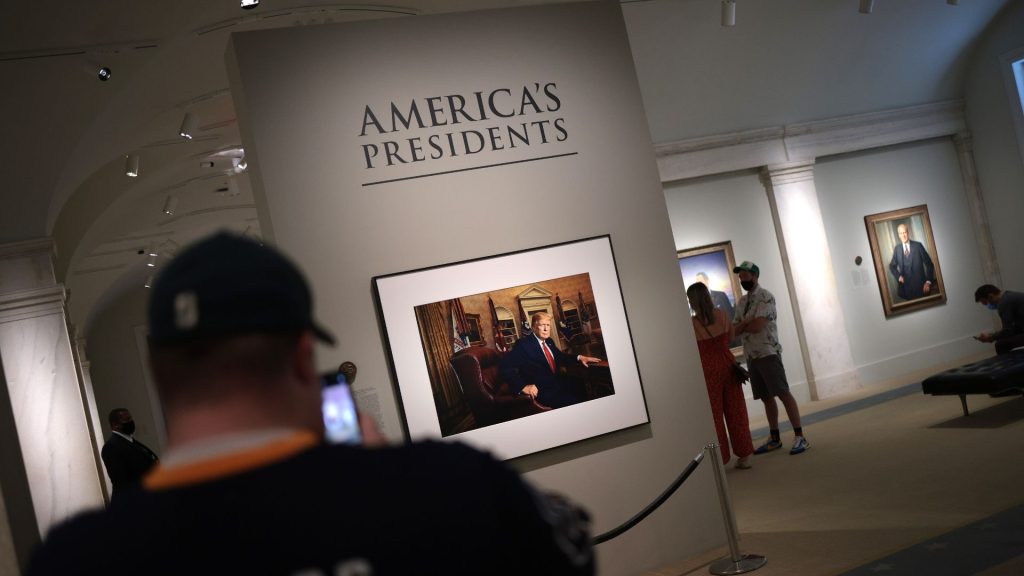
As the smoke clears from America’s 250th anniversary celebration, the Smithsonian’s National Museum of American History finds itself in a fight with the White House after the administration posted a report accusing the Smithsonian of abandoning history for what it calls “extreme political activism.”
The White House released the report, called Saving America’s Story, over the Fourth of July weekend. In it, the Trump administration alleges that the Smithsonian’s leadership has knowingly adopted an ideological framework that treats America’s history as a political instrument intended to divide people. The report also accused the national museum of anti-white bias.
Officials produced the report to comply with an executive order from President Donald Trump, who in 2025 directed a sweeping review of how federal museums, parks and monuments portray American history.
The report reignites a debate that has engaged historians for decades: Who gets to decide what story a national museum tells, and whose experience counts as central to it? Should historians frame the founders who wrote the nation’s founding documents as the central narrative, or the people who lived and sometimes suffered under the government those documents created?
What does the White House’s report say?
The White House report asserts a “broad pattern” of the Smithsonian targeting “traditional patriotic narratives,” saying those stories are “treated with suspicion, if not outright contempt.”
“The basic symbols and stories that once helped unify Americans are presented not as reasons for gratitude and inspiration, but as objects to be inherently questioned, dismantled, ‘problematized,’ and reinterpreted to achieve ideological ends,” the report says.
Elsewhere, the report points out educational materials on gender identity and what it calls “Anti-White Activism.”
The report cites a “White Supremacy Culture” document that Smithsonian staff studied, alleging that it was part of a “longstanding staff reading group.” The framework discusses traits like objectivity, individualism, a sense of urgency and the “worship of the written word” as characteristics of white supremacy. That document traces back to an essay by anti-racism educator Tema Okun and has circulated in diversity training programs for decades.
The specific document cited in the report was the Museums as a Site for Social Action Toolkit, which is a museum resource published in 2017 by the Incluseum, not the Smithsonian.
It also alleged that the museum created a hiring initiative for numerous groups but not for white people, Christians, men or Americans.
On gender activism, the report mentions specific exhibits and language, including an exhibit targeting younger audiences that described a biological male as a “girl trapped inside a boy’s body” and another stating that “girls can be assigned male at birth.”
Another example the report cited was exhibits that were “accompanied by sexually explicit or sexually suggestive content that many parents would find deeply inappropriate for children.” The report cited an exhibit called “Girlhood (It’s complicated),” which featured a diary of an intersex man. Some museum-goers, the report said, might find some specific elements of the exhibit sexually explicit.
Response to report
The American Historical Association pushed back on the report’s framing. Sarah Weicksel, the association’s executive director, told Straight Arrow the report’s underlying assumption that patriotism requires unified agreement on the past doesn’t hold up against the historical records.
“The founders themselves found common purpose amid multiple divisions and conflicts,” Weicksel said. “They and subsequent generations of Americans embraced a patriotism that was capacious enough to include both praise and criticism, challenging us to more fully embody as a nation those ideals set out in our founding documents.”
She warned that political interference in curatorial decisions “places at risk the integrity and accuracy of historical interpretation” and risks eroding public trust in institutions like the Smithsonian.
Weicksel disputed the report’s claim that the National Museum of American History slights the founding generation, pointing to the museum’s collection of relics such as George Washington’s uniform and Thomas Jefferson’s desk.
She also defended specific museum labels in exhibits the report criticizes, arguing they follow standard museum practice.
“Studies of museum visitation have shown that labels should be presented no higher than an 8th grade reading level and that most visitors will read no more than a brief label,” Weicksel told Straight Arrow. “If every label that mentions Washington or Lincoln needs to recount a rote interpretation of their importance to the country, visitors will never learn anything new.”
What happens next?
The Smithsonian, a public-private trust, is run by a Board of Regents and is not an executive branch agency subject to the president.
However, in his March 2025 executive order, Trump directed Vice President JD Vance to work with House Speaker Mike Johnson, R-La., and Senate Majority Leader John Thune, R-S.D., to determine whether it was necessary to install new “citizen” members on the board that oversees the institution. If that happens, those newly handpicked members of the board could have a say in museum exhibits and what is taught.
As the friction between the White House and Smithsonian leadership continues, Secretary Lonnie Bunch, the first Black American to lead the institution, now has to navigate that pressure. He has defended his approach to history as one that reckons with “a more perfect union, not the perfect one.”
“I think what I want people to understand is that there is a responsibility to continue to make those aspirations available, accessible, meaningful to a whole range of people,” Bunch said Sunday on NBC. “And that, in essence, America’s greatest strength, it’s not running away from its history, but it’s understanding how that history shaped us and continues to shape us.”
Round out your reading
- Scientists are now eyeing a possible ‘Mega El Niño’.
- Critics mocked Mamdani’s AC request. Republicans made the same ask.
- Social Security was supposed to be a safety net. To young Americans, it’s a broken promise.
- What happens when the water dries up? Much of the American West is close to finding out.
- Political insiders are targeting the two-party system’s grip on America.
Ella Rae Greene, Editor In Chief