US inflation falls sharply as energy prices retreat, but relief may prove temporary
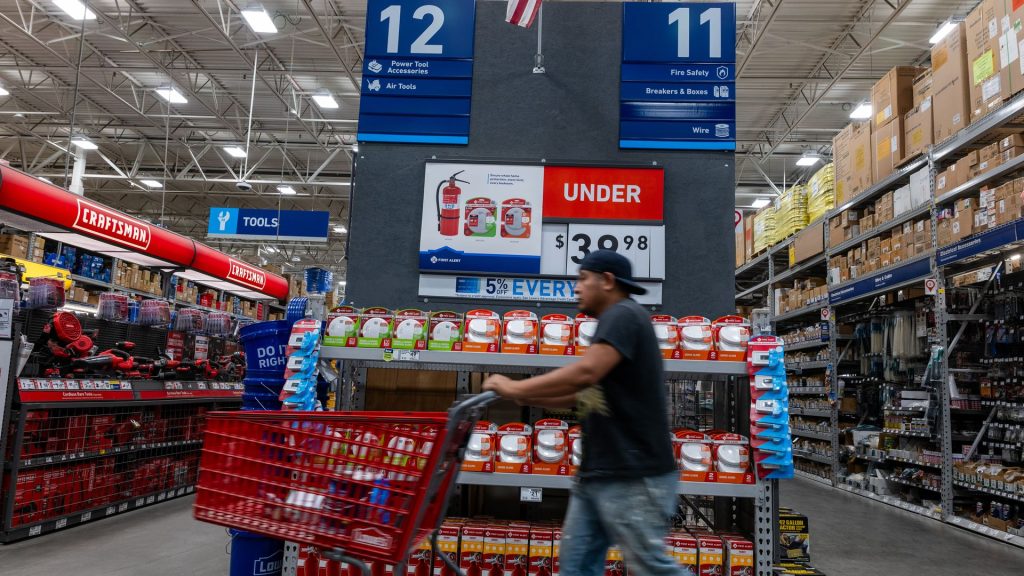
U.S. consumers got some welcome inflation relief in June as gasoline and other energy prices fell during a pause in the war with Iran. But the renewed conflict could make the reprieve from months of price increases short-lived.
Consumer prices rose 3.5% in June from a year earlier, down sharply from an annual rate of 4.2% in May, the Labor Department said Tuesday. Prices fell 0.4% from May to June on a seasonally adjusted basis, the largest monthly decline since April 2020 at the start of the COVID-19 pandemic.
A look at the numbers
The figures were significantly better than economists’ expectations.
The decline was driven overwhelmingly by falling energy costs, offering consumers some relief after months of soaring prices at the pump.
The energy index fell 5.7% in June, its largest monthly decline since April 2020, after increasing 3.9% in May, 3.8% in April and 10.9% in March. Gasoline prices dropped 9.7% in June, while electricity prices fell 1%.
Core consumer prices, which exclude volatile food and energy costs, were unchanged from May but remain elevated on an annual basis.
Food prices rose 0.2% from May to June, and prices for recreation, household furnishings and operations, and personal care also rose in June.
However, the prices of car insurance, communication, clothing, medical care, and used cars and trucks fell over the month.
The Fed’s debate over interest rates
Tuesday’s report is likely to shape the Federal Reserve’s debate over whether interest rates need to remain unchanged or rise further to curb inflation.
Fed Chairman Kevin Warsh told lawmakers Tuesday that the central bank has “no tolerance” for persistently high inflation, but he offered little indication of how the June report might affect the Fed’s next decision.
His testimony came a day after Fed governor Christopher J. Waller said the central bank might soon have to raise interest rates if the June inflation data came in higher than expected.
The Fed has held its benchmark interest rate in a range of 3.5% to 3.75% this year. But last month, in a sharp reversal, nine of the 18 Fed officials who submitted new projections signaled that at least one interest rate increase could be appropriate before the end of 2026. None had projected a hike in March.
Tuesday’s figures could ease pressure on the Fed to raise borrowing costs at its July meeting, though one month of improving data would be unlikely to settle the debate.
Round out your reading
- With more prison space than prisoners, correctional facilities are shutting down.
- ‘Game changer’: New cancer treatment turns major surgery into an outpatient procedure.
- Viewers overwhelmingly support ‘The View’s’ fight against the FCC. Will that matter?
- Why an ICE shooting in Houston isn’t leading to mass protests.
- Milwaukee detective is the latest officer charged with misusing Flock cameras.
Ella Rae Greene, Editor In Chief