Stop giving lettuce to neighbors: diarrhea-causing bacteria spreading paranoia, too
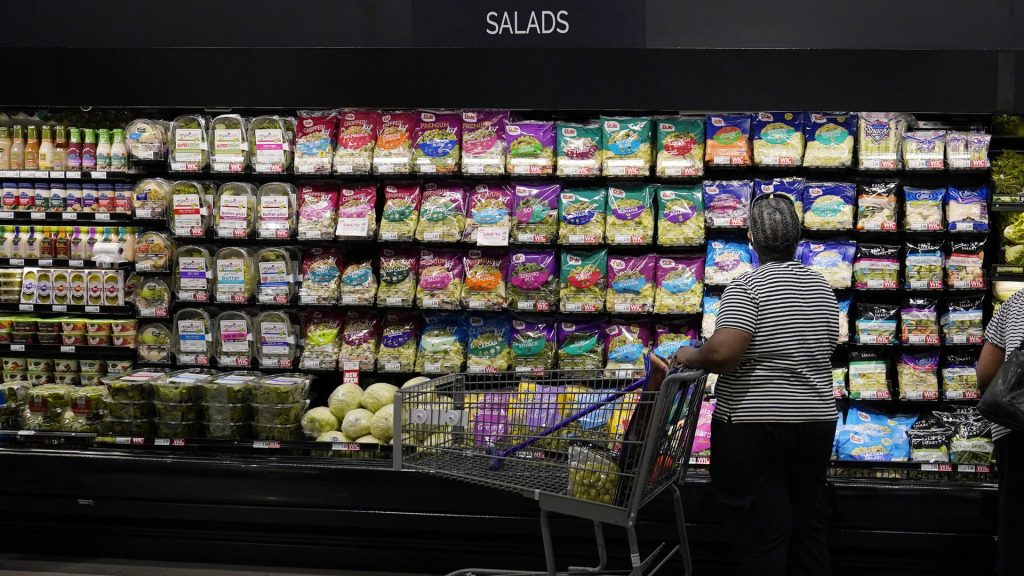
Worried shoppers are trying to give away bagged salads, lettuce and other produce on Facebook, fearing it could be contaminated with cyclosporiasis. Health officials in Michigan — the epicenter of the outbreak — are trying to quell worries with a possible source to the illness.
Several months ago, cyclosporiasis wasn’t in anyone’s vocabulary. It’s now a daily talker as cases rise across the nation and people grow fearful of a parasite characterized by “explosive diarrhea” and fatigue.
It has ignited panic.
“Argh. Cyclospora positive. The symptoms are brutal, and I’ve lost 6 pounds in four days,” an X user wrote on Sunday. “DON’T EAT RAW VEGETABLES OR GREENS FROM GROCERY STORES OR RESTAURANTS!”
“DO NOT EAT THE LETTUCE AT TACO BELL,” Samantha Fancher wrote on Facebook. “I REPEAT DO NOT EAT THE LETTECE AT TACO BELL!!!!!”
And one person has offered a leftover bag of Dole Sesame Asian salad kit for free on Facebook Marketplace.
Dr. Natasha Bagdasarian, chief medical executive at the Michigan Department of Health and Human Services, told Straight Arrow on Monday that the state has narrowed the outbreaks to produce.
About 843 cases of cyclosporiasis have been reported to the Centers for Disease Control and Prevention (CDC), as of July 9. The U.S. Department of Health and Human Services said in a Monday X post that cyclospora, the bacteria that causes cyclosporiasis, “naturally rises every year between May and August” and that federal food and health agencies are investigating the outbreak.
The bacterial infection can cause people to fall ill with diarrhea, nausea and fatigue. Bagdasarian encouraged anyone who suspects they may have cyclosporiasis to request a stool test specifically for the bacteria, as it won’t be picked up in standard tests. The good news, she said, is it’s extremely treatable.
“This is something that responds really well to an antibiotic and people usually start feeling better within a day or two,” she said.
In Michigan, cases nearly doubled to 2,640 as of Monday. The state is considered an epicenter. Bagdasarian said the bacteria can incubate in a person for up to two weeks, causing a significant delay in pinpointing the source of the infection.
But Michigan health officials on Monday narrowed it down to two main offenders: Lettuce and salad greens. It doesn’t eliminate all other suspected produce like cilantro, basil, raspberries, snow peas and green onions, but Bagdasarian said people’s safest bet is to fully cook produce before eating it since the bacteria cannot be washed off.

Cook, not avoid, produce
Bagdasarian said that cyclospora is transmitted to humans through feces. The most common way for people to eat contaminated food is through produce grown in the ground.
That begins with fieldworkers having access to restrooms with running water and proper sanitation, adequate ground and wastewater treatments, and processing facilities that follow food-safe standards, Bagdasarian.
The infectious disease specialist added that bagged lettuce and salads became major culprits because they could be washed with contaminated water, allowing the smallest cyclospora molecules to spread. She said to tear off the outer layers of leafy greens or lettuce first, then cook them. For other produce, Bagdasarian recommended peeling skin if possible.
Panic associated with the parasitic infection has caused people to rethink what items they buy at the grocery store, paying special attention to avoid foods the health department recommends. Still, store managers across several Metro Detroit produce stores that Straight Arrow called said they haven’t seen more produce spoilage than usual, nor have they seen more returns than normal.
It may or may not be helpful to panic over what to eat. Bagdasarian noted that produce naturally has a short shelf life, so health officials may face difficulty asking the public about where their produce came from and where they ate produce.
But Michigan does have a few questions in mind.
“We’re asking very, very specific questions,” Bagdasaroan said. “Not just where did you eat? What did you eat? We’re talking about what menu items. Uh, did you ask for that menu item to be modified in any way? Where do you go to the grocery store? We’re pulling grocery receipts and shopper cards so we can see exactly the type of produce that they bought.”
She still said that pinpointing an exact restaurant, supplier, grower, processor or grocery store is difficult without help from the CDC and the Food and Drug Administration.
Public health cuts directly affect the outbreak
Despite the climbing infections, the FDA hasn’t issued recalls for bagged and prepared produce linked to cyclosporiasis. The agency has open recalls for certain produce linked to possible salmonella and E. coli contamination.
“We currently have measles outbreaks in different parts of the country. We are seeing a resurgence of vaccine-preventable diseases like mumps and pertussis,” Bagdasarian said.
Her focus is on the lack of funding. Because of it, she said staff at Michigan’s health department are being pulled away from other public health issues to focus on the cyclosporiasis outbreak.
“There have been a lot of public health cuts in 2025 and 2026, and I think we are now seeing some of the impacts of those cuts,” Bagdasarian said.
Round out your reading
- With more prison space than prisoners, correctional facilities are shutting down.
- ‘Game changer’: New cancer treatment turns major surgery into an outpatient procedure.
- Viewers overwhelmingly support ‘The View’s’ fight against the FCC. Will that matter?
- Why an ICE shooting in Houston isn’t leading to mass protests.
- Milwaukee detective is the latest officer charged with misusing Flock cameras.
Ella Rae Greene, Editor In Chief