Trump says Iran ceasefire is ‘OVER.’ Did it ever really start?
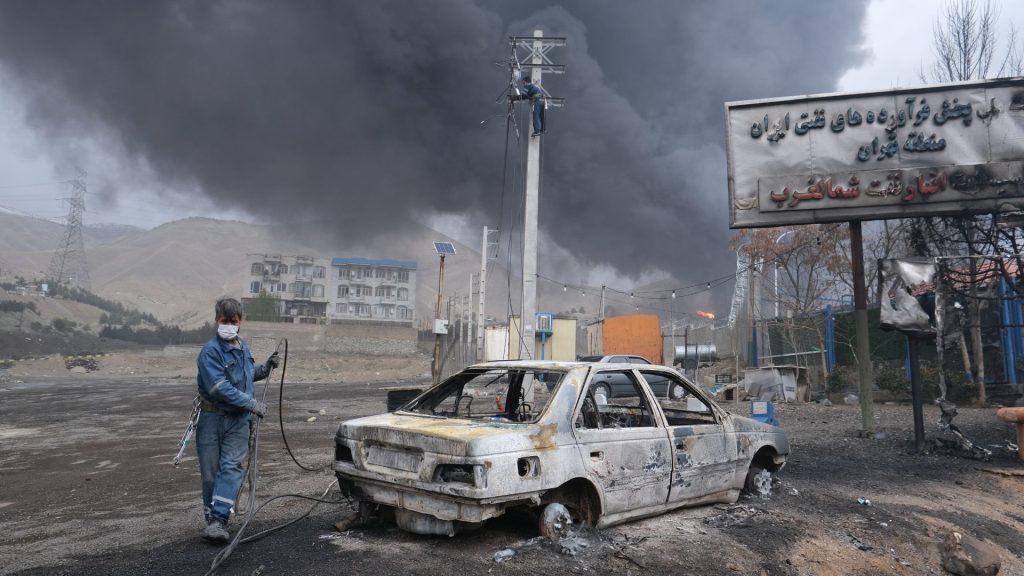
After several rounds of U.S. military strikes, President Donald Trump proclaimed that the ceasefire agreement between the U.S. and Iran was “OVER!” in a post on Truth Social Friday morning.
In the same post, however, Trump said the U.S. had agreed to Iran’s request to continue talks to end the war, which began Feb. 28. The ceasefire, nearly a month old, had been tenuous from the start. Both the U.S. and Iran continued to launch attacks, and each blamed the other for breaking the agreement. At times, that agreement seemed to be a ceasefire in name only.
Ceasefire timeline
On June 14, Pakistani Prime Minister Shehbaz Sharif — who served as the mediator in the deal — announced that the U.S. and Iran had agreed to a ceasefire. Days later, both countries signed it.
The deal ended fighting in the region and allowed ships to safely pass through the Strait of Hormuz, which Iran had blocked early in the war. About 20% of the world’s oil supply normally passes through the Strait, and the blockade sent global prices soaring.
The agreement also allowed the countries 60 days to negotiate the remaining sticking points to finalize an end to hostilities.
But peace quickly proved to be elusive. On June 20, Iran said it was again closing the Strait after Israel continued strikes against the militant group Hezbollah in Lebanon. Iranian officials insisted Lebanon was part of the ceasefire agreement and that the strikes violated it — a claim disputed by the Americans.
Trump was upset over the strikes but told Axios on June 19 that he could get Israeli Prime Minister Benjamin Netanyahu to pull back. “They have a lot of respect for me,” he said, “and they do as I say.”
Nevertheless, Israel has continued to strike Lebanon, most recently on Thursday, according to Al Jazeera.
Tensions escalated in the Strait after the U.S. said Iran launched a drone attack on a commercial ship off the coast of Oman on June 25. The next day, June 26, the U.S. struck Iran in response to that attack.
Then on June 27, U.S. Central Command said Iran launched another strike on a different shipping vessel near the Strait of Hormuz. The military said it struck Iran in response that same day.
The following day, June 28, Iran fired missiles at two U.S. military sites: Ali Al-Salem Air Base in Kuwait and the Fifth Fleet Naval Base in Bahrain.
On Tuesday, after the U.S. military said Iran hit three commercial ships in the Strait, the U.S. Central Command said it launched “powerful strikes” against more than 80 targets. The U.S. launched additional attacks the next day.
Once again, Iran retaliated to the latest U.S. attack, striking targets in Bahrain, Kuwait and Qatar on Thursday. The attack on Qatar was significant because the country has acted as a mediator between the two countries.
What’s the latest on the negotiations?
Despite the recent attacks, U.S. officials said they were still committed to negotiations. Reuters reported that Qatari officials traveled to Iran on Friday to continue talks.
In his social media post, Trump said that Iran had asked the U.S. to continue negotiations and that the U.S. has accepted but emphasized that the ceasefire is void.
“We have agreed to do so, but the United States has stated to them, in no uncertain terms, that the Cease Fire is OVER!” the president wrote.
Round out your reading
- Scientists are now eyeing a possible ‘Mega El Niño’.
- Critics mocked Mamdani’s AC request. Republicans made the same ask.
- Social Security was supposed to be a safety net. To young Americans, it’s a broken promise.
- What happens when the water dries up? Much of the American West is close to finding out.
- Political insiders are targeting the two-party system’s grip on America.
Ella Rae Greene, Editor In Chief