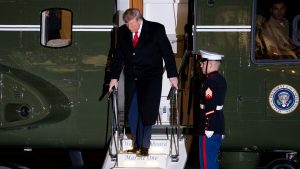
Trump says he’s in ‘no hurry’ on Iran deal; SpaceX files for historic IPO
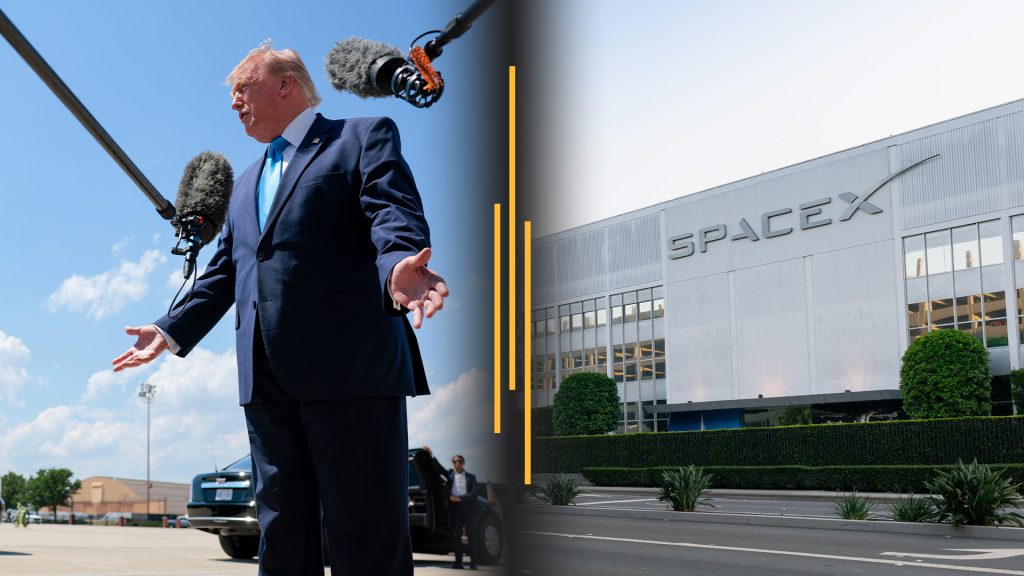
Iran says it’s reviewing the latest U.S. peace proposal as President Donald Trump shifts between patience and pressure.
Plus, a legal fight over the new “anti-weaponization fund” reaches federal court. Two officers who defended the Capitol on Jan. 6, 2021, are trying to block payouts they argue could benefit the wrong people.
And SpaceX is preparing for a Wall Street launch that could rewrite the record books.
These stories and more highlight your Unbiased Updates for Thursday, May 21, 2026.
Trump ‘in no hurry’ for peace deal as Iranian officials review latest US proposal
Iranian officials announced they’re reviewing the latest U.S. peace proposal, while Pakistan’s army chief is expected in Tehran on Thursday as part of a push to keep negotiations on track.
Trump said he’s not rushing to get a deal done.
When asked Wednesday about negotiations, Trump said he is not interested in a narrow agreement that would only reopen the Strait of Hormuz.
“So we’re going to give this one shot. I’m in no hurry,” Trump said. “You know, everyone’s saying, ‘Oh, the midterms. I’m in a hurry.’ I’m in no hurry; I just, ideally, I’d like to see a few people killed, as opposed to a lot. We can do it either way, but I’d like to see a few people killed.”
Hours later, though, Trump struck a tougher tone during a commencement address at the U.S. Coast Guard Academy, saying the military may have to go in and “finish it up” if Iran doesn’t “get smart” and agree to a deal.

At the same time, there are new concerns the ceasefire could unravel, with Washington and Tehran trading fresh threats and Israeli military officials saying they remain on high alert.
Trump dismissed those concerns when asked about Israel’s next steps, saying Prime Minister Benjamin Netanyahu will “do whatever I want him to do.”
Jan. 6 officers sue over Trump’s ‘anti-weaponization fund’
Two police officers who fought to defend the U.S. Capitol on Jan. 6 are now suing the Trump administration. They’re trying to block a nearly $2 billion fund they believe could end up paying rioters.
Former Capitol Police Officer Harry Dunn and Washington, D.C., Police Officer Daniel Hodges filed a federal lawsuit Wednesday to challenge the administration’s new “anti-weaponization fund.” The program was created as part of a settlement between Trump and the government after he agreed to drop his lawsuit against the IRS over the leak of his tax records.
In the lawsuit they wrote, “In the most brazen act of presidential corruption this century, President Donald J. Trump has created a $1.776 billion taxpayer-funded slush fund to finance the insurrectionists and paramilitary groups that commit violence in his name.”
The officers argue the money could reward people who took part in the Capitol attack, including groups that led the breach of the building.
The suit also argues the fund violates the Constitution and points to the Fourteenth Amendment, which states, “Neither the United States nor any state shall assume or pay any debt or obligation incurred in aid of insurrection or rebellion against the United States.”
The Justice Department has defended the program, saying it is open to anyone who believes they were targeted by a weaponized legal system during the Biden presidency, not just Jan. 6 defendants.
Acting Attorney General Todd Blanche also refused this week to rule out the possibility that some Jan. 6 defendants could apply for payments.
Comey lawyers push for trial delay to review government evidence
Former FBI director James Comey is asking a judge to push back his court date by at least 3 months, in the case stemming from his controversial “86 47” social media post.
Comey’s lawyers filed a motion Wednesday seeking to delay his arraignment until October, saying they need more time to review evidence prosecutors have turned over.

Right now, the proceedings are set to begin on July 15.
A grand jury indicted Comey on charges of threatening the president after he posted a photo to Instagram showing seashells on a beach, arranged in the numbers “86 47.”
The number “86” is commonly used as slang for getting rid of something, while Trump is the nation’s 47th president.
Prosecutors and Trump allies argue the post crossed the line.
In Wednesday’s filing, Comey’s attorneys said they expect to file multiple motions seeking to dismiss the indictment on constitutional grounds.
Acting Attorney General Todd Blanche has said the post fell outside of First Amendment free speech protections.
Critics of the case argue the prosecution is part of a broader effort to target political opponents.
Judge orders White House to keep all documents, rejects administration’s view of record law
A federal judge has ordered top White House officials to preserve presidential records, rejecting the Trump administration’s claim that the Presidential Records Act does not apply.
The ruling requires most White House staff and senior advisers to retain text messages and other official communications under the Presidential Records Act.
The order applies to White House Chief of Staff Susie Wiles, White House Deputy Chief of Staff Stephen Miller, the National Security Council and other personnel within the executive office of the president. Trump and Vice President JD Vance are not subject to the directive.
In his ruling, Judge John Bates wrote:
“While the presidency is a singularly important institution, that gravity does not free it from modest constraint.
Congress has validly determined that this act helps to maintain that trust by shining some light on the activities of the president and his aides.”
Bates said the law is likely constitutional and rejected the administration’s position that it could set aside parts of the records law. The White House said it expects to prevail.
SpaceX files to go public in what could be a record‑breaking stock debut
SpaceX took a major step toward what could become the largest stock market debut in U.S. history. The Elon Musk-led company filed paperwork Wednesday to go public, with plans to trade on the NASDAQ under the ticker symbol SPCX.
The filing doesn’t yet specify how much the shares will cost or how much money the company hopes to raise, but the stock could start trading as early as mid-June.
SpaceX is already a major player. The company is valued at about $1.25 trillion following its combination with Musk’s AI company, xAI.

The filing also offers a look under the hood. SpaceX reported nearly $18.7 billion in revenue last year but still ended 2025 with a $4.9 billion loss. The company also reported another $4.3 billion shortfall in just the first three months of this year.
Musk will retain majority voting control, while the company says its biggest growth opportunities are closely tied to artificial intelligence.
Tyrannosaurus rex traded arms for power: Study
The tiny arms of Tyrannosaurus rex may have developed for a specific purpose. A new study now suggests that the small arms weren’t a random trait. As the big predator adapted to pursue larger prey, its body made certain compromises.
Scientists suggest that as the meat-eating T. rex evolved a larger skull, stronger jaws and a more powerful bite, its arms became less significant.

The idea is simple: there’s only so much energy to go around.
“If it needs all of that energy to maintain its equipment for hunting, like a very strong, very heavy skull, it doesn’t really want to; evolution doesn’t want to use it for anything else. So it kind of says, ‘Okay, we’ll take away the arms because the arms aren’t really much use to us anymore, but I’m not using them for hunting.’ Thing we’ll put all that energy into growing a bigger, stronger skull.”
Charlie Roger Scherer, lead study author at University College London
The T. rex lived near the end of the Cretaceous period, around 70 million years ago. Researchers examined the evolutionary history of 82 two-legged dinosaur species — known as theropods — and concluded that, for T. rex, a larger head and a stronger bite may have been worth far more than longer arms.
More from Straight Arrow:

How states and schools are racing to solve the small-town vet shortage
Cattle farmer Jeff Sherfield needs to know his bulls are fertile before selling them. That requires a semen check at a veterinarian’s office.
And this spring, that became a problem.
“The vet I typically use couldn’t see the bulls until the end of May,” he told Straight Arrow in late April.
The closest veterinarian who could fit them in sooner was an hour drive from his Spencer, Indiana farm, requiring gas money and precious time away from his farm.
“I have to haul them 60 miles to get a pretty simple procedure done,” he said. And even then, he had to wait an extra week.
Hundreds of counties nationwide are short on veterinarians, USDA figures show, putting farmers like Sherfield in a tight spot when animals need routine care, and creating desperate circumstances in emergencies.
Ella Rae Greene, Editor In Chief