Trump claimed economic data is ‘rigged.’ Former officials pledge to ‘watch like hawks’ for political manipulation
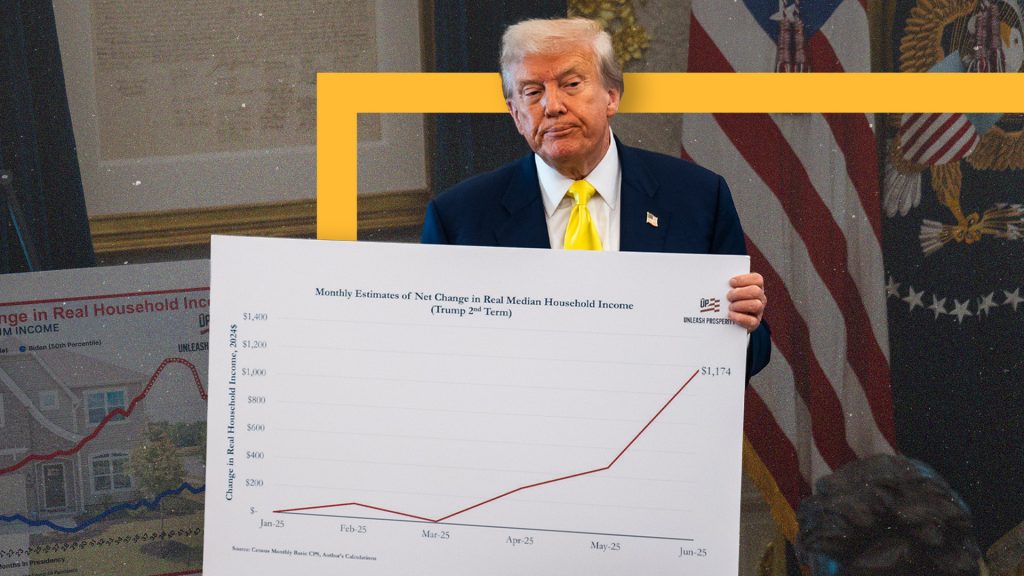
The U.S. economy is in a tenuous state: the annual inflation rate has spiked to 3.8%, U.S. employers added a modest 115,000 jobs in April and average hourly wages remain relatively flat at $37.41.
We know these numbers because the federal Bureau of Labor Statistics, known as the BLS, collects and reports them. Policymakers, businesses, financial institutions, government agencies and everyday Americans rely heavily on the data.
But President Donald Trump has cast doubt on the data, firing former BLS commissioner Erika McEntarfer last August after the release of an unfavorable jobs report. “In my opinion,” he posted on Truth Social at the time, “today’s Jobs Numbers were RIGGED in order to make the Republicans, and ME, look bad.” He cited no evidence that supported his claim.
Trump recently nominated former White House economic adviser Brett Matsumoto to lead the agency.
Now, as the BLS prepares for a leadership shake-up after months of deep budget and staff cuts, former officials and top economists are sounding the alarm about the potential risk of political interference and data manipulation. If federal statistics are compromised, they warn, the economic consequences for all Americans would be severe.
They also have a message: They are watching.
Trustworthy data — for now
President Trump has been blunt about his distrust of federal agencies and the civil servants who staff them as he pushes an aggressive overhaul of the government.
“For years the BLS has failed America’s businesses, policymakers, and families through its notoriously unreliable data, massive revisions and lack of leadership,” Taylor Rogers, a White House spokesperson, told Straight Arrow.
“President Trump has taken action to fix the BLS” by nominating Matsumoto, Rogers said. Matsumoto, she said, “is ready to take on the long history of issues at the Bureau on behalf of the American people.”
But in recent interviews, two former BLS commissioners — Kathy Utgoff, who was appointed by President George W. Bush, and Erica Groshen, who was appointed by President Barack Obama — sharply disputed the White House’s characterization of the agency.
Separately, both told Straight Arrow that BLS data has never been rigged, and it remains trustworthy and reliable, at least for now.
Utgoff and Groshen expressed deep concern about Trump’s ongoing campaign to discredit the 142-year-old institution. They worry his administration could politicize the BLS and other statistical agencies, manipulate data and undermine public trust in vital information.
They are not alone.
“There is a very active group of people who have been in the statistical agencies or are very experienced users who, believe me, we are watching the data like a hawk,” Groshen said.

She said the group is in contact with staffers still inside the BLS.
“We know what to look for,” she said, “and what would suggest that there was any kind of monkeying with the data.”
At this point, “we have seen no evidence of that.”
John Sabelhaus, a former assistant director of the Federal Reserve Board’s division of research and statistics, confirmed Groshen’s account.
“I wish I had the eyes of a hawk,” he told Straight Arrow, “but yes, I am one of the people, like Dr. Groshen, who is watching.”
Mark Zandi, the chief economist at Moody’s Analytics and one of the country’s most closely followed economic forecasters, also weighed in.
“I don’t think there has been any manipulation of the government data to date,” he told Straight Arrow, “and there are many watchful eyes to help ensure that continues, including my own.”
Sabelhaus said his concerns extend beyond the BLS. He also speaks to staffers at the Federal Reserve Board, which produces key economic statistics, as well as at the statistics division of the Internal Revenue Service.
These are people, he said, who “would not allow data to be modified for some political end.”
No guarantees about future manipulation
Experts said any effort to rig federal economic data would be difficult to conceal because of the integrity of agency staffers and the guardrails built into the system.
“The BLS staff would revolt” if there was data tampering, Utgoff said. Groshen added that the public would see mass resignations.
The employees of federal statistical agencies are trained to be nonpartisan and fact-driven, Groshen said, even if it means writing “rather boring” statistical releases that report the data without interpreting it. Utgoff said she coined a phrase the BLS still uses: “The glass is not half full or half empty. It’s an 8-ounce glass with 4 ounces of water.”
Unlike some federal agencies, the BLS has only one political appointee, the commissioner, and that person does not take part in collecting and processing data. Career statisticians perform those functions, using preset methods.
Experts said current BLS processes are finely tuned, highly automated and difficult to disrupt without raising widely visible red flags.
Nancy Potok, a former chief statistician of the United States at the Office of Management and Budget, told Straight Arrow that “existing protections have been effective in assuring that statistical data being released is produced with transparent, sound statistical methodology, and the data have not been tampered with.”
But, she added, “that doesn’t assure that politicization won’t occur in the future.”
Groshen said the agency could become dangerously politicized if Trump removed civil service protections for staffers. Trump has already stripped those protections for 50,000 federal workers, and Project 2025, the blueprint for a conservative administration, called for making it easier to fire civil service workers without cause.
Another major concern, Sabelhaus said, is that certain data will just disappear because it’s inconvenient for the administration.
“We don’t know of any plans to eradicate primary data sources, but this is something I worry about,” he said.
Neither the White House nor the BLS responded to Straight Arrow’s questions about these concerns.
Drastic cuts
Apart from the threat of political interference, experts said that drastic cuts to budgets and staff — which predate Trump’s second inauguration but have accelerated since then — have eroded America’s economic data system.
“Since 2009, the BLS has lost a fifth of its purchasing power, and during the last 16 months, a fifth of its workforce,” said Ron Wasserstein, the executive director of the American Statistical Association, a professional society of statisticians and data scientists that studies federal agencies.
As it shrinks, the BLS is discontinuing some of its data reports or producing them with less granularity, delaying releases because of staff shortages, and cutting needed modernization and innovation projects, the statistical association concluded in a December 2025 report.
Sabelhaus said the cuts prevent the government from answering big, emerging questions, like how artificial intelligence is replacing tasks at work, and not just entire jobs.
“Understanding how people use AI at work is a huge missing piece of information,” Sabelhaus said, and could be captured in BLS surveys, if the agency had enough resources.
Major AI companies, including Anthropic and Microsoft, want to know how their products affect the labor market, he said.
“These companies are saying to me: Tell the government we need better data on this,” he said, because only federal agencies are equipped to gather this information.
‘Trust is mission critical’
Public trust in federal statistics is deteriorating. The percentage of U.S. adults who tend to trust these numbers declined in 2025 from 57% in June to 52% in September, according to the American Statistical Association report.
“If the data are also perceived to be politically influenced, that will affect the credibility of the numbers and lead to all sorts of ripple effects, such as we have seen in other countries like Argentina and Greece,” Potok said.
Groshen was among the authors of a study with the National Bureau of Economic Research, released last month, that measured the rise in uncertainty about economic policy after Trump fired McEntarfer, the former BLS commissioner, and made unsupported claims that agency data were “rigged.”

The authors estimated that preserving trust in the integrity and quality of official statistics generates economic benefits of about $25 for every $1 spent on the agency’s budget.
“Trust is mission critical,” Groshen told Straight Arrow, “otherwise people won’t use our data, and they also won’t provide input data.”
Response rates to BLS surveys, and to surveys more generally, have already plummeted in recent years. Experts attribute the decline to survey fatigue, privacy concerns, a loss of civic responsibility and, increasingly, Americans’ fraying trust in the federal government.
What’s at stake?
Economists generally agree that BLS reports and other federal economic data, while far from perfect, are vital to a wide range of public and private decision-making and cannot be replaced by private-sector data.
If federal statistical agencies are undermined, the economic reverberations would be vast, experts said.
Groshen said one reason the Great Depression lasted so long is that officials had far less timely economic data than they do today. They were slow to grasp how dire the situation had become.
“In the past we had longer and deeper recessions than we have now, partly because we know more about what’s going on,” she said.
“If we go back to flying blind,” Groshen said, “then our decisions will be more often too little, too late, or too much, too soon.”
Round out your reading
- Are aliens real? Pentagon’s newly released UFO files suggest the truth is out there.
- A million Americans get this knee surgery every year. But does it work?
- Is the apocalypse now? One man is tracking flights by the rich to find out.
- ‘No Mow May’: A boon for the bees or a well-intended mistake?
- We’re building a new Straight Arrow. Help us shape our future by taking our survey.
Ella Rae Greene, Editor In Chief