Trump admin moves $2B in health funds to help shut down USAID
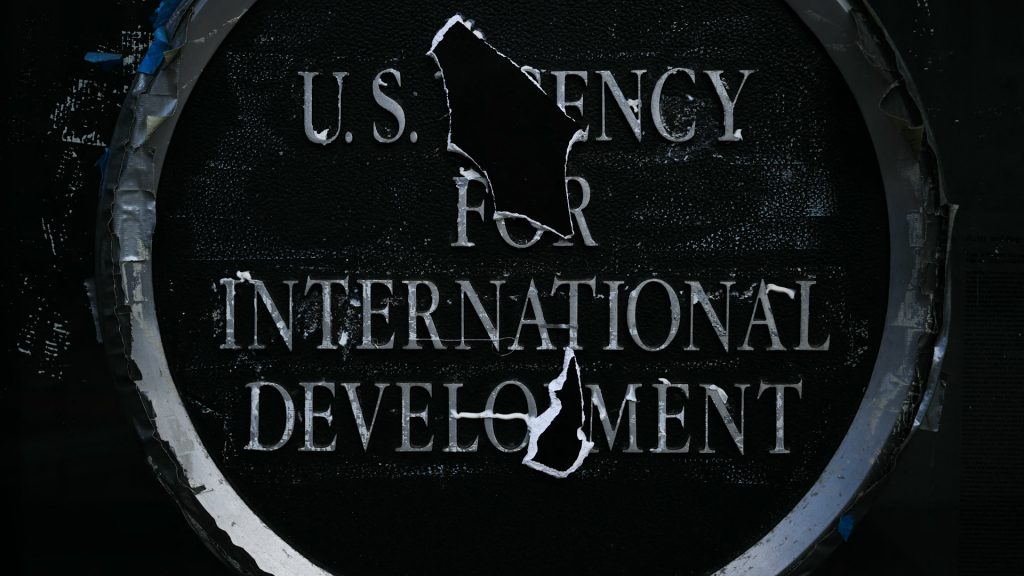
The Trump administration plans to divert $2 billion that Congress provided for global health programs to help pay for the shutdown of the U.S. Agency for International Development, according to CNN. Congress initially approved this money to fight HIV/AIDS, malaria, and tuberculosis, while also funding global health security, nutrition and maternal and child wellness programs.
Critics argue the administration is taking funds Congress explicitly approved for global health initiatives to finance the shutdown of the government’s primary foreign aid agency.
Why the funding shift matters
The $2 billion global health diversion is just a fraction of a massive pool of frozen aid money.
CNN reported that the administration has reserved more than $19.1 billion for USAID closeout costs, including legal fees, outstanding invoices and asset liquidation. The newswire Devex described the process as costly and complex, with funds from terminated foreign assistance awards used to cover the final costs of winding down programs.
Health experts opposed to the plan cited by CNN said that redirecting the $2 billion could result in major losses in care. According to analysts, this reduction threatens to:
- Cause 121,000 avoidable deaths from tuberculosis.
- Result in at least 47,600 preventable deaths from malaria.
- Sever nutritional aid for nearly 23 million young children.
- Eliminate access to safe childbirth for over 5.7 million women.
The ‘pocket rescission’ strategy
CNN also reported that the administration is underspending money already approved for PEPFAR, the U.S. HIV/AIDS program created in 2003, by roughly $1.7 billion. Budget documents show the administration left $976.5 million from FY 2024 untouched, plus another $700 million for the program that hasn’t been transferred to the CDC.
The administration has pointed to relatively steady treatment numbers. CNN reported that senior State Department official Jeremy Lewin said the roughly flat number of people on antiretroviral treatment was “very, very good.”
However, a review of the program’s data by the Foundation for AIDS Research revealed that PEPFAR-backed HIV testing plummeted by 14 million tests in 2025, marking a 17% decline from the prior year.
In a separate analysis for the Health Security Policy Academy, Dr. KJ Seung argued that the $2 billion set-aside could function as a “pocket rescission,” meaning money Congress approved could be held back long enough that it is never effectively spent.
Seung, a public health leader with more than two decades of experience designing global HIV and TB programs, wrote that the account already had large unobligated balances and that the spending pipeline had been dismantled, making it harder for the funds to reach programs before they expire.
How the fight is widening
Pressure is building in Congress to force the administration’s hand. In an April 24 letter, 17 Senate Democrats urged Secretary of State Marco Rubio, Office of Management and Budget Director Russell Vought and Deputy Director Eric Ueland to reverse the notification and use the money as Congress intended.
The lawmakers described the administration’s intention to use $3.2 billion in expiring FY 2025 money for shutdown expenses as an “illegal impoundment of funds.” They highlighted exactly what is at stake in the $2 billion global health portion, noting that the funds include $330 million for HIV/AIDS, $250 million for malaria, $320 million for maternal and child health and nearly $650 million for global health security.
The senators also accused the administration of using award terminations as a “back door to illegally close USAID.” They pointed out that Congress explicitly rejected the administration’s request for the legal authority to close the agency in the current 2026 budget. The lawmakers set a May 8 deadline for officials to provide a timeline for releasing the funds.
Outside government, health experts are raising similar alarms. Atul Gawande, a former USAID global health official, argued the closure has already caused hundreds of thousands of preventable fatalities linked to malnutrition and infectious diseases.
Separately, a Lancet study projected that if steep aid cuts continue, more than 14 million additional deaths could occur by 2030, including about 4.5 million among children under 5. The study also estimated that USAID funding helped prevent about 91.8 million deaths over the prior two decades, including about 30.4 million child deaths.
Round out your reading
- First, it was the schools. Now they’re coming for your cellphone at work.
- Why one of America’s top economic forecasters is worried about a recession.
- AI companies may not be adhering to their own guidelines — with potentially deadly outcomes.
- Data centers are a thorny issue for Democrats. Maine shows us why.
- We’re building a new Straight Arrow. Help us shape our future by taking our survey.
Ella Rae Greene, Editor In Chief