‘No Mow May’: A boon for the bees or a well-intended mistake?
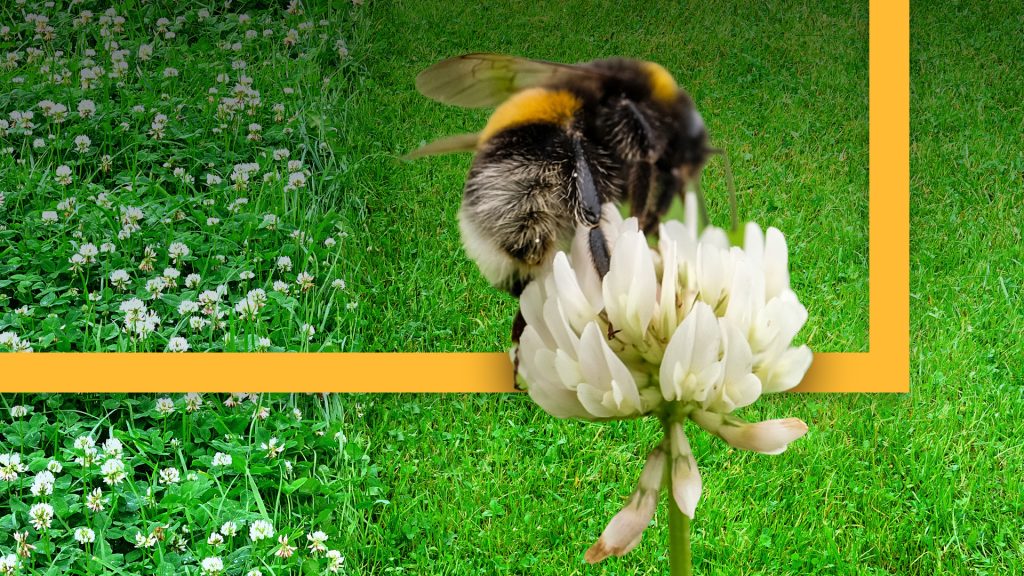
As May unfolds, folks across the country may notice overgrown yards and gardens. Grass shoots taller, wildflowers cover people’s property and things look altogether a bit more wild.
All signs and vines point to No Mow May, an annual movement meant to encourage more food for bees and other pollinators, and lower carbon footprints. The main idea: To skip lawnmowing for the month of May, allowing native flowers to bloom and increasing the number of flowers for bees and other pollinators.
Intentionally skipping mowing in May has taken on a life of its own in recent years, spurring debate over the best ecological solution for pollinators.
“No Mow May is not a one-size-fits-all solution for helping pollinators in the spring,” said Elise Bernstein, a native bee researcher at the University of Minnesota Bee Squad. “It is not a phrase that should be taken literally.”
Skip No Mow May, and take part in Slow Mow Summer
While Bernstein told Straight Arrow that the idea behind No Mow May is valid and should be encouraged, she prefers other ways to maintain lawns and support pollinators.
The University of Minnesota’s bee lab is buzzing with a new alternative this year: Slow Mow Summer.
“Slow Mow Summer is a more science-based approach to supporting urban pollinators,” Bernstein told Straight Arrow.
And it’s rather simple to take part in.
“The main goal of Slow Mow Summer is to mow after lawn flowers bloom,” Bernstein said. “Refraining from spring yard cleanup until trees are blooming can help hibernating pollinators, too. Leaving leaves on the ground until you see lots of blooming trees and active bees makes sure that hibernating pollinators have insulation until they are ready to emerge.”
Simply allowing grass to grow in a yard without naturally blooming flowers won’t provide pollinators with food, she said. Instead, it could damage lawns and increase environmental impacts.
“May is a time of year when grass grows very quickly, and grass goes to seed if it gets too tall,” Bernstein said. “Going from 18 to 24 inches tall down to 3 to 4 inches can be really stressful and potentially kill your lawn.”
And a dead lawn can lead to issues with stormwater runoff, bringing contaminants to nearby bodies of water.
The bee squad is not completely discouraging No Mow May, but it advises against skipping mowing for the entire month.
“If your lawn is full of flowers like dandelions, clovers and creeping charlie, reducing your mowing may be helpful — but stopping mowing altogether may do more harm than good,” Bernstein said.
But homeowners don’t always get the final say in how long to let a lawn grow. Cities often have a say as well.
What are the legalities of No Mow May?
As of May 2026, none of the 50 states have statewide laws banning No Mow May. Rather, the legalities of the annual conservation effort vary from place to place.
In Milwaukee, Wisconsin, residents who wish to take part in No Mow May must register their lawn before the season begins or before someone files a complaint about their lawn’s height.
“If a complaint is received for a property prior to the property being registered, the property will be investigated, and a notice of violation will be issued if weeds and tall grass are found in excess of seven inches in height,” the Milwaukee Public Works website reads.
It notes that all lawns must be mowed by June 1, 2026 or face additional fines.
Other cities in Wisconsin, including Appleton, which helped popularize No Mow May, have effectively banned the movement, adopting Slow Mow Summer.
Things can become even more confusing when it comes to state laws. Some states, like Minnesota, allow “native landscapes,” meaning a resident can’t be punished for having a yard with native plants, including wildflowers, prairie grass and pollinator-friendly landscaping. But under Minnesota law, the landscaping must be intentional. And No Mow May, which is much less intentional native planting and more overgrowth, doesn’t quite fit that bill.
If you’re unclear where your city or state stands with No Mow May, it may behoove your beehive to adopt Slow Mow Summer instead.
Round out your reading
- First, it was the schools. Now they’re coming for your cellphone at work.
- Why one of America’s top economic forecasters is worried about a recession.
- AI companies may not be adhering to their own guidelines — with potentially deadly outcomes.
- Data centers are a thorny issue for Democrats. Maine shows us why.
- We’re building a new Straight Arrow. Help us shape our future by taking our survey.
Ella Rae Greene, Editor In Chief