New York wants cigarette-style labels on AI-generated fake news. Publishers warn it could tarnish real journalism
Two days after state Sen. Patricia Fahy, D-N.Y., introduced a bill to regulate AI-generated news, an article on an obscure website reported a feat of remarkable government efficiency.
“New York Passes Law Regulating AI in News and Entertainment,” read the headline of the article in National Today, an AI-slop content farm led by a San Francisco-based marketing executive and venture capitalist. In just 48 hours, the article claimed, “the law went into effect.”
The story wasn’t true, and the person listed as its author likely wasn’t real.
“I immediately knew this was generative AI,” Fahy told Straight Arrow, “and it wasn’t even a legitimate source.”
Introducing the FAIR News Act
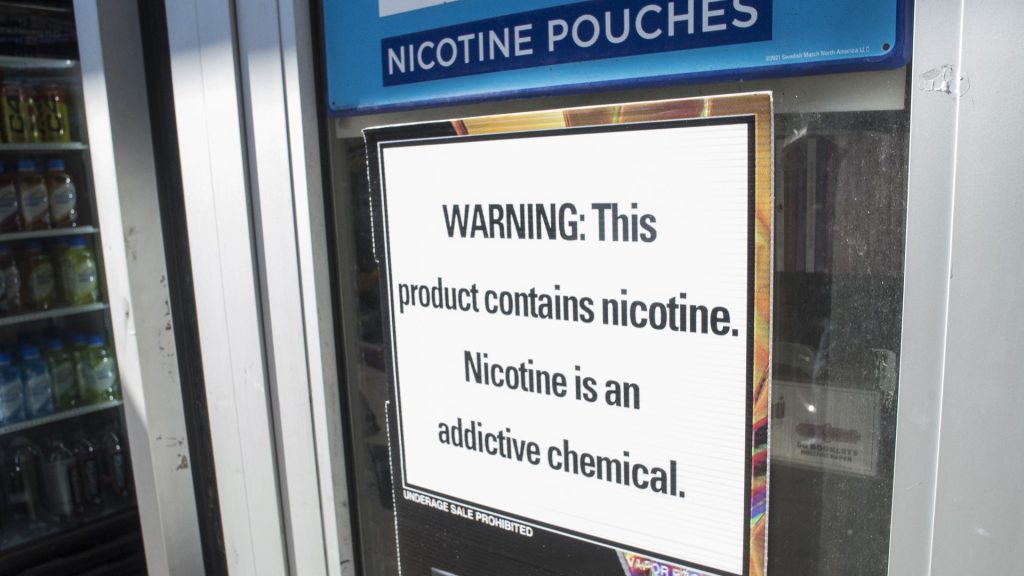
Fahy’s first-in-the-nation legislation, the FAIR News Act, seeks to regulate AI-generated news articles like cigarettes. The legislation would require publishers to disclose when a news article is “substantially composed, authored or otherwise created” with the assistance of artificial intelligence. A failure to disclose could cost web publishers fines of up to $5,000.
The state legislature approved the bill earlier this month, and it now awaits Gov. Kathy Hochul’s signature.
Fahy said the bill aims to protect consumers from misinformation and the news industry from being overrun by machines. As political actors seek to undermine the legitimacy of news, she told Straight Arrow, the public has a right to know when the content they’re reading is AI-generated.
“The future of journalism, in my view, is on the line, and I don’t say that to be hyperbolic,” Fahy said. “That’s how much I believe this is really serious.”

But the bill has created a divide between two groups it directly affects: on one side, publishers and television news companies that want to maintain control over their operations, and on the other, journalists concerned about the threat of automation.
Unions representing journalists interested in preventing the outsourcing of human writers’ work to chatbots were the driving force behind the legislation, according to state lobbying disclosures. Bill proponents say the disclosure notices allow consumers to distinguish AI-generated content from on-the-ground reporting while ensuring media companies are transparent when using AI to produce stories.
However, lobbyists for television news companies and newspaper publishers argue the legislation could have little effect on the spread of AI-generated misinformation — and could run afoul of the First Amendment.
The legislation “essentially grants the government the authority to dictate what a newspaper has to publish,” and could leave readers with the belief that content generated with AI assistance is inherently less trustworthy, said Diane Kennedy, the president of the New York News Publishers Association.
“You can use AI to generate an accurate news story and still have to label it as though it was lacking in credibility,” Kennedy told Straight Arrow. Slapping warning labels on AI-generated information like cigarettes, she said, implies that “using AI to compile a news story is potentially harmful to the reader.”
How common is AI slop?
A small but growing share of people rely on AI-generated content for news, multiple surveys reveal. Mainstream outlets are increasingly integrating AI into their workflows and, in some cases, to write stories.
AI adoption by news outlets could come at the expense of reader trust. More than a third of respondents in a recent Gallup survey said their trust in information would suffer if a news outlet disclosed the article was written with the help of AI. Just 7% said such disclosures would improve their trust.

AI-generated articles like the one about Fahy’s bill have become commonplace on the internet. In fact, the story claiming the FAIR News Act had passed months before lawmakers gave it the stamp of approval was one in a flurry of AI-generated stories on a nationwide network of web portals masquerading as local news websites.
Under the National Today banner were hyperlocal websites, like “Missouri Today” and “New Rochelle Today,” providing AI-generated coverage in at least 37 states and Washington, D.C. Each carried the tagline “By the People, for the People.”
The article, and many like it, recently disappeared from the National Today website after it faced plagiarism accusations. Yet thousands of websites masquerading as local news sources persist. These websites, which publish “AI-enabled misinformation” with little or no human insight, far outnumber daily newspapers in operation nationwide, according to research by NewsGuard. The media literacy company has identified more than 3,700 such sites, which it says flood the web with articles “about top brands, public health, political leaders and celebrities” to generate advertising revenue and, in some cases, spread propaganda.
A cluster of such sites were pulled from the internet last week after they became the subject of a Straight Arrow investigation. Their creator said the websites were part of an unspecified “project” that had been “abandoned a while back.”
In the past few months, National Today has faced multiple plagiarism allegations, including for an article that warns of the potential negative implications of AI use on “users’ intellectual abilities and willingness to persist through difficult problems.” A Straight Arrow analysis of the article’s text using the website GPTZero, which detects AI-generated content, found a high degree of confidence it was created with AI.
“Nobody was harmed” by the National Today article about Fahy’s bill, she said, but “we’re seeing misinformation, we’re seeing fabricated reporting” and a flood of plagiarized stories. Under the proposal, the state attorney general would have the authority to launch investigations, and potentially seek fines, against web publishers over their AI use.

Why publishers are fighting back
The legislation is largely geared toward websites like National Today, Fahy said, but can also apply to traditional media brands, which have increasingly turned to AI to improve efficiency and, in some cases, deepen reporting.
After state lawmakers sent the bill to Hochul’s desk earlier this month, media labor unions, including the The NewsGuild of New York, said the rules would establish critical job protections for journalists by requiring news organizations to “fully disclose to workers when and how AI is used in the workplace,” and establish “clear disclaimers for the public.”
Reached by Straight Arrow for comment, Hochul’s office said “the governor will review” the bill but didn’t say if — or when — she planned to sign it.
Kennedy, of the news publishers association, said the legislation fails to regulate the real threat to local news outlets: Big Tech.
“I don’t think the pink slime websites are that big of a threat,” she said. ChatGPT is a different story. Last week, a lawsuit by a coalition of some 400 local news outlets accused OpenAI and Microsoft of systematically copying articles from their websites to train chatbots and of serving the information to users as their own.
The legislation centers specifically on AI-generated articles and exempts human-written news articles eligible for copyright protections.
But “there’s really no way to tell — reliably — whether or not something is AI-generated,” said Becca Branum, the deputy director of the Free Expression Project at the nonprofit Center for Democracy and Technology. While AI-detection tools like GPTZero can be helpful, researchers have called into question their accuracy. And as generative AI tools improve, it’s becoming increasingly difficult to decipher whether an article, image or song was — or was not — created by a human.
As a result, Branum said, any journalists’ work could become the subject of a state investigation, raising “First Amendment implications for all journalists — not just people who are creating what some people refer to as slop.”
“There’s plenty of AI-assisted or -generated work that’s accurate and plenty of human-written content that’s garbage,” Branum said. “A label isn’t going to be able to tell you which is which.”
And even if it did, the bill raises questions about the government’s role in regulating fake news. It’s the role of journalists and not the government to investigate the truth, Clay Calvert, a nonresident senior fellow at the right-leaning American Enterprise Institute, told Straight Arrow.
“The government probably should not be in the business of being the arbiter of what’s true or false,” Calvert said. “That’s a dangerous proposition,” he said, when “the government plays the role of referee.”
The firm behind AI slop news
Journalist Robert Cox stumbled onto National Today by chance — and he wasn’t happy about what he found.
Since 2008, Cox has published the blog Talk of the Sound, providing news in a suburban area outside of New York City without a daily newspaper. He was surprised, then, to find an article by New Rochelle Today that focused on a murder case only he had covered.
“I’m like ‘I’ve never heard of that and I’ve been covering New Rochelle for 18 years,’” Cox told Straight Arrow. “That’s when I realized what was going on. They had basically cannibalized my article.”

After doing some digging, Cox traced National Today — which he described as a “parasite” — back to Ben Kaplan, a San Francisco-based marketing executive. Kaplan founded National Today in 2017 and is listed as its chairman on his LinkedIn profile. He’s also the founder and chairman of marketing firm TOP Agency and managing partner at investment firm Deep Venture Partners, according to his LinkedIn profile.
Kaplan didn’t respond to LinkedIn messages from Straight Arrow seeking comment.
In April, the same month that Cox discovered that National Today had borrowed from his article without attribution, the tech-news site Futurism accused the outlet of “blatant plagiarism” and of using AI to retool human journalists’ work, “complete with bizarre errors and hallucinations.” Futurism tied National Today to TOP Agency, a “flashy branding and public relations agency” that claimed Microsoft and Budweiser among its clients.
TOP Agency’s website suggests a profit motive. National Today helps brands “Create Ownable Viral Moments” that reach millions of customers.
Cox isn’t against AI, and he uses it regularly to compile articles for Talk of the Sound. In fact, his articles already feature a disclosure about his AI use. But what National Today did with his article, he said, was copyright infringement. Not just that, he said, it threatens his business. AI-generated websites like National Today can copy his work, republish it without attribution and, because of their national reach, rank better in Google search results than the original reporting.
“No offense to North Koreans, but it’s something I’d expect to see out of North Korea,” Cox said. “Not a tech bro from Silicon Valley,”
Can the slop be stopped?
Recently, Fahy noticed something peculiar: The AI-generated news article that spread misinformation about her bill was nowhere to be found. Cox found a similar situation. The articles based on Cox’s work, and those based on the work of other human journalists, disappeared from the National Today website without a trace.
New Rochelle Today, it would seem, no longer exists. Nor does California Today, New York Today or America Today. What remains on the National Today website are gift guides and articles about “popular holidays” like “International Kissing Day” and “National Stay Out of the Sun Day.”
Cox wonders if he played a role. Cox sent Kaplan a takedown notice and “a harshly worded ‘you should be embarrassed’ letter,” he told Straight Arrow. He also filed a copyright complaint with Google.
“But I shouldn’t have to do that,” he said. “If I had to do that for every story I published, I’d be doing that more often than writing articles.”

Ultimately, It wasn’t a state-mandated disclosure that exposed National Today’s practices — it was journalist-induced accountability. Perhaps the best approach to countering online misinformation is greater investment in reliable local news, said Branum of the Center for Democracy and Technology.
“In the American tradition, the solution to bad speech is more speech and more credible speech,” Branum said. Officials should invest in media literacy to help people understand how to evaluate the reliability of sources, she said, “rather than trying to suppress the versions that the government says aren’t worth considering.”
Round out your reading
- America at 250: Straight Arrow’s week-long look at the pressures testing modern America.
- Ketamine is booming in America. The reasons go beyond drugs.
- Cluster of AI news sites suddenly goes dark after human reporter starts asking questions.
- A 79-year-old, obese, well-connected man gained exclusive access to a new weight loss drug. Is it Trump?
- Newsom pushes national wealth tax after opposing California billionaire tax.
Ella Rae Greene, Editor In Chief