Can Europe turn defense spending into military power?
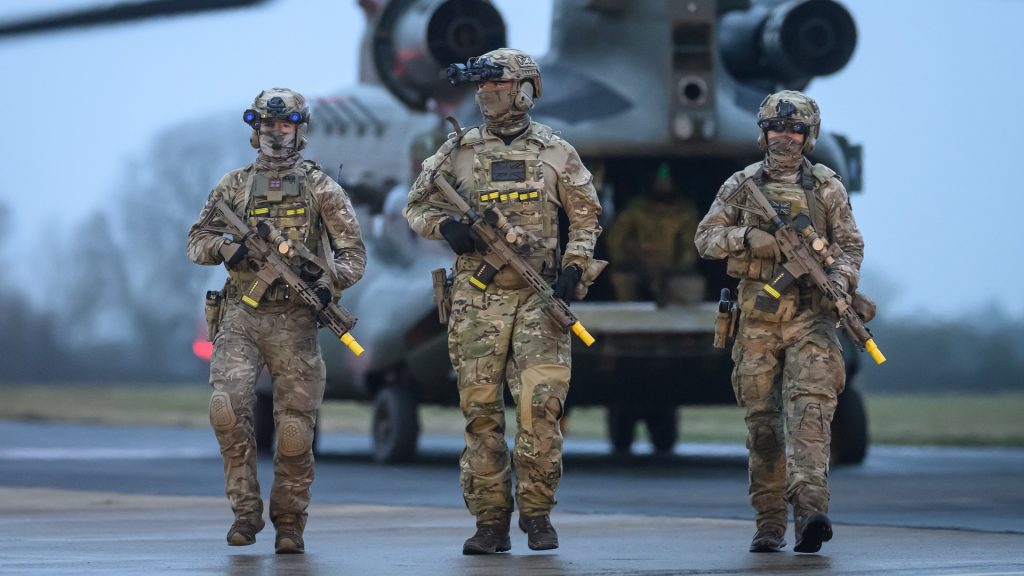
Europe is trying to turn higher defense spending into something more concrete, with Germany moving to secure a major tank maker and Britain shifting its armed forces toward drones, AI and autonomous systems.
Germany’s parliament Budget Committee approved the state’s acquisition of a 40% stake in KNDS, the Franco-German maker of Leopard 2 tanks and Caesar howitzers. Separately, Britain unveiled a long-delayed Defence Investment Plan setting out how it will spend a growing military budget in the coming years.
The two moves are separate policies that point in the same direction: European governments are trying to rebuild defense capacity as the war in Ukraine reshapes military planning.
British Prime Minister Keir Starmer framed the shift in blunt terms: “The very nature of conflict is changing before our eyes.”
Why it matters
Europe’s defense challenge is no longer only about spending more. It is about buying the right equipment, protecting production capacity and adapting faster to modern war.
Germany’s KNDS stake would make Berlin an equal shareholder alongside Paris, allowing more control over regional security. Defense Minister Boris Pistorius said the company is “indispensable for the operational readiness of our land forces.”
Britain’s plan shows a different side of the same shift. The UK, like other NATO countries, is under pressure to increase defense spending as it faces a more aggressive Russia and a less reliable United States. Starmer said the plan would help Britain build “a more European NATO” while strengthening the transatlantic alliance.
The Trump administration has bristled at the cost of American defense spending, acting as a de facto policing agency abroad, saying that NATO and others should be devoting a larger portion of spending to defense.
How Germany is securing defense production
Germany’s KNDS move is about control over a strategic defense manufacturer.
The planned 40% stake is worth up to 7.2 billion euros, or $8.2 billion, according to Reuters. The move clears a hurdle for KNDS’ planned initial public offering and dual listing in Frankfurt and Paris next month.
The IPO would rank as one of Europe’s most significant defense-sector moves in recent years. Berlin says the stake will secure joint control, strengthen oversight and support Europe’s defense industrial base.
How Britain is changing its future force
Britain is using its defense plan to shift toward cheaper systems that can be developed and deployed faster than traditional platforms. The strategy resembles Ukrainian deployment of low-cost drones in its war with Russia as compared to production of costly anti-air missiles and other more costly defense measures.
The plan includes 5 billion pounds over four years for drones across the armed forces, including attack drones, drone fighter jets, armed drones to work with Apache helicopters, autonomous submarines, uncrewed vessels and uncrewed ground vehicles, Reuters reported. Of that total, 650 million pounds are earmarked for inexpensive and expendable autonomous systems.
Britain also plans to spend 2 billion pounds on a “digital targeting web” to connect the armed forces and speed decision-making through AI and software. Starmer said Britain would build a “hybrid Royal Navy” using uncrewed vessels above and below the surface alongside warships.
“This is about harnessing cutting-edge technology on every front to multiply our strength and defend our nation,” Starmer said.
Politico reported that Britain is taking lessons from Ukraine’s battlefield, where lower-cost systems are deployed against expensive targets and weapons development has moved much faster than traditional procurement cycles — a shift the U.S. Army is also studying through new domestic drone test ranges.
What’s next
The reset still faces a money test.
The BBC reported that Britain’s plan adds 15 billion pounds to defense spending over four years and would raise it to 2.7% of GDP by 2029. The plan does not commit Britain to spending 3% of GDP on defense by 2030, one issue that helped prompt John Healey to resign as defense secretary, according to the Associated Press.
For Europe, the test is whether higher defense spending can translate into the weapons, drones, ships and industrial capacity that its militaries say they need.
Round out your reading
- America at 250: Straight Arrow’s week-long look at the pressures testing modern America.
- Ketamine is booming in America. The reasons go beyond drugs.
- Cluster of AI news sites suddenly goes dark after human reporter starts asking questions.
- A 79-year-old, obese, well-connected man gained exclusive access to a new weight loss drug. Is it Trump?
- Newsom pushes national wealth tax after opposing California billionaire tax.
Ella Rae Greene, Editor In Chief