Meta fights order to disclose job, power figures for $50B Louisiana data center
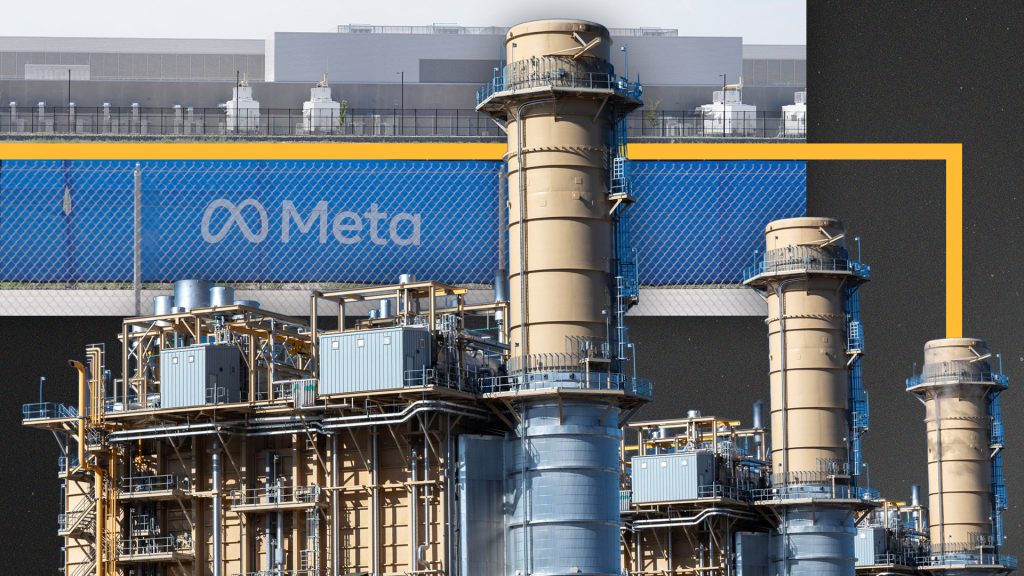
Data centers to run artificial intelligence are transforming America’s energy system. In Louisiana, the boom has spurred a legal fight over what information Big Tech is required to disclose to state regulators and the public.
An administrative law judge at the state’s utility regulatory commission issued a subpoena this month for Meta to submit documents on how much electricity the company will need and how many permanent, full-time jobs the company’s flagship data center development will create. Meta has resisted, asking the judge to quash the order.
Data center construction is increasingly unpopular. Yet the potential economic benefits are lucrative for local and state governments as well as the tech giants envisioning a future with indispensable AI tools. On a construction site in rural Louisiana, Meta’s data center campus has become a potent test case for public trust in the regulatory process underlying how massive energy projects are built.
Environmental groups and consumer advocates have sounded the alarm over what they view as a lack of transparency, and how costs could fall to Louisiana residents.
“This is about decisions being made rapidly and behind closed doors intentionally to reduce public scrutiny of these large data center projects,” said Alaina DiLaura, policy coordinator at the Alliance for Affordable Energy, a nonprofit that has intervened against the state utility company Entergy’s plans for new power plants.
What is Meta’s Hyperion data center?
In 2024, Meta announced a $10 billion investment to build a 2-gigawatt data center called Hyperion in the state’s northeastern Richland Parish between Shreveport, Louisiana and Jackson, Mississippi. The publicly announced investment total increased to $27 billion in October, then $50 billion earlier this month.
The data center will eventually expand to 5 gigawatts by 2032, according to Meta’s website. That’s enough electricity to power 3 to 5 million homes — around twice as many as there are in the entire state of Louisiana.
The scale of the investment could make Meta a major source of state and local tax revenue, and the project has been championed by Louisiana Gov. Jeff Landry for its economic benefits. Meta has also stated that it “pays the full costs of the energy, water and related infrastructure the data center uses so consumers aren’t paying the cost.”
The agreement between Entergy and Meta’s subsidiaries includes a 20-year contract to pay for new additions to the power grid. Nevertheless, Entergy’s applications for new energy resources have faced opposition from critics who argue there should be more robust protections for existing electricity customers.
“Meta and Entergy are asking residents across the state to essentially have blind faith,” DiLaura told Straight Arrow.
Where will Meta get the electricity?
Last year, Entergy Louisiana won approval from the state’s regulatory agency, the Louisiana Public Service Commission (LPSC), to build three new gas power plants, renewable energy assets and transmission lines intended primarily for the new data center.
Under Louisiana’s typical regulatory process, interested parties can intervene in support or opposition of new energy infrastructure. An administrative law judge hears evidence from all sides, lawyers question witnesses and in the end, the judge makes a recommendation to the five LPSC commissioners on whether any given project is in the public interest. The commissioners take the final vote.
After last August’s approval, Landry spearheaded a new “lightning initiative,” which is a fast-tracked regulatory process that forgoes the administrative law judge recommendation and exempts the applicant company — in this case Entergy — from typical competitive bidding for contracts.
Under the lightning initiative, Entergy applied for approval of seven new gas power plants and additional renewable energy resources this March. In total, Entergy has 7.5 gigawatts of new gas power plants that are either approved or pending, and 4 gigawatts of renewables. That’s more than double the amount of power Meta has publicly stated it requires.
“It is important before we just go ahead and rubber stamp all these gas plants to understand: Are they even needed,” DiLaura said.
Why is a judge asking Meta for documents?
Although the lightning initiative prevents the judge from issuing a final recommendation, the legal proceedings are still taking place, and the commissioners will have the chance to review witness testimony and determine whether new power plants are in the public interest.
On July 10, Chief Administrative Law Judge Melanie Verzwyvelt granted a request from the Alliance for Affordable Energy and the Union of Concerned Scientists to issue a subpoena for Meta to release documents about the data center project. That included information on how much electricity the data center will need and the number of permanent jobs the project is expected to create.
Both Entergy and LPSC staff argued against granting the subpoena.
In the ruling, Verzwyvelt wrote that the project is “not a typical utility investment,” adding that the job creation “data is relevant to the Commission’s public interest determination in this matter.” Verzwyvelt also wrote that release of information on Meta’s planned electricity consumption would help substantiate how Entergy determined the number of power plants required
Lawyers for Meta responded by asking for the judge to reverse course, arguing in a legal filing that the subpoena is “unreasonable, oppressive and was issued without the requisite showing that the requested information is necessary for this proceeding.”
Meta has asked for the subpoena to be voided and for the full LPSC to make that decision at its Aug. 20 meeting.
What’s at stake for data center development?
Entergy did not immediately respond to questions from Straight Arrow, but in previous statements to the press, the utility company has argued that the new power plants and renewable energy resources will save customers $2 billion over 20 years.
Greg Upton, director of the Energy Institute at Louisiana State University, said that while it’s risky to build too much, utility companies also do not want to build too few power plants — undercutting supply — when electricity demand is increasing.
“That’s of course going to push up the price and that ultimately goes to ratepayers,” Upton told Straight Arrow.
The former director of the same LSU institute, David Dismukes, told Straight Arrow that Meta’s plans are hugely beneficial from an economic perspective.
The new tax revenue is a “profit margin investment for the state of Louisiana” that can go to improving schools, roads and other public goods, Dismukes said. “It’s continuing this momentum that we’ve had over the last 10 or 15 years, and that’s a good thing.”
But risks to ratepayers are real, said Dismukes, who currently works as a private consultant and has testified on behalf of consumer advocates on other data center proposals across the country.
“We are capacity short in this region and all over this country,” so building some new power plants would make sense even if Meta wasn’t coming to town, Dismukes said. But because the cost to build infrastructure is borne by customers, Dismukes added, “there’s no skin in the game for [Entergy]. If they screw up, somebody else is going to pay for it.”
Round out your reading
- From Obama to Trump to Biden: When networks said ‘no’ to presidential speeches.
- ‘The end of American science as we know it.’ White House funding plan sparks alarm.
- AI data centers are popping up everywhere. What exactly do they do?
- The Trump administration is accused of breaking a law built to target the KKK.
- One Republican senator is dead, another is still alive. Both are the center of conspiracy theories.
Ella Rae Greene, Editor In Chief