ICE officers will have body cameras but not the typical transparency requirements
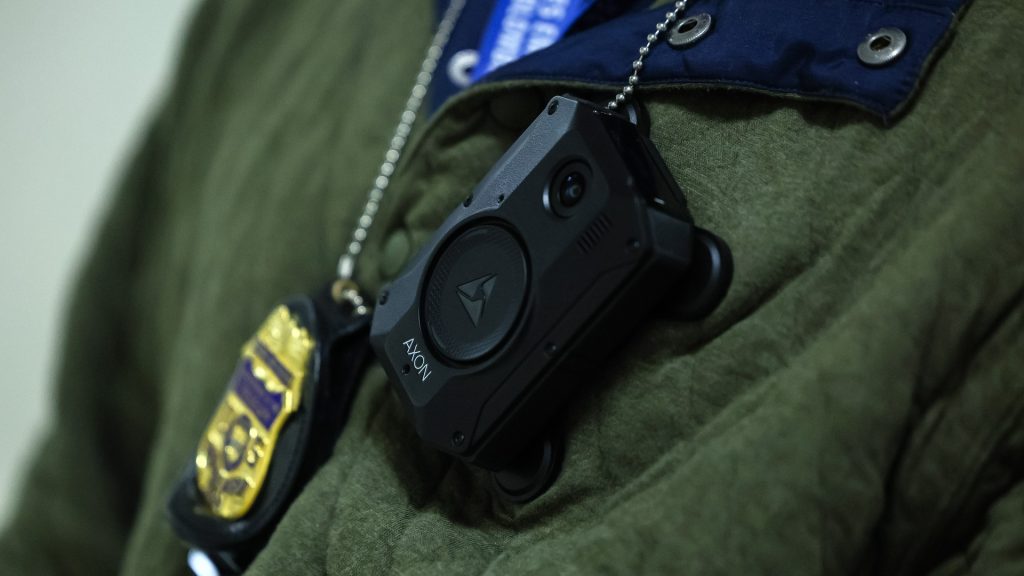
U.S. Immigration and Customs Enforcement will soon equip its agents with body-worn cameras, recording their interactions with the public, falling in line with a tradition law enforcement across the nation follows. However, the agency’s policy on the devices won’t bring the same levels of accountability other departments commonly have.
The new policy, first reported by The Associated Press, gave the agency explicit control over how and what footage is released to the public. David Bier, Cato Institute’s director of immigration studies, told Straight Arrow the policy undercuts the purpose and funds spent on the devices. ICE spent $30.9 million in July on the cameras, The Associated Press reported.
“It’s concerning that the agency is so determined to undermine the purpose of body cameras and to prevent accountability in this way,” he said.
ICE said in a statement to Straight Arrow that arrest teams will have someone equipped with the cameras, and the initiative is a “top priority for DHS.” The spokesperson said that the process was interrupted during the 2025 full government shutdown and Homeland Security’s spring closure.
“Body cameras have been deployed to more than half the field offices with the remaining half expected to receive them in September,” the spokesperson wrote.
They confirmed that footage would first be reviewed for privacy concerns of bystanders, and then be released “as appropriate for official purposes.” However, The Associated Press reported the department’s policy stating that videos would only be released for fatal shootings or incidents that caused serious injuries after deciding “it is in the best interests of the agency.”
Bier said it’s likely a strategy the agency has long planned. Body cameras capture footage of what an officer is doing, how they speak with the public and actions they and their colleagues make. It’s not uncommon for police departments to release videos when officers’ conduct comes into question. A judge can also compel the release in certain situations.
ICE’s policy allows the director full discretion over which videos are disseminated. It can be a problem if agents are accused of serious misconduct in the future.
“The point of having the body cameras is for accountability,” Bier said.
A ‘propaganda’ machine
Similar to other law enforcement, ICE has countered criticism of its officers with its own narrative of events. When officers killed Renee Good in Minneapolis, Lorenzo Salgado Araujo in Houston and Joan Sebastian Guerrero in Maine, the department said the deceased were either domestic terrorists or “weaponized” a vehicle.
The agency’s defensive messaging isn’t reserved for fatal shootings. Posts are available on X where ICE used all caps in some posts, and frequently combats with news headlines about certain arrests. Other posts promote President Donald Trump’s goal of accelerating deportations of unauthorized immigrants.
“I expect we’ll see more of it as more video is made available and is able to be used for this propaganda initiative,” Bier said.
He pointed to the videographers who join ICE and other departments under the U.S. Department of Homeland Security on enforcement operations. Those videos have been heavily edited to paint the agency in a favorable light while it combats complaints about excessive force.
Bier pointed to the arrest of Susan Tichner, an observer in Minneapolis whom he said agents accosted. She sued, alleging ICE violated her civil rights and sought footage the videographer had.
“All of a sudden that footage and that videographer couldn’t be found,” Bier said.
Sharing favorable videos doesn’t mean ICE won’t use disparaging or otherwise negative language about people. In a Friday video the agency shared on its X account, officers were praised for rescuing a Tennessee toddler wandering in a street. It said the toddler’s mother “slept inside a nearby apartment with the door wide open.”
“They’re not afraid of video,” Bier said. “They’re afraid of accountability, they’re afraid of people learning their identity.”
Body cameras serve as accountability
The Associated Press reported that ICE purchased the cameras after agents killed two people in separate July shootings. In both, no footage was available depicting the series of events, leading accounts from ICE, the public, media and police to conflict.
ICE temporarily halted traffic stops following the shootings. Body cameras are believed to be the only changes the agency has since made. The budget reconciliation bill that ended DHS’s spring shutdown was supposed to fund body cameras. Officers weren’t wearing them in the Maine shooting.
Jason Houser, a former ICE chief of staff, told The Associated Press that body cameras aren’t hard to deploy, but ICE has “slow-rolled” it. He served under former President Joe Biden and helped execute the agency’s 2021 body camera program. Through it, 1,400 devices were distributed several years later, but Trump halted further distribution.
A feature of body cameras is seeing how other officers acted during incidents.
Bier said the practice is likely to be reflected in the body-worn cameras, with officers turning recordings off, selective release of footage and manipulating videos before publishing. He wouldn’t be surprised if officers mask up even more or use more methods to conceal their identities.
The harm isn’t on the agency’s image, but what happens when someone is either seriously injured or killed.
“I’m afraid of the scenario that we’re going to be faced with when this agency starts having complete footage of everything that’s favorable to them, and not footage of anything that’s unfavorable,” Bier said.
Round out your reading
- Why Gen Z is staying home on the weekends.
- Autism research is entering a new era. Here’s what scientists are learning.
- The big reason small cities want data centers. Hint: It’s not permanent jobs.
- High school teacher arrested at city meeting after clapping for anti-data center speech.
- Off Script: Everyone’s watching Michigan. Our reporter explains why the race just changed.
Ella Rae Greene, Editor In Chief