How Waymo is changing the playbook for teens learning to drive
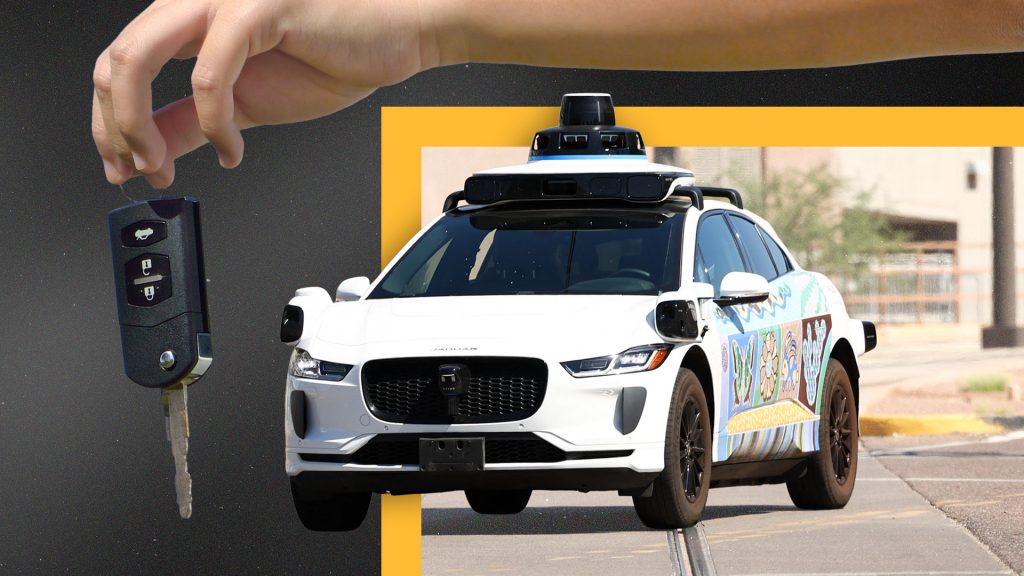
Karly Treacy didn’t want her teenage children driving in Los Angeles traffic, so when her eldest daughter admitted she had no desire to get behind the wheel, Treacy felt immediate relief.
“It’s way too much responsibility for teens whose frontal cortexes aren’t fully developed,” she told Straight Arrow News.
But coordinating the schedules of three children while both she and her husband worked full-time wasn’t easy. At first, Treacy let her oldest children, then 12 and 13, take rideshares, as long as they weren’t alone, but she said they had a few “scary experiences.” They tried public transportation, but that felt unsafe, too. When Waymo became available for kids, Treacy and her husband decided to let the older kids test it out.
Families have long weighed questions about safety, insurance and fuel prices when determining when to teach teenagers to drive. But as gas prices spike, and autonomous rideshares become more readily available, some parents are adding a new variable to their equation: Waymo.

Are automated ride services like Waymo safer than teen drivers?
Motor vehicle accidents were the leading cause of death among U.S. teens in 2023. Among teens 16 or older, the fatal crash rate was three times higher than for drivers over 20.
Waymo’s most recent data shows that its automated vehicles — what the company calls its “Waymo Drivers” — were involved in 92% fewer serious injury-or-worse crashes than human drivers traveling the same distances in the same cities.
“The juxtaposition is pretty significant between these two classes of drivers,” said Shawn DuBravac, Ph.D, a technologist with Avrio Institute, an organization that helps clients discern technological trends and transformations. “We are comparing arguably the safest drivers on the road with the least safe.”
But that doesn’t mean Waymo Drivers don’t make mistakes.
During an active police stand-off in downtown Los Angeles a few months ago, a Waymo Driver cruised slowly through the scene, taking a left-hand turn feet away from the suspect.
“The computer sees people. And it’s like, ‘OK, I’m going to slow down. I’m going to avoid the people,” DuBravac told SAN. In this case, it misread the context of the situation. Still, DuBravac said, the vehicles have been well tested, exposed to a wide range of real-world experiences.
One Phoenix resident, Karen Bell-Zinn, described watching two Waymos get stuck in an awkward face-off at a Circle K parking lot. Another told SAN a Waymo once took her to her destination but kept circling the parking lot and wouldn’t let her out.
“We are committed to continuous improvement and take several steps to ensure our technology operates appropriately on public roads,” Chris Bonelli, a Waymo spokesperson, told SAN. Those efforts include constant software updates, a measured approach to expansion and partnerships with regulators and emergency officials, he said.

Waymo as a dependable carpool choice
Treacy and her family have heard the stories. But they also heard reports from their own social circle, as her kids’ friends took the autonomous rideshares everywhere — the beach, school and sports practices.
When Treacy’s eldest daughter began attending an arts-centered high school in downtown Los Angeles, about 90 minutes from their home, Treacy formed a carpool with other nearby parents. She spent nine hours a week covering three drop-offs or pick-ups.
Eventually, the three carpool families decided to split a Waymo most days to get to and from school. In her eyes, it beat giving a high schooler car keys to drive through city traffic, which she described as “a house on fire.”
In the time since, her family “never had any of the issues that people talk about,” she told SAN. “If Waymo said that it was dropping them off at a spot, it did.”

Is it cheaper to drive or use an automated ride service?
Treacy’s solution came at a cost.
Waymo rides to and from school for Treacy’s daughter usually cost between $45 and $50 each way — a manageable expense, she said, when split three ways between parents.
In Phoenix, Christina Harvey and her husband relied on Waymo to shuttle their 14-year-old to basketball practice and to hang out with friends. Each ride costs about $20, for a roundtrip cost of about $40 a day.
“It is pretty expensive to use Waymo,” Harvey told SAN.
But adding a teenager to your car insurance policy is expensive, too. Rates vary by state, but the national average cost of a full-coverage insurance policy with a teen driver is around $500 a month, said Maya Afilalo, an insurance analyst at AutoInsurance.com. Rates don’t tend to drop until 19 and 21, before evening out at 25.
It would take a teen about 12 to 13 outings a month to hit that $500 threshold. But that’s just one line item: There are other hidden costs of insurance, like what happens if a teen is involved in an accident, said Daniel Setareh, a managing partner and personal injury attorney at Setareh Law Firm.
“All it takes is one serious crash with several other vehicles to go far beyond the cap of that policy,” Setareh told SAN.
If a teen is involved in a serious car accident, the parents holding the policy could end up paying for others’ bodily injury and damages. And Afilalo said after an accident, teen premiums typically rise about 45% to 50%.
With a service like Waymo, the accident is on the company.
“That’s a different world to be in, and one that’s more important to families in more urban areas where the probability of a problem is already greater,” Setareh said.

Maintaining a car can come with many surprising costs, too
Cars have costs beyond insurance. Routine maintenance like shocks, tires and fluids can add up fast, Glen Hayward, owner of Good Works Auto Repair, told SAN.
“I think most families underestimate the true cost of maintaining a teenage driver’s vehicle,” said Hayward, who is a member of Neighborhood Auto Repair Professionals.
And with a teen behind the wheel, certain parts may wear out sooner.
“Sometimes even a minor bump against a curb can damage tires, shock absorbers, struts or suspension parts, leading to hundreds of dollars in damage,” Hayward said.
On top of these potential maintenance expenses, gas prices are soaring — eclipsing $4 per gallon in recent weeks.
“At the very most, I feel like you’re breaking even with what you have to pay for your car and for gas and for insurance to just pop in a Waymo,” said Treacy.

What’s at stake if teens rely on automated ride services?
All states have their own version of a “Graduated Driver Licensing” program (GDL) that includes three stages: a learner’s permit; an intermediate license; and, finally, an unrestricted license.
These programs are designed to help teens gain confidence and often restrict higher-risk driving, such as nighttime driving or carrying other teen passengers. Some teens wait to learn until they are older. That can lower short-term crash risks, but once they do begin, they remain novice drivers, now without the safety guardrails designed for new teen drivers.
And teens who don’t build a driving history will pay higher premiums as young adults, said Afilalo. A 2022 study in the Journal of Adolescent Health found that people who secure a driver’s license in their teens were more likely to report better health, higher educational attainment and greater employment as young adults.
But that study was published before autonomous rideshares became a legitimate option. Both Treacy and Harvey said Waymo has given their kids a sense of independence similar to what a license might provide, raising questions about whether the long-term trade-offs may look different in cities with autonomous transportation.
DuBravac can think of one key tradeoff worth considering: family connection. When his children were younger, he said, car rides became the go-to time to open up about their day. If families increasingly rely on autonomous vehicles to shuttle teens, parents may need to be intentional about preserving time for connection.

Depending solely on autonomous vehicles can have downsides in times of crisis or change
In cities that offer autonomous vehicles, it can be tempting to assume they can replace driving entirely.
Don’t, said Michael Okubajo, a transportation consultant and founder of Capital Transport Planning. This kind of “mobility dependency,” he said, “creates reliance on a single mode with limited reach.”
If teens leave the service area, relocate to a more car-dependent region or encounter situations where on-demand services are unavailable, they’ll need another option.
In emergency situations such as mass evacuations, flooding or infrastructure damage, DuBravac said it remains unknown whether autonomous vehicles can function as a reliable, large-scale mobility solution.
“If the infrastructure is damaged, it’s not yet clear if self-driving vehicles will be a viable solution in those types of situations,” he said.
This isn’t just hypothetical: Waymo temporarily pulled its fleet from pockets of Los Angeles last year after several cars were damaged in protests.
“We have a robust event response team to prepare for and react to dynamic changes in traffic conditions,” said Bonelli, from Waymo. These “changes” include times of civil unrest and extreme weather, he said.

Some parents might want to choose a happy medium approach
“Driving is still a critical life skill in most of America and will be for many decades to come,” said DuBravac.
In 2025, the Treacys moved to a small town outside of Nashville, where the speed limit on most roads is 35 miles per hour. The kids are now 13, 15 and 17.
“Here, they’re going to be able to take it slow and learn,” Treacy said.
All three kids will take driver’s ed classes and go for their licenses; had they stayed in Los Angeles, Treacy said she would have waited until the kids were in their early 20s.
Harvey and her husband want their son to get his permit next year, when he’s 15, so he can learn independence. But she believes he will continue to use Waymo even after he has his license, especially if she and her husband do not buy him a car — another substantial cost, with the average ticket price for used cars at around $25,000, and new cars double that.
Driving decisions don’t have to be all-or-nothing.
“A teen holding a permit — without being fully licensed — can give them a chance to hone driving skills that will serve them in adulthood,” Afilalo told SAN. In some states and insurance cases, she added, some rates don’t increase with permitted drivers.
Another lower-risk approach: Allow teens to get their licenses but lean on rideshares in riskier situations, like nighttime driving and driving other teens.

The future of autonomous vehicles
Waymo isn’t the only game in town. Or at least, not in every town. Tesla’s Robotaxi rides are currently available in Austin, Texas, and Uber has launched a partnerships to commercialize autonomous vehicles.
“It will take a long time before we see wide adoption, general deployment, especially in northern states where there’s more adverse weather,” said DuBravac.
While driving remains a useful skill, that doesn’t mean it will always be seen that way. It may become an atrophied skill — one that eventually turns obsolete.
“Does that matter?” DuBravac asked. “Is this a skill that people really need?”
Ella Rae Greene, Editor In Chief