How a changing CDC is handling the hantavirus outbreak
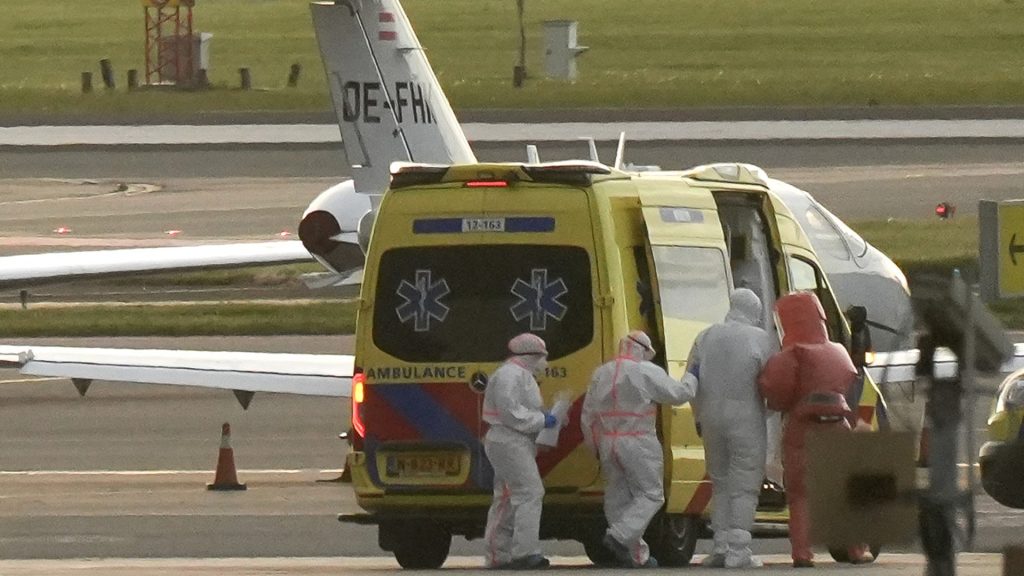
While the hantavirus outbreak aboard a cruise ship last month has generated international headlines, public health experts say the virus is unlikely to evolve into a broader epidemic or pandemic threat. Still, several global health experts have criticized the Centers for Disease Control and Prevention (CDC) for its slow response to the outbreak.
Though the CDC eventually dispatched personnel to the Canary Islands, where the ship docked after being turned away from several ports, it did not send a team aboard the vessel itself to assist with outbreak containment.
“The CDC was missing in action for quite a long time,” Lawrence Gostin, professor of global health law at Georgetown University, told NPR. “Better late than never — but it is very late.”
The Department of Health and Human Services has denied that the CDC response was slow and disjointed.
“These claims are completely inaccurate. The U.S. government is conducting a coordinated, interagency response led by the Department of State. HHS, through ASPR and CDC, is supporting efforts to protect the health and safety of U.S. citizens, including repatriation, medical evaluation, and public health guidance,” spokesperson Emily Hilliard said. (ASPR is the Administration for Strategic Preparedness and Response.)
Seven confirmed cases, two suspected infections and three deaths have been linked to the outbreak so far. Officials are working to identify other patients who may have come into contact with cruise ship passengers who disembarked prior to the ship’s docking in Spain’s Canary Islands. Spain’s Secretary of State for Health told reporters Friday that a woman in the Alicante Province had tested positive for the virus; she was on the same flight as the woman who died in South Africa after disembarking the cruise ship.
How risky is the hantavirus outbreak?
“Let me be crystal clear: The risk of hantavirus to the general public remains very, very low,” Brian Christine, the Department of Health and Human Service’s assistant secretary for health, said, echoing previous similar statements by other officials.
“This is not COVID. This is not influenza,” Maria Van Kerkhove, WHO’s director of epidemic and pandemic preparedness and prevention, said last week.
“This is an outbreak on a ship and we do not anticipate a large epidemic,” Van Kerkhove said.
Other health officials have echoed that assessment.
“Hantavirus is not spread by people without symptoms, transmission requires close contact, and the risk to the American public is very low,” Centers for Disease Control and Prevention Acting Director Jay Bhattacharya posted Wednesday on X.
The CDC classified the outbreak as a level three emergency, the lowest level of activation. The World Health Organization said the risk to the public remains low.
What is hantavirus?
Hantaviruses are a family of more than a dozen distinct viruses primarily carried by rodents. People are most often infected after inhaling virus particles from contaminated rodent urine, saliva or droppings.
Human cases are uncommon, according to the WHO. Hantaviruses found in Asia and Europe typically have fatality rates of less than 1% to 15%, while those found in the Americas are much deadlier with fatality rates up to 50%.
The CDC recorded 890 cases between 1993 — when the agency started monitoring the virus — and 2023. More than 90% of those cases occurred west of the Mississippi River.
Infection can lead to hantavirus cardiopulmonary syndrome — a severe respiratory illness that can rapidly progress to respiratory failure — or Hemorrhagic fever with renal syndrome, which affects the kidneys.
A rare type of hantavirus, called the Andes, is behind the ongoing outbreak. First identified in South America in the 1990s, Andes is the only hantavirus conclusively shown to spread between humans under certain circumstances. Studies of outbreaks in Argentina and Chile found transmission most commonly occurred among close family members, sexual partners and caregivers after prolonged, intimate contact with infected individuals.
Scientists say the virus still spreads far less efficiently than respiratory viruses such as influenza or COVID-19. But the possibility of person-to-person transmission significantly changes how health officials respond. Investigators must now determine not only whether passengers were exposed to infected rodents, but also whether secondary transmission may have occurred aboard the ship itself.
Pandemic potential
No hantavirus has ever caused a pandemic. Outbreaks have historically been relatively small, localized and sporadic, usually tied to contact with infected rodents in specific geographic areas. Even the largest known outbreaks have involved only dozens of cases.
One of the most well-known outbreaks occurred in 1993 in the Four Corners region in southwestern U.S., where the Sin Nombre virus killed several young adults and led to the identification of hantavirus cardiopulmonary syndrome. The CDC reported at least 24 cases and 13 deaths during the initial outbreak.
The largest documented hantavirus outbreak occurred in late 2018 and early 2019 in Patagonia, Argentina, and was caused by the Andes virus. Health officials reported 29 confirmed cases and 11 deaths. Although investigators documented limited person-to-person transmission, the outbreak remained regionally contained and did not spread internationally.
Hantaviruses are considered an emerging infectious disease and appear on the WHO’s list of priority pathogens with potential pandemic risk. Even so, experts say hantaviruses behave very differently from the highly transmissible viruses that have historically driven global pandemics.
Unlike SARS-CoV-2, influenza or measles, hantaviruses do not spread efficiently through casual airborne exposure. The measles virus can linger in the air for hours and infect the vast majority of unvaccinated people exposed to it. Influenza and COVID-19 spread readily through routine respiratory contact in homes, schools, workplaces and public spaces.
But hantavirus transmission, by contrast, is typically linked to rodent exposure, and even the Andes strain appears to require prolonged, close contact. That limited transmissibility is one of the main reasons hantaviruses have never caused a global pandemic despite their high fatality rates.
Still, virologists note that viruses evolve continuously over time. While there is no evidence the current hantavirus strain has become more transmissible, experts monitor outbreaks closely for genetic changes that could alter how efficiently a virus spreads between people.
What’s the role of the CDC in the hantavirus outbreak?
The Trump administration has reduced CDC staffing and withdrawn the U.S. from the World Health Organization, moves some experts say have weakened international coordination and outbreak preparedness.
It remains unclear how differently the agency might have responded prior to the changes under the current administration.
Historically, the CDC has deployed members of its Vessel Sanitation Program to ships experiencing outbreaks of gastroenteritis if Americans were on board and at least 3% of the passengers were symptomatic. Typically, however, CDC officials have focused on ships sailing in U.S. waters or arriving at a U.S. port within 15 days. CBS News reported in April that all full-time civilian employees in the program had been fired, leaving behind a smaller team of 12 U.S. Public Health Service officers and one epidemiologist.
HHS declined to allow Straight Arrow to interview CDC officials.
Round out your reading
- Are aliens real? Pentagon’s newly released UFO files suggest the truth is out there.
- A million Americans get this knee surgery every year. But does it work?
- Is the apocalypse now? One man is tracking flights by the rich to find out.
- ‘No Mow May’: A boon for the bees or a well-intended mistake?
- We’re building a new Straight Arrow. Help us shape our future by taking our survey.
Ella Rae Greene, Editor In Chief