Here’s what back-to-school shopping and the war in Iran have in common
As fighting between the U.S and Iran has ratcheted back up, gas prices have risen again in many areas. Oil prices topped $100 a barrel again this week, with gas prices averaging around $4.10/gallon on Friday, according to AAA.
But it’s not just the gas pump where American consumers may notice bigger bills in the coming weeks.
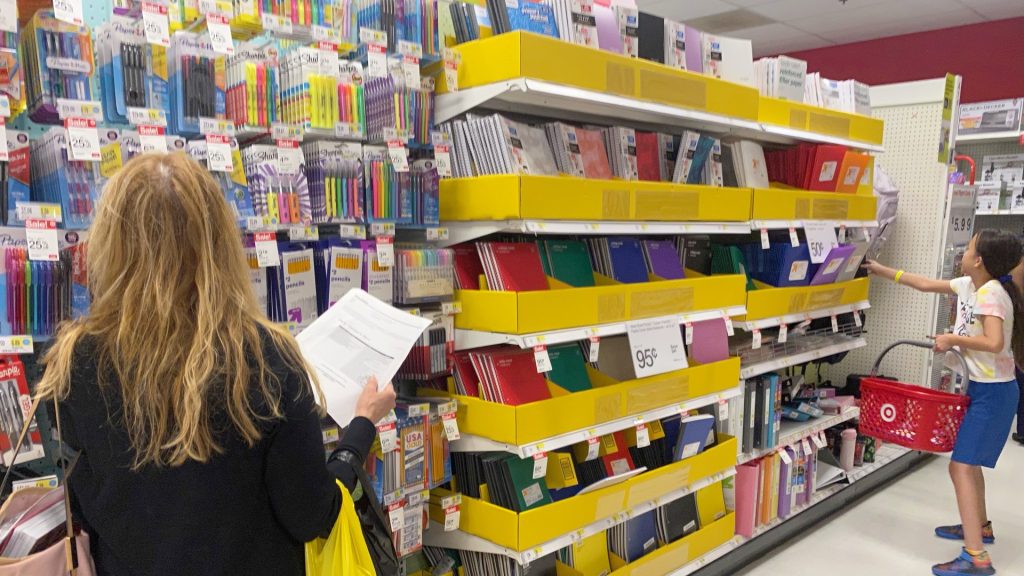
Back-to-school shopping is in full swing, and your totals at checkout might seem higher than you remember from last year. From companies that grow, manufacture and sell the food needed to fill lunchboxes to school supply makers and everything in between that gets shipped, the rising fuel costs are likely to be passed on to consumers.
“Since everything relies on petroleum in our economy, for good or ill, if the cost of petroleum goes up, then everything else goes up as well,” Joe Adamski, a managing director at procurement services company ProcureAbility, told The Associated Press.
The link between gas and groceries
Unbiased. Straight Facts.TM
Farmers spent $1.4 billion more on diesel fuel during the 2026 planting season compared to 2025, according to a Congressional Joint Economic Committee report.

Frequently, grocery prices go up when gas prices do, not only because farmers rely on diesel fuel to power equipment, but because of the cost of fueling the trucks used to ship the food they grow. Imported goods, like tomatoes from Mexico, also face much higher shipping costs when oil prices go up.
“Oil at $100 doesn’t make food prices jump right away, but it does put upward pressure across the food supply chains, especially for categories that depend heavily on trucking, cold storage and packaging,” Cornell University Professor Miguel Gomez told the AP.
Gomez said fresh produce and dairy could feel an even larger impact because they have to be refrigerated during delivery. Those refrigerated units are diesel-powered as well, which burns fuel even when the truck isn’t running.
It’s not just food
Experts say it’s not only food that will be impacted. Higher fuel costs apply to ships and aircraft, as well as trucks – which could trickle down from businesses to consumers.
Shipping services, including UPS and FedEx, have already introduced fuel surcharges and implemented other new fees amid higher prices.
AFS Logistics CEO Andy Dyer told The AP that diesel prices in the second quarter (April 1 – June 30) were about 51% higher than in January and February, and jet fuel prices went up 90% compared to last year.
Since the war in Iran began, airlines have raised airfares and add-on fees, and cut back on certain flights or routes that are no longer profitable at higher fuel prices.
And when it comes to getting ready to go back to school, parents might feel a squeeze.
The trade group Footwear Distributors and Retailers of America released a report Wednesday warning that increasing freight and material costs, paired with rising tariffs, are creating big challenges for the footwear industry. The group’s CEO says some of its members have reported 25% price increases for petroleum-based materials used in footwear manufacturing due to the Middle East conflict, according to the AP. That could translate to a 5% increase in the cost of finished footwear down the road, Priest said in the report.
Round out your reading
- From Obama to Trump to Biden: When networks said ‘no’ to presidential speeches.
- ‘The end of American science as we know it.’ White House funding plan sparks alarm.
- AI data centers are popping up everywhere. What exactly do they do?
- The Trump administration is accused of breaking a law built to target the KKK.
- One Republican senator is dead, another is still alive. Both are the center of conspiracy theories.
Ella Rae Greene, Editor In Chief