Graham Platner’s strategist was asked three times to do more vetting: Sources
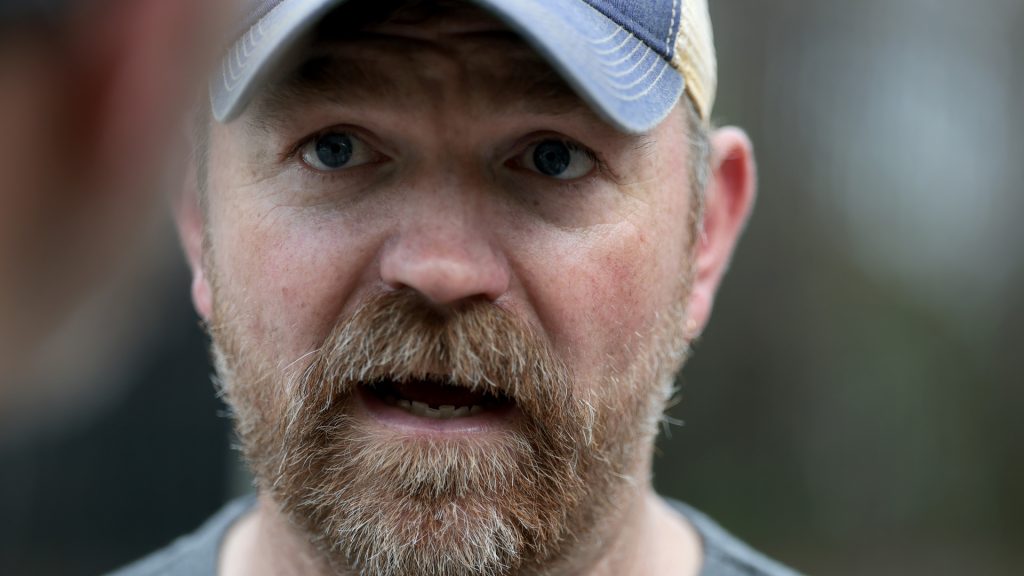
One of the people credited with finding Graham Platner and recruiting him to run for Senate in Maine, Daniel Moraff, was asked at least three times to do more thorough research into the first-time candidate. The appeals for more vetting, which have not been previously reported, were described to Straight Arrow by two people with knowledge of the situation.
Two of the times Moraff was asked about additional vetting came before a series of scandals emerged about the 41-year-old Marine veteran and oyster farmer, which culminated this week in accusations from two women of sexual assault. Straight Arrow granted the sources anonymity based on fear of career reprisal.
A third appeal was sent shortly after CNN revealed social media posts Platner made on Reddit from an account he deleted shortly before entering the race.
We ‘got some stuff back’
Moraff and his partner, Leanne Fan, have said that vetting into Platner was done shortly before he announced his candidacy on Aug. 19; Moraff described that vetting as expensive, not exhaustive, and ultimately indeterminate as to whether the candidate should hold public office.
“We paid a nice firm a whole chunk of money and got some stuff back,” Moraff told The Wall Street Journal in an interview published days before the June 9 Democratic primary in Maine, where Platner cruised to victory. “Some of what you’ve seen on the news we got back. Other stuff we didn’t,” Moraff said, referring to a drumbeat of revelations about Platner.
The last attempt came on Oct. 16, shortly after CNN published an article revealing controversial comments Platner made on Reddit about sexual assault victims, military soldiers and his views on politics, which he deleted shortly before entering the race. More vetting was needed, Moraff was told, given Platner’s rising stature and plethora of unexamined elements of his background, according to the sources. Moraff did not respond to those messages.
Text messages sent to Moraff by Straight Arrow on Thursday and Friday were not immediately returned.
Early scandals were framed as authenticity
After stories emerged revealing the tattoo on Platner’s chest had its roots in Nazi Germany, Moraff asked the firm to do more vetting but a deal never materialized, according to one of the sources.
An official working on Platner’s campaign reached out to the firm asking it to do the kind of in-depth vetting that Moraff had not sought earlier, but was rebuffed, this person said. A message sent to Platner’s campaign through its website on Friday was not immediately returned.
Another consultant, Morris Katz, “met Platner shortly after Moraff and Fan discovered” the candidate and “worked with the pair through the vetting process,” The Journal reported.
Before the sexual assault allegations — which Platner denies — Moraff and Katz had argued that the revelations about Platner were a kind of validation of the candidate’s authenticity, which they said is the quality voters prioritized.
“Part of our thesis here is that people do not want their candidates grown in vats,” Moraff told the outlet. “They want people who are real human beings” and do not “sound like the vat-grown people who’ve been leading this country off a cliff for the last century.”
Katz concurred, telling the outlet there was “a different barrier, inherent” when recruiting someone who did not spend years plotting a career in politics, and may have “said things that they will have regretted.” When asked whether the risk of an unvetted candidate was too great for the party, Katz said, “To me, the biggest risk the Democratic Party can take is continuing to do things the same way it’s done…”
Later, Katz wrote on X: “As soon as the team became aware of the rape allegations against Graham Platner we advised he suspend his candidacy, and in the following days worked to wind down the campaign.”
A message sent on Friday to Katz through his campaign’s website was not immediately returned.
‘Do you think you could delete those passages?’
But Moraff did not always downplay the impact of what a vetting process might unearth. According to Pennsylvania-based reporter Mike Elk, Moraff once asked him to delete quotes from a years-old article because he thought it would hinder a candidate he wanted to run for Congress as an independent in a Republican-leaning district. Doing something like that is widely seen as unethical in journalism.
“Do you think you could delete those passages?” Elk recalled Moraff asking him in October 2022 about an article he published in October 2020. In the story about a Biden rally in Pittsburgh, a local union member told attendees, “No union member should vote for Trump.”
“This isn’t like you publish a story and someone says, ‘Hey, could I clarify my remarks?’ or there was a factual error,” Elk said in an interview. Moraff’s response, according to Elk: “Well, who’s going to know?”
‘Maybe nobody finds out’
Elk thinks Moraff may have gotten the idea to request this deletion since an essay he wrote in 2017 for In These Times, a left-leaning magazine, is no longer on its website. The essay, titled “Want to Elect Socialists? Run Them in Democratic Primaries,” was available on the site as recently as March 1, 2024, but was deleted by Aug. 8, 2025. Messages sent to the magazine on Friday seeking comment were not immediately returned. Elk had worked at the magazine years ago, and his articles are still available.
“I just kept explaining,” Elk recalled of his conversation with Moraff, “and he’s like ‘Who’s going to know?’”
Elk said he told Moraff it would be a violation of journalist ethics, “and he’s like ‘Eh, maybe nobody finds out.’”
“And I said no,” Elk recalled telling him. “What if your candidate — what if they get in the Wayback Machine,” which allows people to see older versions of websites, “and then I get in trouble?
“For what? For what? Toning down criticism of Trump?” Elk said. “Bulls—, I’m not doing that.”
Round out your reading
- Scientists are now eyeing a possible ‘Mega El Niño’.
- Critics mocked Mamdani’s AC request. Republicans made the same ask.
- Social Security was supposed to be a safety net. To young Americans, it’s a broken promise.
- What happens when the water dries up? Much of the American West is close to finding out.
- Political insiders are targeting the two-party system’s grip on America.
Ella Rae Greene, Editor In Chief