Google’s shift to AI-powered search results may be the ‘final knife in the back of digital media’
Who won the football game last night? When did California become a state? Will it rain this weekend?
Since 1998, people’s questions about the world around them have been met with a simple response: “Just Google it.”
As of this week, how people Google — and how Google answers their questions — looks a lot different. The internet’s leading search engine is undergoing what the company called its biggest facelift in more than two decades.
The overhaul could transform Google from a portal to the internet to the final destination for many users. The changes could have major implications for how people access news and information — and for how news organizations and other digital publishers get their content onto people’s screens.
While company executives say they’re making it easier for people to find what they’re looking for, journalists on social media warned the changes could further decimate a news industry that has struggled for years to make ends meet.
What’s new with Google Search?
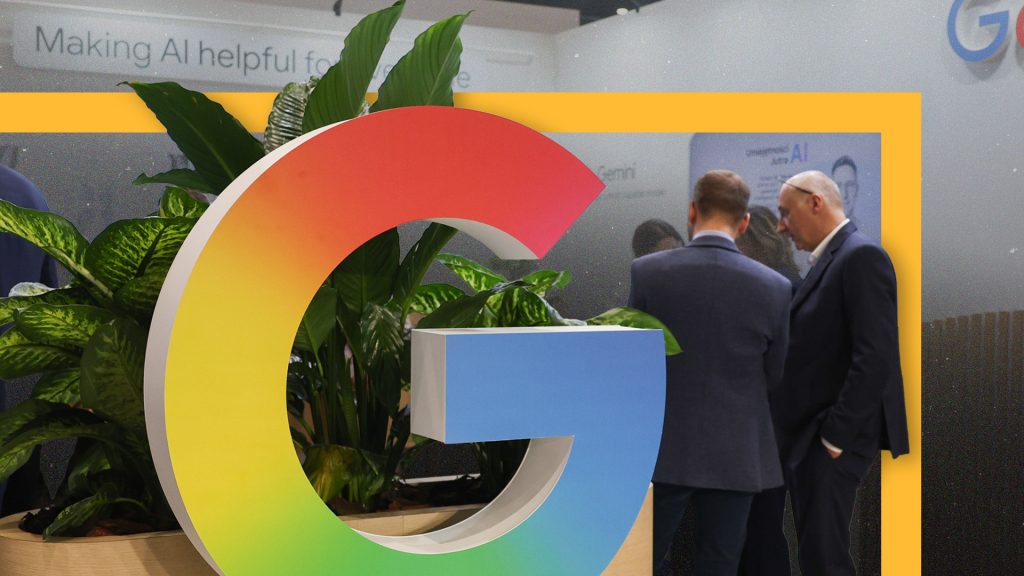
During its Google I/O event Tuesday in Mountain View, California, Alphabet, Inc., executives announced a slate of changes designed to place artificial intelligence front and center when people search the World Wide Web.
For decades, Google users have entered keywords into a search bar, with results presented as a list of links to third-party websites. That began to change over the last few years with the rollout of AI Overviews, brief summaries that appear at the top of search results, and the tech giant’s chatbot feature AI Mode.
“In the previous era, how it worked was you entered a search term and it produced pages and then you, the user, got to decide what you wanted to read and what sources you thought looked trustworthy,” Jacob Montgomery, a Washington University political science professor, told Straight Arrow.
“Now, a lot of those decisions are still in your hands,” Montgomery said, “but the first thing you’re going to see is a summary drawn from sources chosen by the search algorithm and then summarized by them.”
Even before the latest changes, Google’s AI Overview was “arguably the most widely encountered deployment of generative AI” to date, according to a report published this month by Montgomery and colleagues at Washington University in St. Louis, Missouri.
At Google I/O, the company announced its “biggest upgrade to our Search box in over 25 years — now completely reimagined with AI.” Powered by Gemini 3.5 Flash, the Search box features larger dimensions and new interactive features designed to facilitate longer questions and multimedia content like videos. The search engine has also made its AI Overview and AI Mode features more prominent.
“Because your curiosity doesn’t always fit into keywords,” the change “puts our most powerful AI tools right at your fingertips, making it easier to ask your questions,” Elizabeth Reid, the company’s vice president of search, wrote in a blog post about the changes.
According to Google, the Search feature was reimagined to “anticipate your intent,” prompting users with “AI-powered suggestions that go beyond autocomplete.” The changes also allow users to ask follow-up questions to Google’s AI Overviews and easily “flow into a conversational back and forth with AI Mode.”
“You’ll continue to get a range of results from Search, just like you do today,” Reid wrote. But users should expect results that are custom-tailored to their interests. “As you explore more deeply, the links and supporting articles get even more relevant,” Reid wrote.
In a statement to Straight Arrow, a Google spokesperson said its generative AI Search features were “designed to provide people with a useful overview of a topic while prominently surfacing relevant links to content across the web.” AI mode is not the default experience in Search, the company said.
The company recently published a guide to help digital publishers optimize their web content for AI Search. To succeed in the new era of AI Search, the company advises content creators to develop material that’s helpful to humans — rather than crafting content to perform well with algorithms — and to produce original work that web users can’t get anywhere else.
Could the changes harm publishers?
As Big Tech pivots to artificial intelligence, digital publishers have seen their traffic plummet and advertising revenue dwindle. On social media this week, Google’s AI-powered changes to Search were met with cynicism.
“A hard truth for independent media: the big platforms are indifferent to you,” Chris Best, the Substack co-founder and CEO, wrote on X this week. “Your success is not their business.”
Paul Tassi, a senior contributor at Forbes, lamented on X that the news industry as we know it “might just be over.”
“I don’t really know where to go from here,” Tassi wrote. “How do you exist in an ecosystem that takes all your work and gives you nothing in return[?]”
Massachusetts-based freelance journalist Michael McSweeney, meanwhile, called the change “the final knife in the back of digital media.”
Responding to reports that blue lists of links to third-parties would no longer be a prominent part of Google Search results, the company sought to clarify.
Google noted on X that users will “absolutely continue to see blue web links in search results” and that AI chatbot responses will feature citations to original sources. “Our new search box helps you describe exactly what you’re looking for,” the company wrote, “but using it does not mean you will only get AI features — you’ll continue to get a range of results on Search.”
Still, as the tech industry embraces AI chatbots, digital publishers have seen steep declines in web traffic as a result, according to research by Chartbeat, a web analytics firm.
Smaller web publishers, with 10,000 or fewer daily page views, have taken the biggest hit. In the last two years, referral traffic from search engines like Google has declined by 60% for small publishers. For large publishers, with more than 100,000 daily page views, referral traffic has dwindled by 22%.
At Washington University, researchers tracked more than 55,000 trending search queries between mid-March and mid-April and found that AI Overviews appeared on 13.7% of searches. AI Overviews activation surged to nearly 65% when search queries were posed as questions.
The feature could make a Google Search easier for users who no longer have to visit third-party websites for answers. But Montgomery said the convenience has come at the expense of digital content producers.
More than half of the websites Google scrapes to power its AI summaries rely on display advertising to generate revenue, the research found. The “zero-click” environment means people no longer have to visit web pages directly — but the companies that operate those sites will be unable to charge advertisers as much as they have in the past.
“To the extent that people are being dissuaded from clicking through to those sources and instead are being presented summaries, those publishers and other websites are losing revenue from their ads,” Montgomery told Straight Arrow. “Google’s ad revenue streams continue, even as it’s eating into the ad revenue streams of the people whose work the AI Overviews are based on.”
AI Overviews also carry implications for internet users’ understanding of the world around them. In an analysis of nearly 100,000 claims made by the AI, Montgomery and his colleagues found that almost 7% were unsupported by the sources cited by Google.
In about 2.7% of instances, a cited source “explicitly contradicts the claim” presented by Google’s AI summary.
“They have the same authoritative language, they’re stating ‘this is the truth,’ and for a small percentage of the time, that is simply not what the sources say,” Montgomery said. “The percentage is fairly small, but if you multiply by the literally billions of searches that are done everyday by Google, it can have fairly wide consequences.”
Round out your reading
- They built an Epstein files library, but realized they couldn’t let everyone read them.
- The doctor who claims functional medicine reversed her MS.
- For many Americans, ‘one more round’ no longer serves their lifestyle or budget.
- Trump claimed economic data is ‘rigged.’ Former officials pledge to ‘watch like hawks’ for political manipulation.
- We’re building a new Straight Arrow. Help us shape our future by taking our survey.
Ella Rae Greene, Editor In Chief