For decades, the definition of autism expanded. Is it now too broad?
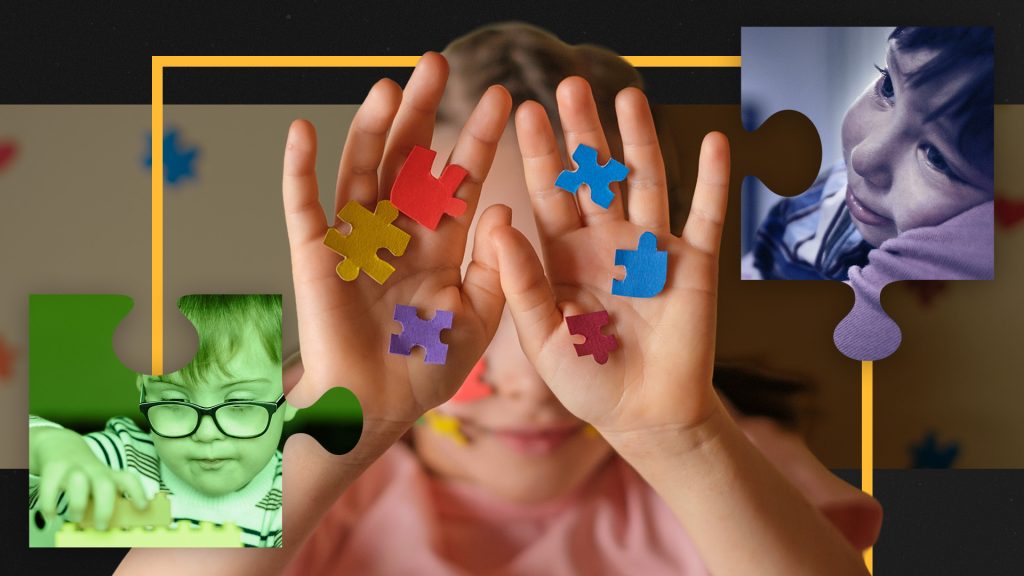
Jill Escher has two adult children with autism, but they bear little resemblance to the autistic people portrayed in television shows, social media posts and news stories.
Escher’s children are 25 and 18. They cannot read or write. They cannot send a text message, make a phone call or cook a meal.
“They have no sense of safety. They can’t brush their own teeth. They can’t take their own baths. They can’t wipe their own bottoms,” Escher said. They’ll need round-the-clock care for the rest of their lives. “There’s no two ways around it.”
Escher’s children have what many clinicians and researchers now describe as profound autism — a term increasingly used to describe those with severe intellectual disability, minimal or no spoken language and sometimes violent or self-injurious tendencies.
It was children like Escher’s whom psychiatrist Leo Kanner had in mind when he first described autism in 1943.
But over time, the clinical definition of autism broadened, and public understanding of the condition changed. Once a diagnosis largely associated with stigma, autism increasingly became, for many people, an important part of personal identity. As autism became more widely recognized and accepted, more people sought diagnoses, raising questions about whether the dramatic increase in autism reflects a true change in prevalence or improvements in identifying people who would once have gone undiagnosed.
This is part 3 of a 5-part series examining one of the most contested areas in modern medicine.
- Part 1: Autism research is entering a new era. Here’s what scientists are learning
- Part 2: Inside the decades-long search for autism’s causes
Today, autism spectrum disorder encompasses people who need extensive assistance with nearly every aspect of daily life as well as those who graduate from college, build careers, raise families and live independently. That evolution has prompted some researchers, clinicians and families to argue that a single diagnosis no longer adequately describes everyone it includes.
How autism became a spectrum
The decision to expand the definition of autism reflected a fundamental shift in how psychiatrists understood the condition.
As researchers followed children and families over time, they found that autism did not fall into neat categories. Parents of children with severe autism often display subtle autistic traits themselves, for example they may struggle with eye contact, prefer strict routines or have highly focused hobbies. Siblings could share many of the same characteristics while requiring dramatically different levels of support. Others with average or above-average intelligence still exhibited the same underlying differences in social communication or repetitive behaviors.
Those observations challenged the idea that autism consisted of several distinct conditions. Instead, scientists increasingly came to view it as a spectrum of related neurodevelopmental differences with a strong genetic basis that could vary dramatically from one person to the next.
“We sort of took away the severe modifier as diagnosis proceeded,” said Helen Tager-Flusberg, the former director of Boston University’s Center for Autism Research Excellence.
“It’s not that this was a mistake,” she explained. “It’s still consistent with our biological views of autism and particularly with the genetic-inherited ideas about autism. All of that’s very consistent, but it opened things up.”

Beginning in the late 1980s, successive editions of the Diagnostic and Statistical Manual of Mental Disorders — the handbook clinicians use to diagnose psychiatric and developmental conditions — formally redefined autism.
In 1987, the manual broadened the criteria for autism to recognize children with less severe presentations. In 1994, it introduced diagnoses including Asperger syndrome and “pervasive developmental disorder not otherwise specified” — a category for people with autistic features who did not fit neatly into the existing diagnoses — acknowledging that autism could present very differently from one person to the next.
In the coming years, however, researchers found that even experienced clinicians could evaluate the same person and reach different diagnoses, suggesting the distinctions were not biologically meaningful or consistently applied. So in 2013, the DSM merged them into a single umbrella diagnosis: Autism spectrum disorder. This version introduced severity levels intended to describe a person’s support needs — ranging from school or workplace accommodations to lifelong, 24-hour assistance like Escher says her children need— while keeping everyone under one diagnosis.

From almost the moment the spectrum expanded, some clinicians, researchers and advocates questioned whether grouping people with vastly different abilities obscured important differences that would impact patients, providers and the public alike.
Where the science is headed
For families like Escher’s, the debate over diagnostic labels shapes everyday life. It influences how schools, insurers, health care providers and policymakers understand autism and whether they recognize the vastly different levels of support some require.
As a growing number of autistic adults have shared their experiences publicly, Escher worries that society has come to associate autism primarily with people who live independently and advocate for themselves, leaving those with profound autism less visible.
“If everybody thinks that autism is like ‘The Good Doctor,'” Escher said, “it’s going to be mystifying to them why we need to dedicate so many resources to supporting people with autism.”
Escher believes that misunderstanding extends beyond public perception; it also shapes research priorities and public policy.
Concerns from folks like Escher have prompted renewed calls from some researchers and advocacy organizations to formally split autism back into categories that more accurately reflect a person’s needs.
Escher agrees the spectrum has become too broad, but also acknowledges it’s a complicated topic.
“Clearly we need better diagnostic tools and labels to disaggregate such a wildly heterogeneous group of patients,” she said. “In broad terms, there should be at least two categories, one that includes people with substantial developmental disability, and another for whom autism is more of a personality trait, without being at all incapacitating.”
While families continue debating whether one diagnosis adequately captures such different experiences, many researchers believe the discussion may ultimately be overtaken by advances in genetics.
Over the past two decades, scientists have discovered hundreds of genes associated with autism. Some people develop autism because of a rare mutation in a single gene, while others appear to develop it through the combined effects of hundreds or even thousands of common genetic variants.
Researchers have also identified dozens of rare genetic syndromes — including Fragile X syndrome, the most common inherited cause of intellectual disability; Angelman syndrome, a rare neurological disorder that affects speech, movement and development; and SYNGAP1-related disorders, caused by mutations in a gene critical for early brain development — that can also produce autistic behaviors, according to Joseph Buxbaum, director of Mount Sinai’s Seaver Autism Center for Research and Treatment.
In other words, scientists increasingly believe autism may not be one biological condition expressed in different ways, but many different biological conditions that happen to produce similar behaviors.
Those discoveries are already reshaping treatment. Rather than searching for a single therapy for autism, researchers are developing targeted treatments for specific genetic forms of the condition. Several clinical trials are underway for rare genetic disorders associated with autism, raising the possibility that future therapies could be tailored to the biology underlying a person’s diagnosis rather than the behavioral symptoms alone.
Even if genetics ultimately reveal dozens of biologically distinct forms of autism, Buxbaum does not believe clinicians should return to separate diagnoses such as Asperger syndrome. The spectrum, he argues, remains the best reflection of what scientists currently know about autism’s biology.
Instead, Buxbaum believes clinicians should make better use of severity levels and clinical specifiers to communicate differences.
“Maybe DSM did it right,” he said. “If we said somebody with autism has very high support needs, that actually captures things much better.”
For now, however, clinicians must balance two competing realities. Science increasingly supports the idea that autism exists on a spectrum. Yet that same spectrum now encompasses people whose abilities, daily lives and needs differ so profoundly that many families and clinicians believe one diagnosis no longer tells the whole story.
Researchers increasingly agree that the next chapter in autism research will be about understanding what makes people on that spectrum fundamentally different — not simply what they have in common.
Round out your reading
- What does low water at the Hoover Dam mean for power in the American West?
- Could GLP-1 drugs become the first longevity medications? Scientists think it’s possible.
- ChatGPT told him he wouldn’t face charges. Then came the arrest warrant.
- How one small city built a second act as a bio hub inside empty cigarette factories.
- If permanent Daylight Saving Time is so popular, why is it dead in the Senate?
Ella Rae Greene, Editor In Chief