Does social media make you feel bad? The fault is not in our algorithm, but in ourselves
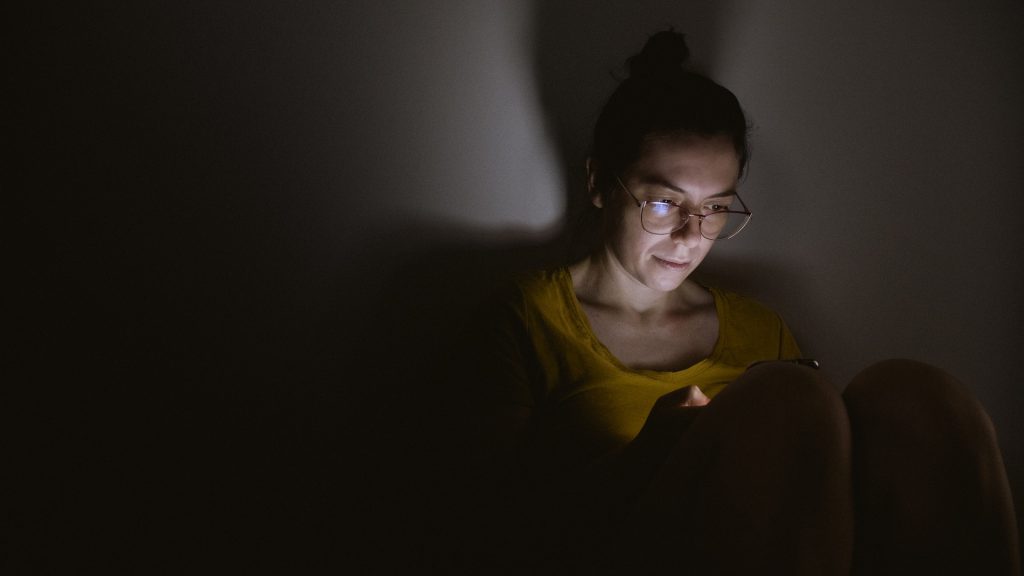
It’s the middle of summer and, according to social media, everyone is having the time of their lives. Everyone, that is, except you.
Your best friend from high school, who you haven’t spoken to in a decade, is at the beach — for the third time this season. You’re stuck in a cubicle, while your boss is flooding Instagram from a lavish wedding in France.
We all know about FOMO — the fear of missing out — and how social media can make us feel like hot garbage. But new research says the problem isn’t just the algorithm.
It’s us.
Human biases motivate people to consume, share and interact with social media posts featuring rare and novel content, prompting people to overestimate how frequently such scenarios play out in the real world, according to the report by Virginia Tech researchers. The imbalance creates a phenomenon that researchers dubbed “rareness bias diffusion,” according to the report in the peer-reviewed academic journal MIS Quarterly.
The cognitive bias leaves people sharing rare and unusual content on social media more than public policy conversations with direct relevance to their lives in the physical world. As more and more people share their novel experiences, the “systematic distortion” compounds over time, said Alice Jang, an assistant professor of business information technology at Virginia Tech and the report’s co-author.
“Algorithms cannot fix all the problems that people have and this is one of them: human biases,” Jang told Straight Arrow. “We all have these biases and we make individual sharing decisions, which aggregates and worsens this problem.”
The results aren’t limited to the Instagram reel your first boss posted to boast about the sushi they ate on date night. The study results offer insights into how social media influences the way people view the world around them, including major news stories like the fatal cyclospora outbreak that’s been linked to contaminated lettuce and that social media would have you believe is giving everyone explosive diarrhea.
“There is human bias,” Jang said, “that we simply cannot fix with technology.”
Why are people drawn to weird news?
For Jang, the research into rareness bias diffusion has been a work in progress for nearly a decade, and it all began with her own social media feed. Just about everyone, she said, seemed to be sharing “weird news” — to the point that uncommon events began to feel routine.
People seemed drawn to stories about airplane crashes, she said, even though they’re far more likely to die behind the steering wheel of a car.
Prior research concluded that people shared content on social media that tapped into emotions, Jang said. But she began to question the degree to which people are willing to share the content they’re exposed to.
To reach the report’s conclusions about the types of information that people share online, the researchers conducted six experiments in which participants were presented with scenarios of a city under attack by monsters. While some of the monster attack scenarios were more common than others, participants most often shared the rarest forms of dystopian destruction.
The results highlight how people tend to seek out — and subsequently share — information they perceive as unusual over the mundane. The outcome is a skewed understanding of reality, said Viswanath Venkatesh, another report co-author and business information technology professor at Virginia Tech.
The problem, Venkatesh told Straight Arrow, lies in the diffusion effect in which media platforms wind up presenting biased depictions of the world based on a spiraling effect of shares and reposts.
“It’s not a big problem if you individually or I individually see some rare event and then say, ‘Oh wow, that happened,’” Venkatesh said. “I’m going to see it, I’m going to share it, Alice is going to see it, Alice is going to share it, and it goes on that way.”
While social media is flooded with wellness trends, a body of research points to the proliferation of manicured feeds as a cause of heightened anxiety and depressive symptoms, particularly among young people.
How social media distorts reality
The distortions can also leave people without proper context for important issues happening in their communities, Jang said. She pointed to news coverage of war, a rare event relative to other high-probability challenges faced by humans like having high blood pressure.
“War happens rarely, but because it impacts a lot of people and it’s a tragedy, it gets shared everywhere to the point that now people think the world is burning down,” she said. “The tragedy gets shared everywhere and because of that people are not perceiving the world in a way that’s representative of what’s happening out there.”
In fact, viral trends can help shape public health policy decisions.
Remember the Tide Pod Challenge? Highlighting a dangerous and viral internet craze several years back, news articles warned of teens eating laundry detergent for internet clout. Enter rareness bias diffusion.
It turns out kids weren’t eating Tide Pods en masse, but that didn’t stop a viral internet meme from prompting a national public health outcry.
“Because it was a rare challenge, it got spread everywhere to the point that Tide Pods had to change their marketing plan,” Jang said. “But it turns out there were only about 80 kids who did this challenge.”
When information like the Tide Pod Challenge is shared over and over again, she said, mass amplification “changes how people perceive these events.”
How can people regain control of their lives, and their emotions?
Such a bias is inherent to news, Jang said. A journalist is unlikely to write a news story about a dog biting a man. A man biting a dog, meanwhile, is headline gold.
The findings could offer insight into ways people can create healthier online habits. Journalists can play a role, the researchers said, through responsible reporting on issues relevant to people and their communities without leaning on sensationalism.
“If something were to happen, whether it’s food poisoning or unfortunately a shooting, you’re going to report about that,” Venkatesh said, but it’s important for tragedies to be framed in context about their frequency and the risks they pose. “People also need to be responsible consumers and more intelligent consumers of the news.”
A simple strategy that people should use while doomscrolling, Jang said, is to simply acknowledge that their social media feeds are not necessarily a reflection of reality.
Some users have already begun to see the light. On Reddit, people routinely gripe about how their participation in such digital spaces leaves them feeling unwell. In a post last month on the self-improvement subreddit, one user said they stopped using TikTok to rid their lives of “the endless doomscrolling and short-form content that wasn’t adding much” to their life. But they remain active on Instagram, and that nauseating feeling in their gut hasn’t gone away.
One Redditor offered a solution: an “unfollow purge.”
“Not just of people I don’t know, but also acquaintances whose posts always made me feel some type of way,” the Redditor wrote. In their place, the social media user focused their attention on cooking and car restoration accounts — “stuff that actually interests me rather than watching people perform their lives.”
“The algorithm shifted pretty quick after that,” the Redditor wrote.
Round out your reading
- Why Gen Z is staying home on the weekends.
- Autism research is entering a new era. Here’s what scientists are learning.
- The big reason small cities want data centers. Hint: It’s not permanent jobs.
- High school teacher arrested at city meeting after clapping for anti-data center speech.
- Off Script: Everyone’s watching Michigan. Our reporter explains why the race just changed.
Ella Rae Greene, Editor In Chief