Coverage of Graham Platner shows that Americans still doubt sexual assault victims
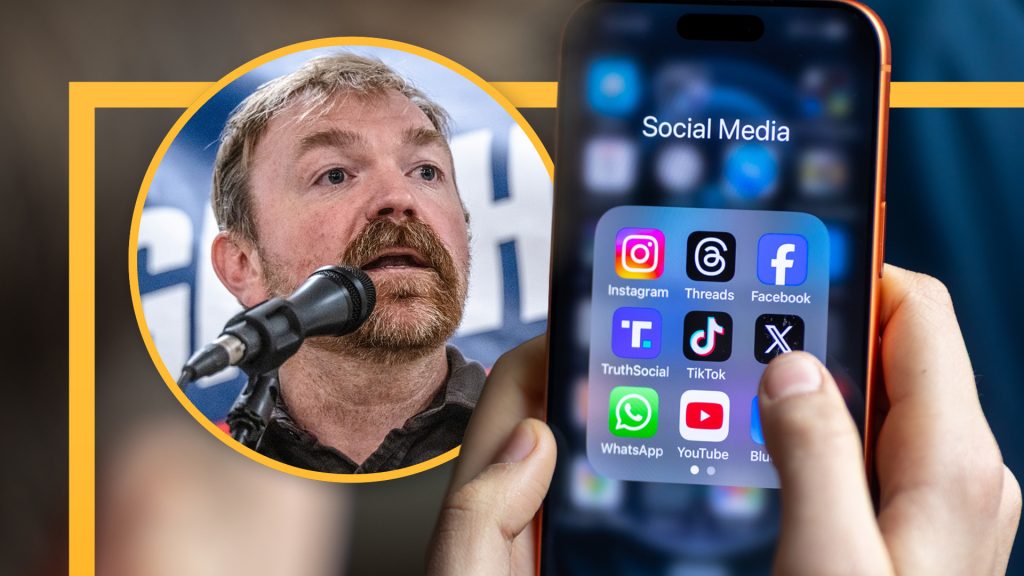
A woman’s decision to come forward and accuse a Senate candidate of sexual assault revealed a stubborn social issue the #MeToo movement thought to resolve: believing victims.
Hours after Jenny Racicot came forward in Politico with allegations that Graham Platner sexually assaulted her during a 2021 encounter, people rushed to discredit and question her story. Claims centered on Racicot’s credibility and that “outside forces,” as Platner put it, are destined to tank the senatorial bid for a seat parties are fighting over.
Platner’s 11-minute announcement and two since-deleted posts on X from DropSite News and former U.S. Rep. Marjorie Taylor Greene, R-Ga., attempted to discredit Racicot’s allegations in some fashion. Platner pointed to an out-of-state campaign. DropSite claimed Politico’s omission of a text Racicot sent to Platner was malpractice. Greene accused Racicot of turning a story for political points.
Erica Vladimer, founding director of Harassment-Free New York, told Straight Arrow that it’s a product of people trying to create a “perfect victim” when it comes to sexual assault and rape.
Vladimer started the nonprofit to increase protections for legislative staffers and politicians from harassment, discrimination and sexual violence. The nonprofit has sponsored legislation in New York State to prioritize survivor-centered policies and pushed the New York Legislature to conduct an independent investigation into former Gov. Andrew Cuomo for alleged sexual harassment.
“The idea that it would ever be someone who: Has a job that we accept, they came out at the perfect time, and they shared their full story the first time, is an extremely high bar when we are still in an era where, victims are not supported, and the whole idea of ‘believe women’ is nothing more than just a phrase that people like to toss around,” she said.
It’s happened before to other survivors and alleged victims.
“Reminder: there is no excuse for smearing survivors who come forward about sexual assault,” Lindsey Boylan, who accused Cuomo of sexual harassment, wrote Monday on X. “It doesn’t make you righteous because you agree politically with the abuser.”
‘Perfect victim’
For Racicot, she first came forward in the New York Times and said she didn’t believe Platner respected women. The story centered on allegations that Platner mistreated women he dated, and Racicot described an incident in 2021 where he came to her home drunk after she asked him not to.
She didn’t elaborate on the story further to The Times, but told Politico she didn’t initially come forward since she agreed with his policies. She was motivated after seeing her experiences get “read-over” and Lyndsey Fifield be portrayed as politically motivated.
Independent journalist Michael Tracey took issue with that, writing a post on X and his Substack where he accused Racicot of changing her story and said she only came forward after speaking with Cheyenne Hunt. Hunt started Reckoning Action as a coalition to amplify allegations that former U.S. Rep. Eric Swalwell, D-Calif., sexually assaulted them.
Norwegian sociologist Nils Christie first coined the term “perfect victim” in 1986 to describe how society determines who gets believed and supported after a crime. Several social scientists have dissected the term over the years and determined that, in the case of rape, the victim is a white, middle-class, straight and morally irreproachable person who has a private sex life.
Stanford University sociology professor Meghan Warner said that, besides society, the concept can harm victims.
“If someone’s experience deviates from the perfect victim narrative, they may believe the incident was not serious enough to constitute sexual violence or that they do not ‘count’ as either a victim or a survivor,” she wrote in her research titled “Not a victim, not a survivor.” “This is particularly true for marginalized people, such as women of color and LGBTQ people, who are excluded from the perfect victim narrative.”
Vladimer said that survivors and alleged victims of sexual assault will often guard themselves to shield from reliving the trauma and for protection.
“In Jenny’s case, she realized that people didn’t actually pay attention to what she was saying, and she recognized how much her story could help other women, help understand who this candidate was,” she said.
But coming forward didn’t stop attempts to discredit Racicot.
Media plays a role
How sexual assaults and rapes are covered in the news shapes how they’re spoken about in society, Vladimer said. Phrasing such as “accuser” and a focus on the victim’s actions casts doubt on a person’s experience.
In the case of Drop Site News, journalist Ryan Grim wrote Wednesday on X that he was focused on Politico’s omission of a detail in the story. He brushed aside accusations that he was victim-blaming Racicot.
“Obviously no text message justifies sexual assault, so Politico should have included it since they had it,” Grim wrote. “It’s a major story, no time to selectively leave out details that will obviously come out later anyway.”
DropSite issued a statement and deleted the initial post, adding that their initial post was to highlight Politico’s reporting and not to question whether Racicot was raped or justify the alleged assault.
“It leans towards victim discreditation and victim blaming,” Vladimer said. “And that’s exactly what Ryan Grim is doing in those types of things.”
Fifield criticized The New York Times over its handling of her story. She wrote on X on Tuesday that the publication kept noting that her story couldn’t be corroborated despite giving them sources and documents she said would verify it. Friends told her they called Platner abusive to the publication.
To fix it, Vladimer said journalists and publications need to change how they cover sexual assault. RAINN, the Rape Abuse and Incest National Network, has a guide for newsrooms to foster responsible, trauma-informed reporting. Recommendations included minimizing harm to victims, being specific about legal terms and avoiding biased language.
“For someone to choose to tell their story publicly takes so much strength that many people don’t understand unless they themselves are put in that situation,” Vladimer said.
Round out your reading
- With more prison space than prisoners, correctional facilities are shutting down.
- ‘Game changer’: New cancer treatment turns major surgery into an outpatient procedure.
- Viewers overwhelmingly support ‘The View’s’ fight against the FCC. Will that matter?
- Why an ICE shooting in Houston isn’t leading to mass protests.
- Milwaukee detective is the latest officer charged with misusing Flock cameras.
Ella Rae Greene, Editor In Chief