Court fast-tracks Louisiana redistricting, spurring moves in Tennessee, Alabama
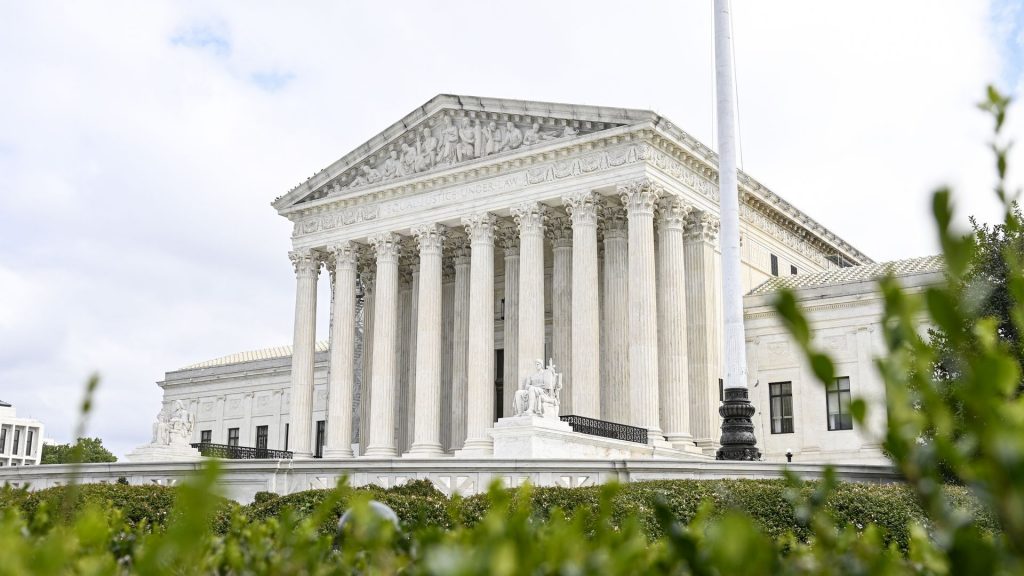
The Supreme Court on Monday moved to immediately finalize its ruling striking down Louisiana’s congressional map, a step that cleared the way for new district lines and set off swift redistricting efforts across the South ahead of the 2026 midterm elections.
The court granted a request to issue its judgment without waiting the usual 32 days in Callais v. Louisiana, allowing state lawmakers to redraw congressional districts in time for upcoming elections. By a 6–3 vote issued last week, the justices invalidated a 2024 map that created two majority-Black districts, ruling that race played too large a role in how the lines were drawn.
Justice Samuel Alito wrote a concurring opinion joined by Justices Clarence Thomas and Neil Gorsuch. Justice Ketanji Brown Jackson dissented from the court’s decision to fast-track the ruling, warning it disrupted an election already in progress.
“This ruling has spawned chaos in the State of Louisiana,” Jackson wrote, saying the court appeared to take sides during a heated redistricting fight.
The decision is already reshaping politics in neighboring states.
In Tennessee, Gov. Bill Lee called a special legislative session beginning Tuesday to reconsider the state’s congressional map, targeting the district centered on Memphis, the state’s only Democratic-held seat, before the 2026 elections. Republicans already hold an 8–1 advantage in Tennessee’s U.S. House delegation.
Lee said the session followed last week’s Supreme Court ruling and the need to meet election deadlines.
“We owe it to Tennesseans to ensure our congressional districts accurately reflect the will of Tennessee voters,” Lee said in a statement. After consulting with legislative leaders and state officials, he said the General Assembly has a responsibility to ensure the map is “fair, legal, and defensible.”
Democrats argue proposed changes would weaken the voting power of Black voters by dividing Memphis among surrounding Republican-leaning districts.
In Alabama, Gov. Kay Ivey called lawmakers into a special session beginning Monday to redraw congressional districts and revise the election calendar.
Republicans currently hold five of Alabama’s seven House seats, and new lines could give the party a path to winning all seven. Lawmakers have introduced proposals that would return the state to district lines similar to a map previously struck down by federal courts.
The changes would affect nearly half of Alabama’s population, particularly voters in south Alabama, the Wiregrass and the Black Belt. Two predominantly Black districts represented by Black Democrats would be significantly reconfigured under the proposed maps, which were originally drafted in 2023.
Nationally, both parties are racing to redraw maps as the midterm elections approach. Republicans hold a narrow 218–213 majority in the U.S. House, with four vacancies.
President Donald Trump urged state legislatures to act quickly after the ruling, writing on Truth Social that compliance was “more important than administrative convenience,” and predicting Republicans could gain additional House seats.
Democrats sharply criticized the decision. Sen. Raphael Warnock of Georgia said it opens the door to partisan gerrymandering that weakens voter influence.
“They said we’re going to allow partisan politicians to gerrymander you,” Warnock said. “So that even when you show up, your voice won’t have as much impact because we’ll play with the lines.”
Ella Rae Greene, Editor In Chief