Conflicting justifications raise questions about US endgame in Iran
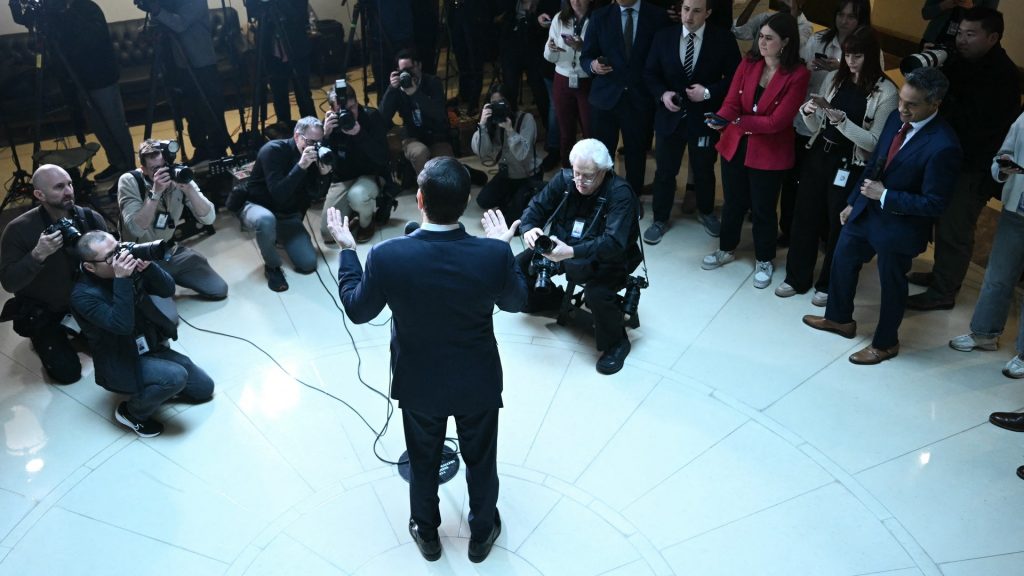
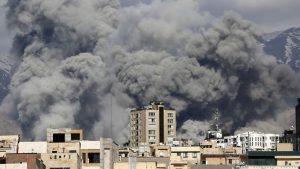
As the U.S. continues its military conflict against Iran, top members of the Trump administration are giving mixed messages on the reasons behind the offensive. That includes President Donald Trump himself, who has voiced different concerns about the Iranian regime.
Reasons given
Earlier Monday, Trump told reporters that Iran ignored his warnings about rebuilding the country’s nuclear program.
“Following our obliteration of Iran’s nuclear program and Operation Midnight Hammer a short while ago, we warned Iran not to make any attempt to rebuild at a different location, because they were unable to use the ones we so powerfully blew up, but they ignored those warnings and refused to cease their pursuit of nuclear weapons,” Trump said.
Two days prior, the administration had said part of the reason for the attack was that Tehran was planning an imminent strike on the U.S.
“We will not tolerate powerful missiles targeting the American people,” Secretary of Defense Pete Hegseth said on X on Saturday. “Those missiles will be destroyed, along with Iran’s missile production. The Iranian navy will be destroyed.”
However, the administration has since walked back that argument. Also on Monday, Secretary of State Marco Rubio said the attack on Iran was actually because they believed Iran would have been able to launch missiles in about 18 months.
“Imagine a year from now or a year and a half from now, the capabilities they would have to inflict damage on us,” Rubio reportedly said.
Meanwhile, on Saturday, the president also said the goal is to free the Iranian people.
“All I want is freedom for the people,” Trump told The Washington Post.
Trump, Rubio and Hegseth have also mentioned regime change was necessary in Iran, with the attack killing Iranian Supreme Leader Ayatollah Ali Khamenei.
“All of them can be true at the same time,” Lt. Col. Rick Francona, a retired intelligence officer with the U.S. Air Force, told Straight Arrow News. “I think the overriding goal is to make sure that [the nuclear] program does not continue. But the best way to make that happen is regime change.”
Francona added that he believes most Iranians want to rejoin the Western world.
“I think they want a friendly relationship with the United States,” he said. “We had great relationships in the past, 50 years ago. And, I think most people think that they want that. So, regime change, I think, is an absolute necessity. And of course, that will bring about the desired result of the end of the nuclear weapons threat.”
As far as the imminent threat of a strike from Iran against the U.S., Francona wasn’t as sure about that.
“I kind of doubt that, but I have no access to any of the intelligence that’s going on there,” he said.
Public relations concerns
“The messaging, the whole PR effort during this has been abysmal,” Francona said. “I would have preferred that the president come on, the night of or right after the hostility started, and say, ‘Here’s what we’re doing. Here’s why we’re doing it. This is the plan.’ We haven’t heard that.”
He added that the mixed messaging from other officials also isn’t helping.
“I have not heard a coherent message from anybody in the administration,” Francona said. “Hegseth says one thing, the president says another.”
Francona said incoherent messaging makes it hard to get the support of the American public.
“If they want the American people behind them, they’re going to have to tell the American people what they’re doing, why they’re doing it, and what the plan is,” he said. “I think there are answers. There’s a good explanation for all of this. They just have to be out in front of this.”
When former President George W. Bush and his administration decided to pivot from Afghanistan and invade Iraq, there was a large public relations push to the American public and to the rest of the world on why it was necessary, including a Bush speech to the U.N. But before that could happen, everyone in the administration needed to be on the same page.
While Bush, Vice President Dick Cheney and Secretary of Defense Donald Rumsfeld were ready to go in, Secretary of State Colin Powell was famously unsure about the move.
The Powell Doctrine stated that the U.S. should only engage in military action as a last resort.
When talking about the plan to invade Iraq and remove Saddam Hussein from power, Powell also invoked the “Pottery Barn Rule.” Powell believed if the U.S. went in and broke Iraq, America bought it. Meaning America would be responsible for putting Iraq back together, which is basically what happened.
Eventually, the Bush administration did get Powell onboard, including his famous speech before the United Nations, where he was sure to have CIA Director George Tenet seated directly behind him to show the administration was united.
In recent history, Democrats were largely united whenever Democratic presidents undertook military operations in the Middle East.
“Look at the Democrats,” Francona said. “They’ve got a solid, coherent opposition. I didn’t see any opposition to the Biden, Obama, Clinton operations. But at least they’re kind of coherent in their objections.”
What’s next?
Other messaging that has not come through consistently was the plan for the war and how long it would take. Over the weekend, Trump floated the idea of ending the operation in two or three days.
“I can go long and take over the whole thing, or end it in two or three days and tell the Iranians: ‘See you again in a few years if you start rebuilding [your nuclear and missile programs],” Trump told Axios.
While speaking on Monday, Trump seemed to contradict that messaging.
“We’re already substantially ahead of our time projections,” Trump said. “But whatever the time is, it’s okay. Whatever it takes, we will always…. and we have, right from the beginning, we projected four to five weeks. But we have capability to go far longer than that.”
Francona said that kind of messaging isn’t helpful.
“What are we doing?” Francona said. “Where are we going? What’s the end game? I’m all supportive of getting rid of the Iranian regime. I spent a lot of time working against the Iranians. And I have no problems at all with ridding the world of these people. But I’d like to know what the plan is.”
Francona added that it does remind him of Iraq and Powell’s Pottery Barn Rule.
“This goes back to the ‘if you break it, you own it,’” he said. “Now, are we going to be responsible for a follow-on government, some sort of interim thing?”
He also pointed to the invasion of Iraq as an example.
“We had a plan, and we didn’t follow it,” Francona said. “The first thing we do is go in and fire all of the civilian bureaucrats and disband the Iraqi army, who we, me included, in the intelligence community, had spent years developing the follow on what was going to happen.”
The original plan for Iraq was to have the Iraqi army take over.
“I hope we’ve done that in Iran, but I see no indications that anybody has thought of what happens after the regime collapses,” Francona said. “Calling on the Iranian people to take matters into their own hands is not an answer.”
Ella Rae Greene, Editor In Chief