As talks deadlock, a new Iran nuclear deal may look similar to the old one
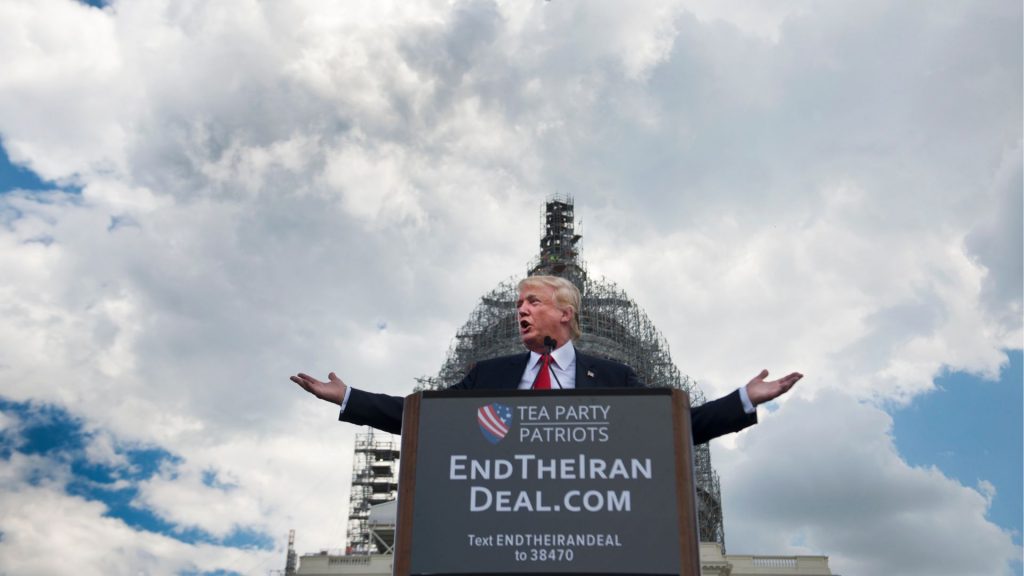
It was in May 2018, during President Donald Trump’s first term, when he called his predecessor’s nuclear deal with Iran a “horrible, one-sided deal that should have never, ever been made.” Now, Trump is in the captain’s chair as negotiations have stalled for his deal.
Trump said that former President Barack Obama’s Joint Comprehensive Plan of Action (JCPOA) was too lenient with lifting Iran’s economic sanctions for “very weak limits on the regime’s nuclear activity.” The White House has said it initiated the current conflict in Iran because nuclear negotiations broke down.
“We thought we had a deal, but then they backed out, and then they came back, and we thought we had a deal, and they backed out. I said, ‘You can’t deal with these people. You got to do it the right way.'” Trump said during a March 2 Medal of Honor award ceremony.
What did the 2015 JCPOA do?
The JCPOA was a complex agreement between the U.S. and Iran forbidding the Middle Eastern country from enriching uranium to levels high enough for weapons and other obligations regarding the country’s nuclear program.
By following these rules, countries that had imposed sanctions because of Iran’s nuclear weapons program agreed to lift them once the International Atomic Energy Agency verified Iran’s nuclear commitments. Obama and other supporters said this was the best deal they could make and said it was better than the other option to pause Iran’s nuclear program.
“So let’s not mince words,” Obama said in 2015. “The choice we face is ultimately between diplomacy or some form of war — maybe not tomorrow, maybe not three months from now, but soon.”
Critics, like Trump, said the deal was weak and panned the deal’s sunset provisions. These provisions stated that limits on nuclear centrifuges would expire in a decade and that reduced enrichment restrictions would last only 15 years. Trump’s previous secretary of state, Rex Tillerson, called the provisions a “very concerning shortcoming” of the JCPOA.
“One can almost set the countdown clock to when Iran can resume its nuclear weapons programs, its nuclear activities,” Tillerson said at a press conference in 2017. “That’s something that the president simply finds unacceptable.”
US pulls out and compliance ends
When the U.S. pulled out of the deal, Iran was still in compliance. From the deal’s beginning in 2016 to the U.S. ending its involvement in 2018, the IAEA issued more than a dozen compliance reports. None of those reports found any evidence of major violations by Iran.
Weeks before the Trump administration withdrew, the State Department’s own report said Iran was “transparently, verifiably, and fully implementing the JCPOA,” according to the Center for International Policy.
Even after the withdrawal, Iran continued to comply with the JCPOA until 2019, but later began enriching uranium to higher levels as the effects of the economic sanctions began setting in. By the beginning of 2020, Tehran announced it had dropped all JCPOA restrictions. The country’s nuclear enrichment program increased after the assassination of Mohsen Fakhrizadeh, who many regard as the father of Iran’s nuclear program, according to Iran Watch.
Iran justified their actions by saying it was the U.S. that went back on their word first.
“The US has announced that it doesn’t respect its commitments,” Iran’s then-President Hassan Rouhani said in 2018.
What’s now on the table?
Vice President JD Vance is leading the negotiations to end the war, but talks have paused, with some reports that they could resume sometime this week. Following his trip to Pakistan for the talks, he discussed his main goal.
“The simple fact is that we need to see an affirmative commitment that they will not seek a nuclear weapon and they will not seek the tools that would enable them to quickly achieve a nuclear weapon,” he said.
The main goal Vance laid out is similar to what Trump pulled out of in 2018, which also called for restrictions on Iran’s nuclear weapons program. Some analysts have said that Trump pulling out of the deal nearly a decade ago has also allowed Iran to amass a large amount of enriched uranium, something that has become another issue in talks.
Omani Foreign Minister Sayyid Badr bin Hamad Al Busaidi, a man involved in the negotiations, said Iran had just agreed to major concessions a day before the attacks began, despite reports that negotiations had fallen apart.
“There would be zero accumulation, zero stockpiling, and full verification. That is also equally important achievement, I think,” Al Busaidi said.
Special envoy Steve Witkoff, who was leading the American side of the negotiations, had a different take on the talks. He said Iran emphasized that “they would not give up diplomatically what we could not win militarily.”
Daryl Kimball, the executive director of the Arms Control Association, told CNN that Witkoff may have been unprepared for the negotiations and didn’t understand what Iran was giving to the U.S.
“Witkoff was too — I’m going to say a strong word: incompetent — and technically ill-informed to understand the significance of what was on the table,” Kimball said.
Ella Rae Greene, Editor In Chief