An experimental weight loss drug is so effective, many Americans don’t care it’s not FDA approved
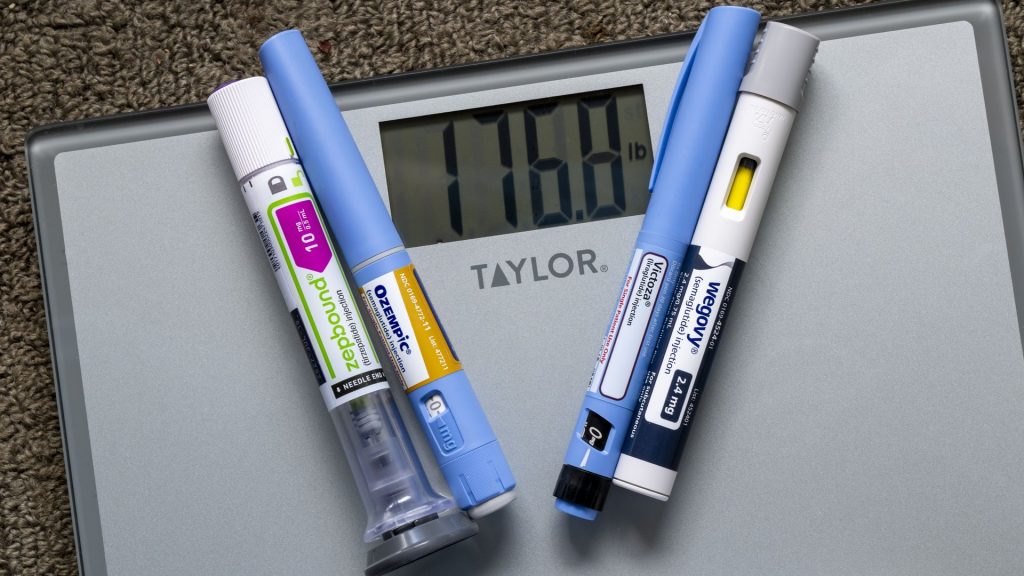
The latest weight loss craze is already here: retatrutide. Despite still being in the testing phase and not FDA approved or legal to sell, many Americans are willing to shell out big bucks to get their hands on the next generation of GLP-1 from Eli Lilly.
The drugmaker just released its latest data from its phase 3 trials of retatrutide and it’s showing encouraging results. The study showed an average weight loss of roughly 19% for those taking the lower, 4 mg dose. That is comparable to results achieved by taking the highest dose of Lilly’s other blockbuster weight loss drug, Zepbound.
The promising results have more and more people vying for the experimental drug, even if it has not yet been deemed safe and effective by the FDA. And a recent CBS News investigation found that it’s not just questionable online pharmacies doling out doses, it’s also legitimate health clinics nationwide.
What makes retatrutide different from semaglutide and tirzepatide?
Retatrutide is a glucagon-like peptide-1, or GLP-1 receptor agonist, that – like the other popular weight loss drugs – is also meant to treat diabetes. However, it’s considered a “triple threat” because it is not solely a GLP-1.
GLP-1 receptor agonists work by mimicking the body’s natural GLP-1 hormone, which regulates appetite and food intake by targeting specific receptors in the brain, according to Willow, an online company that sells GLP-1s.
Semaglutide, known best by the brand names Wegovy and Ozempic, is solely a GLP-1.
Then there’s tirzepatide, sold as Zepbound and Mounjaro, which mimics not only GLP-1 but also glucose-dependent insulinotropic polypeptide, or GIP. GIP amplifies the ability of GLP-1’s to suppress appetite and boost metabolic calorie burning.
But Retatrutide takes it a step further, adding glucagon. Glucagon is a hormone naturally produced by the pancreas that signals the liver to break down and burn stored fats.
Retatrutide producing ‘staggering’ results
The phase 3 trial of retatrutide studied more than 2,300 people with inadequately controlled type 2 diabetes over the course of 104 weeks. They were given either a 4 mg, 9 mg, or 12 mg dose or a placebo.
The study found that those taking the highest dose lost an average of about 30% of their body weight, or about 85 lbs. Those on the lowest 4 mg dose also saw impressive results, losing an average of 19% of their weight.
“That is quite staggering,” Harpreet Singh Bajaj, MD, one of the study’s authors, said. “This magnitude of weight reduction in people with T2D [type 2 diabetes] has not been seen with any medications in a phase 3 study before.”
Comparatively, Wegovy has been found to help people lose an average of 10% of their body weight in a year and Zepbound 15%.
Raising the red flag
While retatrutide is yielding promising results, clinicians are sounding the alarm over its potential side effects, especially since it is unregulated.
GLP-1s don’t just burn fat to cause weight loss, they burn muscle mass as well. That’s because the metabolic process requires amino acids, which are the building blocks of proteins. If a person is not consuming enough protein to replenish their amino acids – which many who are on these weight loss drugs aren’t – the body will start recycling muscle to make up for it.
“Anything that is going to produce robust weight loss, there’s going to be a percentage of that that’s muscle,” Caroline Apovian, an obesity medicine specialist at Harvard Medical School and at Brigham and Women’s Hospital in Boston, told Scientific American.
People taking GLP-1s have been found to have lost 25% to 40% of lean mass, including muscle mass. Bone mass loss has also been a notable side effect.
Losing so much weight so quickly also carries the risk of malnutrition and gallstones.
And since retatrutide is not legally on the market, it’s risky to seek it out, since you can’t be sure it’s legitimate.
“What those companies are selling is completely unknown. It could be a different peptide entirely, a mislabeled or counterfeit product, a product with the wrong concentration or contaminants, or something with no active ingredient at all. Every one of those scenarios carries a real risk of serious harm,” Rozalina McCoy, MD, vice chief of clinical research in the Division of Endocrinology, Diabetes, and Nutrition, at the University of Maryland School of Medicine, told Verywell Health.
Round out your reading
- People are overdosing on GLP-1 injections. What does that look like?
- Researchers put chatbots in a simulation. Grok ended the world in 4 days.
- Fearing more e-bike injuries, Illinois looks to become 10th state to mandate registration, insurance.
- Why are young professionals facing such a tough job market? Hint: It’s not just AI.
- We’re building a new Straight Arrow. Help us shape our future by taking our survey.
Ella Rae Greene, Editor In Chief