First it was Taco Bell. Now Chipotle is at the center of a foodborne outbreak
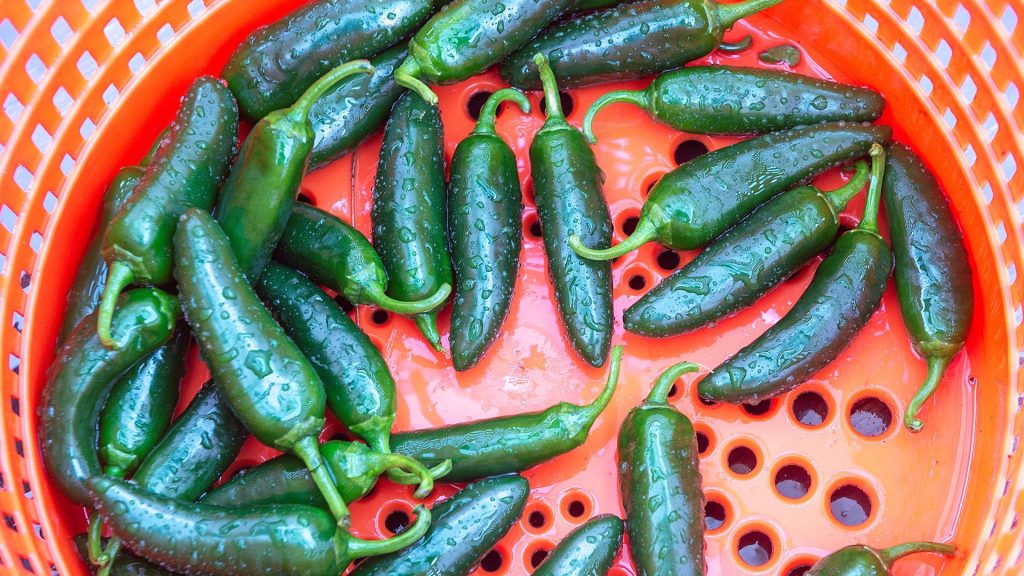
Frustrated about having to avoid lettuce and Taco Bell in fear of contracting cyclosporiasis? It may be time to add Chipotle’s jalapeños to that list after Minnesota public health officials announced they are investigating a salmonella outbreak.
At least 110 people in Minnesota have fallen ill with salmonella, Reuters reported, with 75 telling the Minnesota Department of Health they ate at Chipotle between June 14 and July 14. Chipotle said in a Tuesday statement that it conducted an internal investigation and found its jalapeños to be the culprit.
“As part of our established health and safety protocols, upon learning of a potential outbreak, we immediately initiated our ingredient traceability system and were able to identify jalapeños as a potential common ingredient from a common lot, and the restaurants where it was distributed,” the restaurant said.
The state’s Department of Health didn’t immediately respond to Straight Arrow’s request for comment. Officials told The Wall Street Journal that the specific strain is salmonella javiana.
It’s not immediately known if the illness has affected people in other states. The Food and Drug Administration, which is leading a traceback investigation, considers a foodborne illness to be an outbreak when at least two people contract the same illness from the same food or drink.
Salmonella infections are common, with the Centers for Disease Control and Prevention estimating about 1.35 million infections every year.
Salmonella can be contracted from virtually anywhere. FoodSafety.gov said it can be present in produce, meats, processed foods, contaminated water, animals at petting zoos and schools. It can take up to six days for symptoms to arise after infection. They can involve bloody diarrhea, fevers and stomach cramps.
“Salmonella are one of the leading causes of foodborne illnesses,” according to the CDC. “Salmonella also are the leading cause of hospitalizations and deaths linked to foodborne illness.”
FDA, CDC investigating four other outbreaks
If the Chipotle-related illnesses are considered an outbreak by the FDA, it would be the agency’s fifth ongoing outbreak so far. It’s currently investigating an egg-based salmonella outbreak, listeria, botulism and E. coli, and has issued “do not eat, sell, or serve” advisories.
Managing multiple outbreaks isn’t uncommon for the FDA. The agency documented 16 by July 2025 and 10 by July 2024. This year, the count is at 19 investigations, excluding the Chipotle-linked salmonella illness.
For the egg-linked salmonella outbreak, the FDA recalled white- and brown-shelled cage-free eggs of various sizes produced at Midwest Poultry Services and sold under the Country Morning, Cal-Maine Sunups, Brookshire’s, Simple Truth and Kroger brands. The affected products had sell-by or best-by dates between July 20 and Aug. 17.
The agency said the eggs were distributed in Arkansas, Louisiana, Oklahoma, Mississippi, New Mexico and Texas. It said on July 24 that there were 98 infected people across 17 states.
An E. coli outbreak is ongoing with traceback investigations pointing to GreenWise Organic Frozen Whole Blueberries and Whole Mixed Berries, both of which were sold in Publix stores in Alabama, Florida, Georgia, Kentucky, North Carolina, South Carolina, Tennessee and Virginia. Twelve people fell ill, with the latest reported illness on June 5.
The FDA is investigating two smaller outbreaks of listeria from soft cheeses sold by La Ceiba Foods Latin Market and Clover Hill Dairy that have made 12 people sick, and a four-person infant botulism outbreak linked back to Nara Organics Whole Milk Organic Powdered Infant Formula.
Some public health officials and politicians believed that cuts made in 2024 and 2025 to the FDA, CDC and overall food safety have harmed the nation’s ability to respond adequately to foodborne illness outbreaks.
“Consumers should not be faced with a trade-off between nutrition and food safety,” former FDA Center for Food Safety and Applied Nutrition Director Susan Mayne wrote in her July 19 Substack post. “Health is made possible when food safety supports consumer confidence in fruits and vegetables, which are of course, “real foods,” vulnerable to real pathogens.”
Round out your reading
- Why Gen Z is staying home on the weekends.
- Autism research is entering a new era. Here’s what scientists are learning.
- The big reason small cities want data centers. Hint: It’s not permanent jobs.
- High school teacher arrested at city meeting after clapping for anti-data center speech.
- Off Script: Everyone’s watching Michigan. Our reporter explains why the race just changed.
Ella Rae Greene, Editor In Chief