A judge put the brakes on the $111B Paramount-Warner Bros. merger. How a trio of lawsuits puts the deal’s fate into question
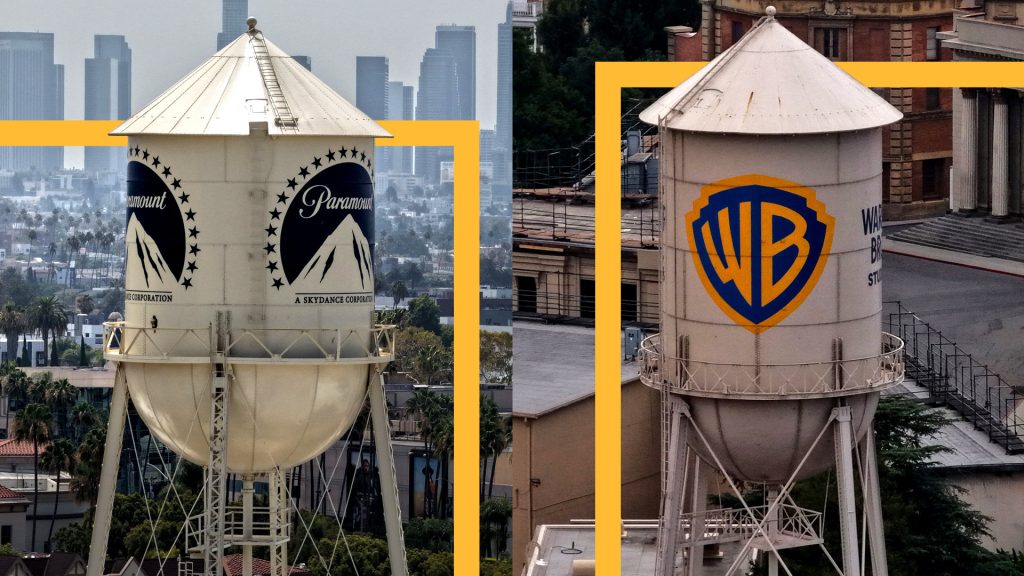
First, it was the state attorneys general from a dozen states. Then, the Hollywood unions. Now, shareholders.
Last week was a busy one for lawyers with Paramount Skydance, which was slapped with three federal lawsuits seeking to stop the company’s $111 billion bid to acquire Warner Bros. Discovery. The legal drama — with deep political undertones and major implications for the media industry — has raged ever since.
On Monday, a federal judge issued a temporary restraining order — at the request of the attorneys general in 12 states — blocking Paramount from finalizing the transaction for two weeks as the legal battle heats up in court.
Paramount Skydance, owned by media mogul and President Donald Trump ally David Ellison, set out to close on the deal by the end of the month. But the order, issued by U.S. District Judge Araceli Martínez-Olguín of the Northern District of California, will delay the merger until at least August.
If the deal is ultimately approved, it would consolidate the film studios Paramount and Warner Bros. and the streaming services Paramount+ and HBO Max. It would also bring two major TV news operations — CBS News and CNN — under the same roof. All of it would be overseen by David Ellison, the son of billionaire Oracle co-founder and Trump friend Larry Ellison.
From Hollywood blockbusters to cable news to professional sports to video games, virtually every segment of the entertainment industry faces the prospects of a major shakeup.
The fate of the merger hangs in the balance, with the potential of winding up before the Supreme Court. Each of the lawsuits represents different constituencies, including the union for screenwriters, which alleges the deal would result in fewer places for them to sell the next blockbuster to hit theaters, and a First Amendment group that warns the deal could stifle press freedom.
The situation requires Paramount to “mount several defenses,” Eric Fruits, the director of economic research at the International Center for Law & Economics, told Straight Arrow. Still, he said, the company has “a fairly good case to allow the merger to go through.”
“They’re going to have to fight a lot harder in the courts on this because there are so many different means of attacking,” Fruits said. “They have to address all of them because the plaintiffs only need to win one and Paramount Skydance has to win all of them.”
But each lawsuit comes to a similar conclusion: The deal could have major implications for consumers, their screens and their wallets. Analysts warn the deal could lead to higher costs, fewer choices — and political meddling.
Paramount v. states
A legal challenge from states — led by California Attorney General Rob Bonta — had been expected for months. When the lawsuit by 12 states, including New York, Arizona and Minnesota, dropped early last week, what quickly followed was a whirlwind of legal filings and finger-pointing that perhaps nobody could have predicted.
In total, four lawsuits have been filed to block the merger, three in the last week.
In the federal antitrust case, the states argue the consolidation would undermine competition in the media industry — affecting blockbuster films in particular. Speaking last week in Los Angeles with the famous Hollywood sign as a backdrop, Bonta said that “audiences on every sofa and in every movie seat would feel the impact of this unlawful merger.”
Monopoly-like power, the lawsuit alleges, would drive up the costs for movie theater tickets and cable subscriptions while reducing the quality and variety of entertainment on tap for consumers.
The legal challenge paints a sharply different picture from the findings of an eight-month investigation by the Justice Department’s antitrust division. In June, the division greenlit the deal, announcing that it determined the megamerger “is not likely to result in harm to competition or American consumers.” Senior Justice Department leaders approved the deal before career antitrust lawyers had an opportunity to object, The Wall Street Journal reported.
Paramount, for its part, maintains the merger is necessary for the company to compete against “dominant streaming and technology platforms,” like Netflix, and would put it in a financial position “capable of investing more aggressively in premium content, theatrical releases and creative talent.”
The company didn’t respond to requests for comment from Straight Arrow for this story. Makan Delrahim, Paramount’s high-paid chief legal officer, said on Monday the states’ lawsuit represents a “weaponization of antitrust law, if I’ve ever seen one,” but denied reports the company was weighing the possibility of moving its headquarters out of California. In early July, Tennessee officials urged Paramount to relocate its operations to the state.
Chatter about relocating, Bonta told CNN, “smacks of what a monopolist would do.”
“It seems like a desperate last-ditch effort to try to leverage, bully, blackmail me and other states from bringing a lawsuit,” he said. “I think they were trying to threaten us. So, their gambit, their threat, their attempt to blackmail obviously didn’t work, won’t work and will never work.”

Paramount v. the world
The day after Bonta and the other state attorneys general mounted their legal challenge, Paramount was back in court to defend itself, this time in a lawsuit filed by screenwriters. The Writers Guild of America, the labor union that represents film and television writers, filed an antitrust lawsuit alleging the megamerger would lead to lower wages and create a “monopsony,” in which its dominance in the industry could allow Hollywood to cut payments to writers.
“This proposed combined entity would be the largest employer of writers, with tremendous power to suppress our wages, eliminate opportunities for emerging writers, cut jobs across the industry, and produce less programming, effecting the range of storytelling,” Writers Guild of America East President Tom Fontana said in a media release. “This merger is not inevitable and we are fighting to stop it.”
So, too, are shareholders. On the third consecutive day of federal lawsuits against Paramount, the nonprofit Freedom of the Press Foundation and the Public Integrity Project, an anti-corruption legal group, filed a shareholder derivative lawsuit seeking to block the merger.
Brought on behalf of a Paramount shareholder, the lawsuit argues the merger would allow Ellison and other executives to profit from a deal that trades “editorial independence for favoritism from the Trump administration.”
The free speech group pointed to a promised “overhaul” of CNN by Ellison, reminiscent of changes already well underway at CBS News. Proponents of the merger, as well as critics, have pointed to a rightward turn at CBS News under top editor Bari Weiss, a longtime opinion journalist who had no experience in broadcasting before Ellison installed her to lead CBS News.
The lawsuit also surfaced bribery and corruption allegations it said would undermine CNN’s credibility, including news that Paramount gave Federal Communications Commission (FCC) officials expensive tickets to the Kennedy Center Gala, hosted by Trump, after the agency greenlit the Warner Bros. merger. FCC Chairman Brendan Carr reportedly sat in a $125,000 seat in a private skybox with Ellison by his side.
“CNN and CBS viewers want real journalism,” Seth Stern, the chief of advocacy at the Freedom of the Press Foundation, said in a media release. “If Paramount’s news networks are watered down to appease the administration, they’ll stop tuning in, and the public will be less informed.”
Paramount v. your wallet
Media is increasingly dominated by wealthy conglomerates, with just a handful of companies owning each sector of the industry — from blockbuster films to video games to streaming TV to local news.
The Paramount-Warner Bros. merger would further consolidate media in ways that threaten the industry’s long-term health and are out of step with consumers’ interests, according to an in-depth report released this month by the Media and Consolidation Research Organization at the University of California San Diego and written by a team of more than 20 media scholars from the U.S. and Canada.
The deal — which would immediately burden the newly formed conglomerate with $79 billion of debt — would create a megaconglomerate that “will struggle to respect competitive safeguards, serve consumer needs, cultivate the media industry’s long term health and act in the broader interest of the public,” according to the report.
Andrew deWaard, an associate professor of communication at the University of California San Diego who consulted the California Attorney General’s Office on its investigation into the Paramount-Warner Bros. merger, told Straight Arrow the deal’s implications for consumers are vast. Subscription prices for TV sports packages could surge, he said, and movies could become more generic and less diverse. Such a situation means fewer risks, he said, and an even greater reliance on sequels.
“We have 14 angles here to think about how bad this merger is,” deWaard said. “We recommend people think holistically, comprehensively and try to get a sense of the huge scale of this merger. And, really, how detrimental it is for democracy and the public interest.”
DeWaard said that while the merger presents clear antitrust issues, the strongest reasons to block the deal are its effects on everyday viewers, workers and democracy.
“This is two huge companies — that are already probably too big — getting even bigger and being run by a particular family that has very particular political motivations,” deWaard said. “That would be the strongest case for challenging it, even though that’s not the strongest legal case.”
Researchers conclude the merger would “likely reduce the number of media projects that both conglomerates would have produced as separate companies.” Such a reality has been seen before: When the Walt Disney Company acquired 21st Century Fox in 2019, for example, major projects were left on the cutting room floor.
Streaming platform subscriptions have risen by nearly 20% since 2020, with consolidation bringing the prospects of additional hikes — and fewer programs to choose from. With reduced competition for “bold, innovative decisions in storytelling,” researchers concluded, Paramount could be incentivized to play it safe to pay down its massive debt.
Marginalized and underrepresented creators would face higher barriers, and the news, too, could become more homogenized. Not only that, it could introduce foreign influence into U.S. news programming.
With billions of dollars in financial backing from investors in Saudi Arabia, Qatar and the United Arab Emirates, overseas influence could affect how “foreign nationals and governments are represented in U.S. media, threatening neutrality and free speech in both scripted media and news.”
“In a news landscape where journalists are losing jobs and more and more communities have little to no access to local news, the Ellisons are a uniquely dangerous type of media owner” due to their willingness to “capitulate to political pressure,” Rodney Benson, a media, culture and communication professor at New York University, wrote in the report.
Is the merger the best path for Warner Bros.?
Fruits, with the International Center for Law & Economics, is skeptical the merger would have a detrimental harm on consumers and, he told Straight Arrow, could be beneficial. While the lawsuit filed by the dozen states has received the most attention and “is probably the strongest,” Fruits said, he’s skeptical of claims that the merger would lead to major changes for consumers, including fears the deal would lead to higher admission prices to movie theaters.
Given widespread disruptions to the industry, including changes in consumer habits and competition from technology companies, the merger could be key to business sustainability. Paramount, which currently has some $38 billion in debt from two previous mergers, is a “company searching for scale and a cleaner balance sheet, not one so dominant that it can afford to starve Hollywood of work,” he wrote last month.
Hollywood’s “big five” studios would be reduced to four under the deal, making it the second-largest film distributor after Disney and falling shy of being a “highly concentrated” market, Fruits wrote. As Paramount seeks to compete with Netflix and other digital startups, the company will need to produce more — not less — content.
For example, Fruits noted, Cable TV subscriptions have been on the decline for decades, and most young people “don’t even know what an antenna is.”
“The question is, if this merger doesn’t go through, what would happen to Warner Bros. Discovery?” Fruits said. “Because it shouldn’t be assumed that Warner Bros. could survive very long on its own.”
Round out your reading
- From Obama to Trump to Biden: When networks said ‘no’ to presidential speeches.
- ‘The end of American science as we know it.’ White House funding plan sparks alarm.
- AI data centers are popping up everywhere. What exactly do they do?
- The Trump administration is accused of breaking a law built to target the KKK.
- One Republican senator is dead, another is still alive. Both are the center of conspiracy theories.
Ella Rae Greene, Editor In Chief