Teens are ‘taking over’ city streets. Is it the solution to charge parents?
Law enforcement and prosecutors across the nation have turned attention to parents and charged them for their teens’ actions during “teen takeovers.” A criminal justice scholar is skeptical of the approach, as he said the punitive measures criminalize families and are applied too broadly.
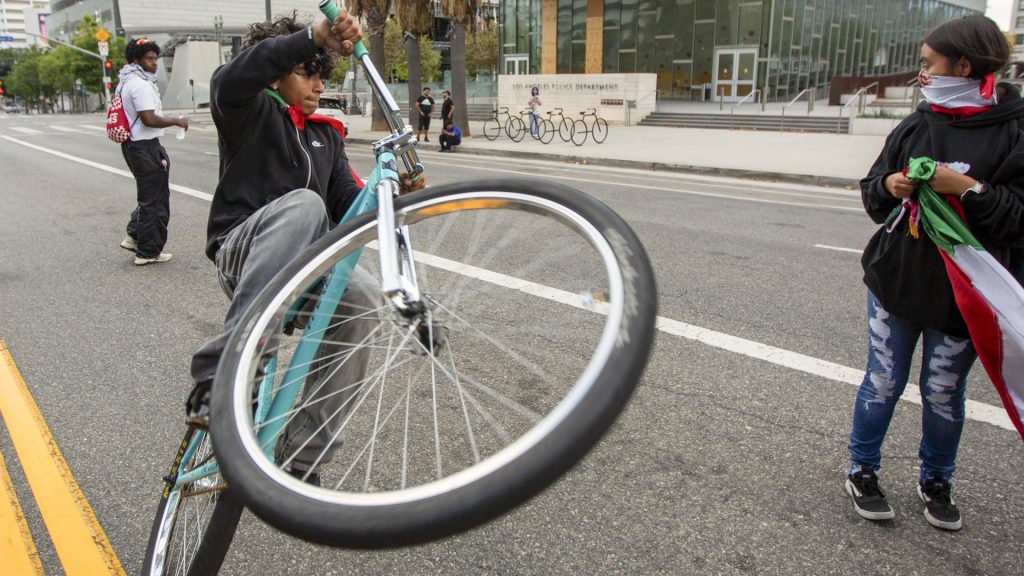
A trend on social media has spread to Chicago, New York City, Washington, D.C., Atlanta and Detroit in the past few months, where teens encourage large gatherings out in public. It’s grown across the U.S., with some filming speedruns at Church of Scientology locations, fighting in restaurants or just hanging out in cities, forcing law enforcement to charge parents for their kids’ actions.
“If I’m a parent and I have a 12-year-old and they’re in the heart of downtown at midnight and I don’t know where they are, I don’t expect to be shamed,” Chicago Police Superintendent Larry Snelling said Wednesday. “I would be ashamed as a parent to not know that.”
Snelling wants strict penalties for both parents and teens to deter the takeovers.
But Mike Males, senior researcher at the Center on Juvenile and Criminal Justice, told Straight Arrow that officials shouldn’t use a one-shoe-fits-all approach. He opined for charges if a direct link could be made that parents neglected to care for their children, but teens hanging out isn’t inherently a bad issue.
However, Males noticed that many of the groups are Black teenagers, whom he said people ascribe negative feelings and fear to.
“A group of white teenagers — or a group of adults for that matter of any race — they’re not going to cause the same kind of anxiety and fear,” he said.
Still, places like Detroit have charged parents for their children’s actions. A federal prosecutor warns that D.C. could see a similar policy.
“Law-abiding taxpayers should not subsidize chaos caused by parental neglect,” U.S. Attorney for D.C. Jeanine Pirro said in a May 15 statement. “Parents do your job, or we will do ours.”
Charges threatened, issued against parents
So far, Detroit, Michigan has become an outlier in dealing with the takeovers. The city has issued more than 50 “parental responsibility tickets,” Mayor Mary Sheffield told CBS News Detroit on Tuesday. As a result, she said about half of the parents showed up for court dates.
The charges stemmed from two past takeovers, one in which resulted in a 14-year-old being shot on May 17 during an argument, according to WXYZ Detroit. The wounded teen is expected to survive. Meanwhile, prosecutors charged two others in connection with the shooting. The city has enforced a 10 p.m. curfew for children aged 15 or younger, and an 11 p.m. curfew for those aged 16 to 17.
Sheffield met with some of the teens in April for a conversation about why they participate in the events and what they want from the city.
“Detroit teens can expect a lot of city-sponsored structured recreational opportunities if they choose to engage in those,” Sheffield’s spokesperson told Straight Arrow in an email, “and strict enforcement regarding curfews, disorderly conduct and parental responsibility tickets if they choose to engage in less productive activities.”

In D.C., Pirro announced Friday that her office is reviewing the teens’ actions for possible criminal charges against parents. She called the takeovers in D.C. disruptive and said they forced businesses to temporarily close. One incident that’s attracted attention is a fight that broke out in a Chipotle.
Mayor Muriel Bowser reinstated a curfew in April for everyone under 18 to be indoors by 11 p.m., and now wants the city council to extend it. The city’s interim police chief was authorized to establish juvenile curfew zones that would prohibit teens from gathering in groups of nine or more after 8 p.m.
All three have called it a problem that teens are hanging out near the city’s Navy Yard, which is home to Nationals Park, the stadium where the D.C. Nationals MLB team plays.
“Curfew laws are completely ineffective,” Males said. “The politicians love them because they can go out and bellow on television about how they’re controlling the problem, but they’re not.”
He added that curfews have been proven ineffective in preventing youth crime. The Coalition for Juvenile Justice said in 2023 that the laws reduced automobile crash injuries, but increased violence during non-curfew hours in D.C. In other cases, the coalition found that police enforce the laws inconsistently.
“African American youth are 19x more likely to be arrested for a curfew violation than Caucasian youth, further damaging the relationship between law enforcement and youth of color,” according to the coalition.
Instead, Males said cities should embrace the abundance of teens on the streets as they make the streets safer. Cities should also move away from penalizing all teens and focus on individual people who are the cause, Males said. He said that the method is used around bars when a drunk person behaves unruly, and police arrest those causing problems.
“This idea of just blaming all teenagers, and the way the police talk about teenagers in these dire and negative terms all the time is that the whole group was responsible for what five people do, that needs to stop,” Males said.
Data doesn’t support claims
Males shared his review of FBI crime data for Detroit and D.C., both of which showed people under 18 committed 5% and 7% of all offenses in the past six months, respectively. He added that about 80% fewer teens are committing crimes today compared to nearly 30 years ago.
Instead, people in their 30s and 40s are the ones getting charged more often for crimes.
“There’s less reason to panic today,” Males said. “There’s more reason to apply measured solutions rather than all this harsh rhetoric.”
Several cities have implemented some of those solutions.
Sheffield created a six-point summer safety plan earlier this year to redirect teens’ energy to city-sponsored programs such as nights for basketball, skating and biking, as well as arts and culture programs. According to Sheffield’s office, the events were held in areas of the city most impacted by violence.
Her office told Straight Arrow in an email that teens can utilize the activities, but will have “strict enforcement regarding curfews” and disorderly conduct for those who cause problems.
The six-point plan was developed with the Detroit Police Department to focus on gun safety, neighborhood safety action teams, venue engagement for late-night events, block party safety and crowd control, conflict resolution and youth engagement.
“On the whole, most of the hundreds of teens who have come down to these Takeover events have not caused a problem, but the Mayor is deeply concerned about some of the behavior and especially the shooting that took place last weekend,” Sheffield’s spokesperson told Straight Arrow in an email.
Ella Rae Greene, Editor In Chief