Austin’s approval of a gas peaker plant echos America’s power dilemma
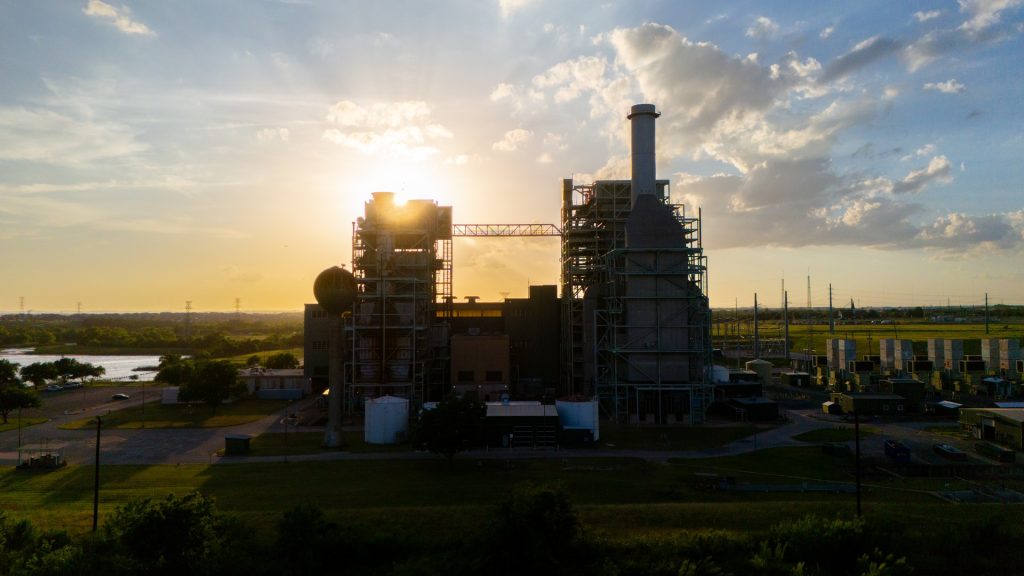
AUSTIN, Texas — America’s electric utilities are at a crossroads, balancing environmental goals with escalating electricity demand due to seasonal climate extremes and a wave of data-center buildouts. A new power plant approved by the city of Austin provides a sneak peek at how the push and pull between city-owned utilities, environmental groups and local politicians could play out across the nation.
Austin Energy is the third largest municipal utility in the U.S. by customer count. On Thursday, Austin’s 11-member city council, which also serves as Austin Energy’s oversight committee, voted in an executive session closed to the public to approve a 400-megawatt gas peaker power plant.
While exact details — including who will build the plants and how much it will cost — are not publicly available, the 400-megawatt power plant is estimated to cost $1 billion, according to an Austin Energy spokesperson.
These details are not public because they include competitive business information, Austin Energy said.
Texas is fast becoming a hotbed in the nationwide data center construction wave, which is driving forecasted electricity demand upward. Austin Energy said the new peaker plant will help the city withstand extreme weather similar to the 2021 freeze that brought Texas’ grid to the edge. But community activists see the peaker as a step backwards; they argue batteries are a more cost-effective, cleaner alternative.
Why choose a gas peaker plant?
A gas peaker is a natural-gas-fired power plant, designed to only run during periods when the grid is strained with high demand and lagging supply. The units can quickly switch on and off as directed by grid operators.
Austin Energy framed the peaker plant as an insurance policy against weather-induced blackouts and the financial cost of importing power from other parts of the state.
“Austin is accelerating the clean energy transition faster than any time in our history, but we need more local generation,” Austin Energy General Manager Stuart Riley said during a Tuesday meeting.
Austin currently has two gas power plants on the city’s eastern edge: the 200-megawatt Decker Creek and the 595-megawatt Sand Hill. Two units at Decker Creek, totalling 725 megawatts, were retired in 2020 and 2022.
According to Austin Energy’s grid models, building new gas peaker units will lower the total annual hours in which there is a risk of isolated outages within Austin Energy’s service area. Under already approved plans, Austin Energy identified 575 “reliability risk hours.”
Adding the gas peaker plant reduced the risk hours to 45. Using batteries instead of gas peakers only reduced the risk hours to 475 per year, according to Austin Energy’s analysis.
How is the plan being received?
The underlying modeling data behind Austin Energy’s reliability risk hour analysis is not publicly available. Members of the public present at a Tuesday council meeting voiced opposition to the peakers, asked for more public disclosure of information and called for a third-party analysis.
“I’ve never seen a request to authorize a contract without revealing who the contract is with or how much it will cost,” said Kaiba White, climate policy specialist at the nonprofit consumer advocacy organization Public Citizen.
Due largely to projections of higher electricity demand, the cost of gas turbines that allow power plants to run is increasing. White added, “buying a lot of peakers when they’re at their most expensive is risky for ratepayers. Natural gas price volatility is also a risk.”
The peaker plants received support from business groups like the Austin Chamber of Commerce and the Real Estate Council of Austin.
Other speakers during council’s public comment section pushed for battery storage as an alternative to gas peaker plants and expressed doubt over Austin Energy’s assertions that batteries would be more expensive and provide fewer benefits than gas power plants.
Batteries have been growing on the Texas grid, supplying power in the high-demand evening hours as daytime solar ramps down. The cost of grid-scale batteries is also falling. Nikhil Kumar, program director at Grid Lab, a nonprofit providing technical expertise on power systems, told Straight Arrow four-hour batteries can “replace a huge fraction of historical peaker runtime.”
Based on Kumar’s estimates of current battery costs, a four-hour, 400-megawatt battery system would cost roughly $640 million. After four hours, the system would need to recharge.
Many residents expressed concerns over climate change, which is driven in large part by emissions of carbon dioxide when gas is burned, and methane emissions that leak into the atmosphere across the gas supply chain.
“Given the world that we live in I’ve been struggling to understand how we’ve gotten to the point of even considering the purchase of a gas-powered generator,” said Austin resident Larry Gilg.
What are Austin Energy’s environmental goals?
The peaker plant is being put forward under Austin Energy’s Generation and Climate Protection Plan to 2035, which calls for “100% carbon-free generation as a percentage of load by 2035.”
That might sound like Austin will ditch any electricity source that produces carbon dioxide emissions, including gas and coal, within the next decade. But it’s more complicated than that.
Austin Energy owns power generation resources across Texas, including wind and solar arrays far from Austin, a biomass energy plant and part of a nuclear power plant on the Gulf coast. The power produced by Austin Energy’s assets is sold into the marketplace operated by the Electric Reliability Council of Texas, known as ERCOT. And Austin Energy buys the power it needs to serve homes and businesses on that same electricity market.
The amount of electricity Austin Energy produces does not have to equal how much its customers consume. And the goal really says that by 2035, the amount of clean energy produced will match how much Austin Energy’s customers use.
Even while building a new gas peaker unit, the utility plans to continue investing in renewable energy and batteries. The city council also approved proposals for 100 megawatts of utility-scale batteries and an agreement to purchase electricity from a 299-megawatt wind power facility.
“Its not an either-or kind of a situation. We know we are going to need it all,” Riley said.
Where will a new gas peaker plant be located?
Austin Energy has published a map of 14 potential locations for new generation resources, including local solar and batteries. Nine are located east of Interstate 35, historically a dividing line of racial segregation. Both the Sand Hill and Decker Creek gas plants are already in East Austin, and another gas plant in the center of the predominantly Latino east-side Holly neighborhood was shut down in 2007.
“Austin Energy intentionally looked across its service territory because of historically impacted communities,” an Austin Energy spokesperson told Straight Arrow. The utility is using feedback from a series of community meetings to shape its final site selection and “will conduct further community engagement efforts to collaborate on how Austin Energy can be a good neighbor.”
Austin’s racial divide was codified in the 1928 master plan, which described how the highest concentration of Black residents was located south of the city cemetery and east of East Avenue, which would later become the I-35 corridor through downtown Austin.
The 1928 plan stated, “the solution of the race segregation problem will be the recommendation of this district as a Negro district. This will eliminate the necessity of duplication of white and black schools, white and black parks, and other duplicate facilities.”
“The mechanism used for segregation through that plan was very much the classic redlining and weaponizing zoning,” said Adam Powell, a member of the City of Austin Planning Commission and local history buff.
In the following years, numerous predominantly Black neighborhoods in other parts of the city were cut off from city services and Black residents were left with little choice but to move east.
“It is not an accident whatsoever that all of this highly industrial infrastructure ended up on the east side,” Powell told Straight Arrow.
Travis County, where Austin is located, recently received an F grade for ozone pollution and a D for short-term particle pollution from the American Lung Association. A 2024 study from researchers at the University of Texas at Austin’s Dell Medical School found increased rates of asthma-related emergency room visits in East Austin.
Analysis presented by Austin Energy said the utility’s power plants contribute only 1% to Austin’s NOx emissions, a class of toxic air pollution that contributes to smog. A majority of those emissions come from vehicles. But opponents of the peaker plant cited the potential for increased local pollution.
“These plants are the wrong solution, especially for the long-term health of our communities,” said Bianca Guerrero, sustainability analyst with PODER, a community group advocating for East Austin.
Ella Rae Greene, Editor In Chief