State Department to revoke passports over unpaid child support
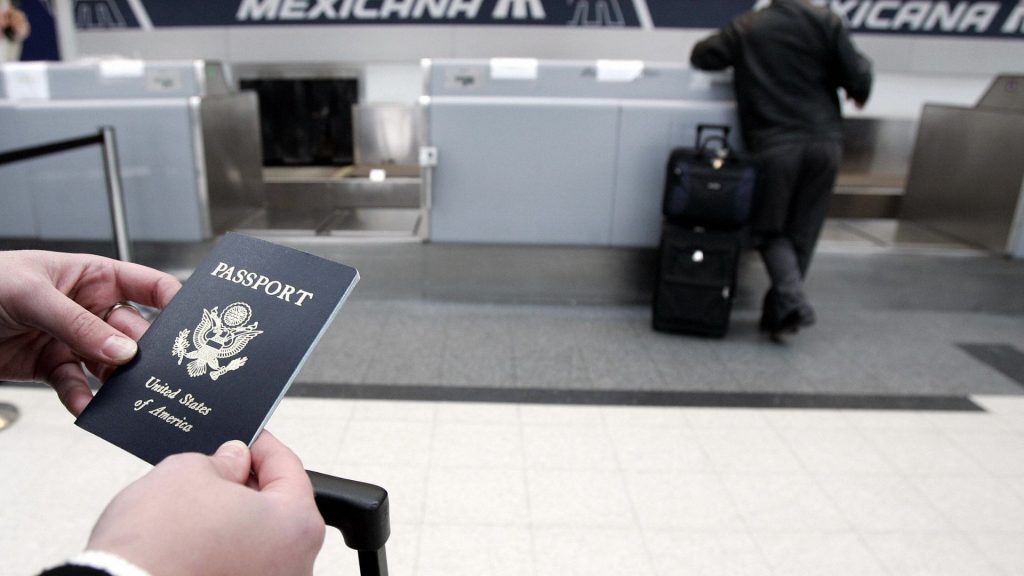
The U.S. State Department announced it will begin revoking passports of Americans who owe thousands of dollars in child support. The execution of the rarely enforced rule has led to some discussions of the demographics of divorce and which groups this might impact the most.
The department’s notice states that current regulations allow the state to deny reissued passports and even revoke them for those who owe more than $2,500 in unpaid child support. Officials said they would begin with those who have $100,000 or more in child support debt, which is about 2,700 people, according to PBS. But they soon plan to “greatly” expand the revocations to include those who owe more than $2,500.
“Notices about passport revocations will be sent from the Department of State directly to the passport holder via email or to the mailing address provided on the most recent passport application,” the State Department said in the notice.
Can the government revoke passports?
The rule allowing the government to revoke passports comes from the Personal Responsibility and Work Opportunity Act. The law, which former President Bill Clinton signed in 1996, was a major part of the Republican Party’s “Contract with America” agenda.
The State Department said it was working with the Department of Health and Human Services at an “unprecedented scale” to speed up revocation in support of children.
“This action supports the welfare of American children by exacting real consequences for child support delinquency under existing federal law,” the State Department wrote. “The State Department is putting American families first through our passport process.”
The State Department told The Associated Press that it had observed that parents who owed money quickly resolved their debts after the department announced it was expanding the program in February. But there was a caution to the data.
“While we can’t confirm the causation in all of those cases, we are taking this action precisely to impel these parents to do the right thing by their children and by U.S. law,” the department said.
The administration previously said that the child support program was already a “powerful tool” to get parents to repay their debts. Since it began in 1998, the department said the program has collected more than $650 million.
Who will this impact?
Despite passing with bipartisan support, the bill faced opposition from Democrats. Critics claimed that the program was racist and was designed to destroy the national safety net.
Several top officials at the HHS resigned in protest over the law. Political analysts who reviewed the policy following its passage found that it negatively affected minority groups, poorer Americans and immigrants the most.
Data from California found that 80% of those who owed child support made less than $20,000, and 60% made less than $10,000. A large portion of unpaid support came from low-income fathers. Racial demographics also play into child support statistics, with Black fathers about three times more likely to be jailed for child support debt compared to fathers overall.
But those with passports and those who owe child support aren’t typically in the same group. Passport holders are usually younger, college-educated and well-off.
Some critics of the Trump administration have tried to connect the plan to voter suppression, saying it could disenfranchise some if Congress passes the SAVE America Act. The act would require Americans to show identification to register to vote, but a driver’s license wouldn’t work in most cases. Instead, Americans would have to use a passport or birth certificate to register, and married women would likely be required to show more documents.
But the argument gets cold since the bill has stalled as Democrats control enough seats to block passage despite President Donald Trump’s insistence.
Round out your reading
- First, it was the schools. Now they’re coming for your cellphone at work.
- Why one of America’s top economic forecasters is worried about a recession.
- AI companies may not be adhering to their own guidelines — with potentially deadly outcomes.
- Data centers are a thorny issue for Democrats. Maine shows us why.
- We’re building a new Straight Arrow. Help us shape our future by taking our survey.
Ella Rae Greene, Editor In Chief