Trump’s border wall expansion damages Native American site in Arizona
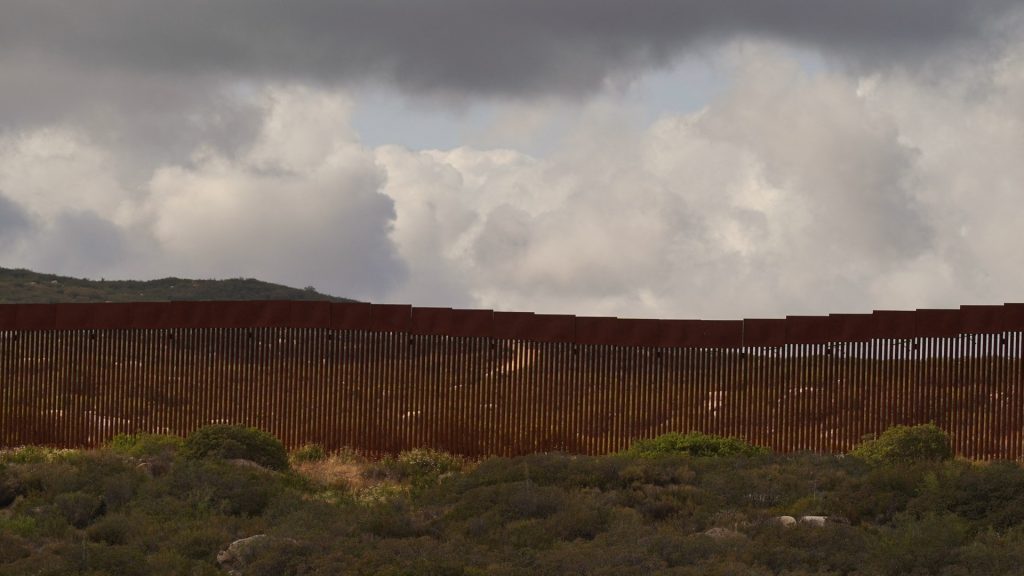
The border wall along the U.S.-Mexico border is expanding by around three miles a week, and that construction is now impacting an ancient tribal site.
President Donald Trump ordered an aggressive expansion of the wall, backed by funding in the “One Big Beautiful Bill.” Now, The Washington Post reports that recent construction in southern Arizona has damaged a rare Native American archaeological site.
Native American site damaged
Construction crews ran heavy machinery through part of an intaglio, a more than 200-foot ground etching shaped like a fish and believed to be at least 1,000 years old. Roughly 60 to 70 feet of the site was damaged.

Archaeologists and Native American leaders in the area confirmed the destruction. Lorraine Marquez Eiler, an elder of the Hia-ced O’odham Indigenous people, said it happened last week.
“Those things were made by our ancestors, and it’s hitting home … For me, it’s an emotional subject,” she told The Post.
The intaglio sits inside the Cabeza Prieta National Wildlife Refuge, which is managed by the Interior Department. A department staffer confirmed that a portion of the site was damaged.


“If someone came to Washington and started destroying all the different sites that people in the United States revere, it’s the same thing for us,” Marquez Eiler said.
It’s unclear exactly how old the intaglio is or what it was used for, but officials say it was likely used in ceremonies.
The damage is part of broader concerns from Native American communities in the region. Members of the nearby Tohono O’odham Nation have raised alarms about other culturally significant sites along the wall’s proposed path, including Quitobaquito Springs and a Native American grave site.
The border wall project
Trump’s border wall expansion, budgeted at $46.5 million, is part of a broader effort to build hundreds of miles of new and reinforced barriers along the southern border, including projects in Texas and additional wall segments in California, Arizona and New Mexico.
Construction has moved forward in part because of waivers issued by the Department of Homeland Security, which allow the government to bypass certain environmental and cultural protection laws tied to federal projects.
Numerous environmental groups and Native American tribes have challenged those waivers in courts, but judges have largely allowed construction to continue.
Round out your reading
- Scientists unearth new evidence on how the Grand Canyon was shaped.
- Why the Army is adding a second fitness test for combat.
- Illegal midwives, growing demand: The fight over home birth in America.
- 40 years after Chernobyl, the U.S. pushes nuclear power once again.
- We’re building a new Straight Arrow. Help us shape our future by taking our survey.
Ella Rae Greene, Editor In Chief